Comparison

Azteca polymorpha polymorpha vs Argentine Ant

Azteca polymorpha polymorpha (Azteca polymorpha polymorpha) and Argentine Ant (Linepithema humile) both belong to the tribe Leptomyrmecini and part ways below it.
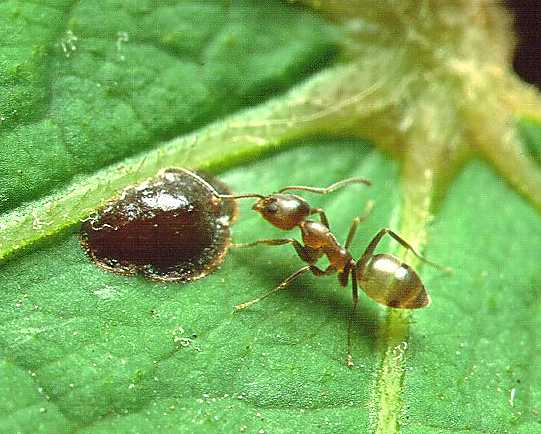
Argentine Ant

Argentine Ant

Linepithema humile

Penarc, CC BY-SA 4.0, via Wikimedia Commons

Side by side

Azteca polymorpha polymorphaArgentine Ant
Scientific nameAzteca polymorpha polymorpha Forel, 1899Linepithema humile (Mayr, 1868)
English nameNot recordedArgentine Ant
Ranksubspeciesspecies
GroupInsectsInsects
ClassInsecta InsectInsecta Insect
OrderHymenoptera AntsHymenoptera Ants
FamilyFormicidae AntFormicidae Ant
GenusAzteca Cecropia Ants and AlliesLinepithema
Named in18991868
EnvironmentNot recordedterrestrial
Countries on recordNot recorded24 countries
GBIF occurrence recordsNot recorded21,817 records

Rows where the two agree are shown in grey.

Where each is found

Only Argentine Ant (24)

From Catalogue of Life checklists and GBIF occurrence records. A country missing from a list means no record is held, which is not proof of absence.

Checked facts

Azteca polymorpha polymorphaArgentine Ant
AppearanceNo checked fact yet
  • Adult Argentine ants are uniformly dull brown, with males and queens generally darker than workers. animaldiversity.org
  • Workers have yellowish mandibles and legs that are lighter brown than their bodies. animaldiversity.org
  • Males retain their wings throughout adulthood, whereas reproductive females lose theirs after mating. animaldiversity.org
  • Argentine ant eggs are pearly white and elliptical. animaldiversity.org
SizeNo checked fact yet
  • Adult Argentine ants measure approximately 2.2–2.6 mm in body length. English Wikipedia
  • Reproductive females measure approximately 4.5–5.0 mm in length. animaldiversity.org
  • Male Argentine ants weigh approximately 1.0 mg. animaldiversity.org
  • Argentine ant eggs average 0.3 mm in length and 0.2 mm in width. animaldiversity.org
  • Newly hatched Argentine ant larvae are approximately 0.5 mm long and can grow to 1.7 mm, while male larvae can reach 2.5 mm. animaldiversity.org
HabitatNo checked fact yet
  • Argentine ants naturally inhabit riparian floodplain environments in the lowland Paraná River drainage. English Wikipedia
  • Argentine ants establish nests in forests, agricultural fields, shrublands, and areas near rivers. animaldiversity.org
  • Argentine ant nests are generally shallow, typically extending no more than 1–2 inches into the soil. animaldiversity.org
  • Argentine ants also nest beneath wood, debris, and rocks, in sandy soil, and inside pavement cracks and buildings. animaldiversity.org
  • Argentine ants can survive in temperatures ranging from -5 to 45 degrees Celsius. animaldiversity.org
  • Argentine ants require access to water sources, including rivers and urban water runoff. animaldiversity.org
DietNo checked fact yet
BehaviourNo checked fact yet
  • Introduced Argentine ant colonies commonly form supercolonies because individuals from different nests generally do not attack one another. English Wikipedia
  • Argentine ants from neighboring nests can mingle without aggression in most of their introduced range. English Wikipedia
  • When their nests become flooded, Argentine ant workers collect the brood and relocate the colony to dry ground. English Wikipedia
  • Argentine ant colonies readily occupy abandoned nests belonging to deeper-nesting ant species. English Wikipedia
  • Argentine ants can incorporate dietary hydrocarbons into their cuticles, influencing recognition between colony members. English Wikipedia
ReproductionNo checked fact yet
  • Argentine ant colonies are polygynous and may contain as many as one reproductive queen per 125 workers. English Wikipedia
  • Argentine ant workers cannot lay reproductive eggs but can influence egg development in reproductive females. English Wikipedia
  • Argentine ants generally mate inside their nests during late spring and summer. animaldiversity.org
  • Argentine ant females are inseminated by a single male, although they may mate with several males. animaldiversity.org
  • Male Argentine ants die shortly after mating, while queens generally delay egg-laying until the following spring. animaldiversity.org
  • Argentine ant eggs generally hatch after approximately 28 days, although incubation can range from 12 to 55 days. animaldiversity.org
  • Argentine ant larvae take an average of 31 days to develop. animaldiversity.org
  • Argentine ant workers require an average of 20 days to complete pupation. animaldiversity.org
  • Argentine ants require at least 33 days to develop from egg to adult, with approximately 74 days being the average. animaldiversity.org
DistributionNo checked fact yet
  • Argentine ants are native to northern Argentina, Uruguay, Paraguay, and southern Brazil. English Wikipedia
  • Argentine ants have established populations on every continent except Antarctica. English Wikipedia
  • Argentine ants have spread into parts of Chile, Colombia, Ecuador, and Peru. English Wikipedia
  • Argentine ants have spread globally since the late nineteenth century, largely through human commercial activities. animaldiversity.org
ConservationNo checked fact yet
  • Argentine ants are ranked among the world's 100 worst invasive animal species. English Wikipedia
OtherNo checked fact yet
  • Higher environmental temperatures shorten the developmental time of Argentine ant brood. pmc.ncbi.nlm.nih.gov
  • The maximum egg-to-adult brood survival rate recorded in the temperature study was 16% at 26 degrees Celsius. pmc.ncbi.nlm.nih.gov
  • No Argentine ant eggs survived at 32 degrees Celsius under the experimental conditions. pmc.ncbi.nlm.nih.gov
  • At 18 degrees Celsius, fewer than 2% of Argentine ant eggs hatched into larvae in the temperature study. pmc.ncbi.nlm.nih.gov

In brief

Argentine Ant

Linepithema humile naturally inhabits riparian floodplain environments in the lowland Paraná River drainage and establishes nests in forests, agricultural fields, shrublands, and areas near rivers. Introduced colonies commonly form supercolonies in which ants from different nests generally do not attack one another. Full profile

Compare something else

Page built on 25 November 2026 from the data on the two species pages, where every source is listed.

Cite this page

ScientificNames.org. (2026). Azteca polymorpha polymorpha vs Argentine Ant. Retrieved November 25, 2026, from https://scientificnames.org/compare/azteca-polymorpha-polymorpha-vs-argentine-ant