Comparison
Blue Malkoha vs Common Cuckoo
Blue Malkoha (Ceuthmochares aereus) and Common Cuckoo (Cuculus canorus) both belong to the family Cuculidae (cuckoo) and part ways below it. Both are recorded in 22 countries.
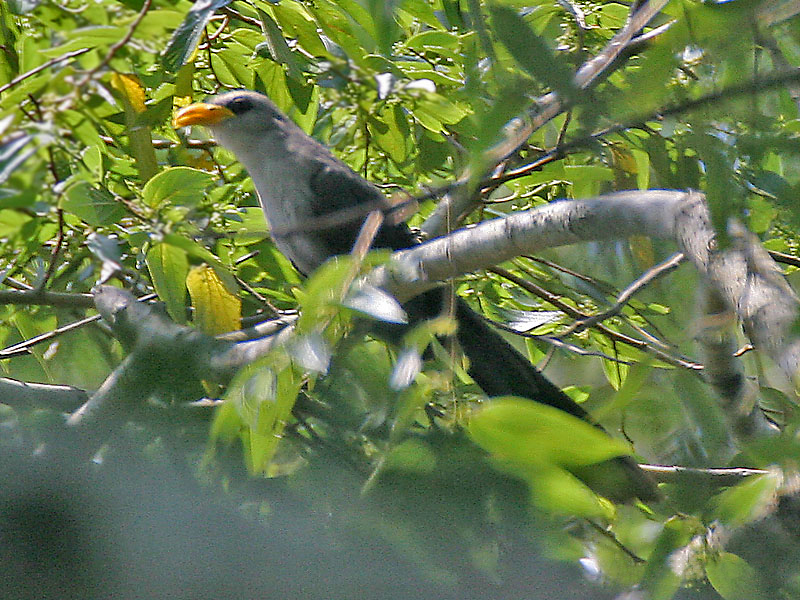

Common Cuckoo
Cuculus canorus
Side by side
| Blue Malkoha | Common Cuckoo | |
|---|---|---|
| Scientific name | Ceuthmochares aereus (Vieillot, 1817) | Cuculus canorus Linnaeus, 1758 |
| English name | Blue Malkoha | Common Cuckoo |
| Group | Birds | Birds |
| Class | Aves Bird | Aves Bird |
| Order | Cuculiformes Cuckoo | Cuculiformes Cuckoo |
| Family | Cuculidae Cuckoo | Cuculidae Cuckoo |
| Genus | Ceuthmochares Yellowbills | Cuculus Eurasian Cuckoos |
| Named in | 1817 | 1758 |
| Red List category | Least Concern | Least Concern |
| Environment | terrestrial | terrestrial |
| Countries on record | 27 countries | 138 countries |
| GBIF occurrence records | 15,305 records | 2,252,580 records |
Rows where the two agree are shown in grey.
Where each is found
Both recorded in 22 countries
- Angola
- Benin
- Cameroon
- Central African Republic
- Democratic Republic of the Congo
- Gabon
- Ghana
- Kenya
- Liberia
- Malawi
- Mozambique
- Nigeria
- Republic of the Congo
- Rwanda
- Senegal
- Sierra Leone
- South Africa
- Tanzania
- Togo
- Uganda
- Zambia
- Zimbabwe
Only Blue Malkoha (5)
Only Common Cuckoo (116)
- Afghanistan
- Aland Islands
- Albania
- Algeria
- Andorra
- Armenia
- Austria
- Azerbaijan
- Bahrain
- Bangladesh
- Barbados
- Belarus
- Belgium
- Bhutan
- Bosnia and Herzegovina
- Botswana
- Bulgaria
- Burundi
- Chad
- China
- Croatia
- Cyprus
- Czechia
- Denmark
- Djibouti
- Egypt
- Eritrea
- Estonia
- Eswatini
- Ethiopia
- Faroe Islands
- Finland
- France
- Georgia
- Germany
- Gibraltar
- Greece
- Guadeloupe
- Guernsey
- Hong Kong
- Hungary
- Iceland
- India
- Indonesia
- Iran
- Iraq
- Ireland
- Isle of Man
- Israel
- Italy
- Japan
- Jersey
- Jordan
- Kazakhstan
- Kosovo
- Kuwait
- Kyrgyzstan
- Laos
- Latvia
- Lebanon
- Lesotho
- Liechtenstein
- Lithuania
- Luxembourg
- Malta
- Mauritania
- Moldova
- Monaco
- Mongolia
- Montenegro
- Morocco
- Myanmar
- Namibia
- Nepal
- Niger
- North Korea
- North Macedonia
- Norway
- Oman
- Pakistan
- Palestinian Territory
- Poland
- Portugal
- Qatar
- Romania
- Russia
- San Marino
- Saudi Arabia
- Serbia
- Seychelles
- Slovakia
- Slovenia
- Somalia
- South Korea
- South Sudan
- Spain
- Sri Lanka
- Sudan
- Svalbard and Jan Mayen
- Sweden
- Switzerland
- Syria
- Taiwan
- Tajikistan
- Thailand
- The Netherlands
- Tunisia
- Turkey
- Turkmenistan
- Ukraine
- United Arab Emirates
- United Kingdom
- United States
- Uzbekistan
- Vietnam
- Yemen
From Catalogue of Life checklists and GBIF occurrence records. A country missing from a list means no record is held, which is not proof of absence.
Checked facts
| Blue Malkoha | Common Cuckoo | |
|---|---|---|
| Appearance |
|
|
| Size | No checked fact yet |
|
| Habitat |
|
|
| Diet |
|
|
| Behaviour |
|
|
| Reproduction |
|
|
| Lifespan | No checked fact yet |
|
| Distribution | No checked fact yet |
|
| Conservation |
|
|
| Similar species |
| No checked fact yet |
| Name origin | No checked fact yet |
|
In brief
Blue Malkoha
Ceuthmochares aereus occurs in thick habitats, including forests, forest edges and thickets, and is widely distributed across the African tropical rainforest. It has a greyish belly, head and throat, a heavy yellow bill, and a greenish-blue or blue back, wings and tail depending on the subspecies. Full profile
Common Cuckoo
Cuculus canorus inhabits open areas, forests, alpine areas and farmland, and its habitat extends to elevations of 3,800 metres. It is an obligate brood parasite that lays its eggs in other birds' nests. Full profile
Compare something else
Page built on 28 November 2026 from the data on the two species pages, where every source is listed.
Cite this page
ScientificNames.org. (2026). Blue Malkoha vs Common Cuckoo. Retrieved November 28, 2026, from https://scientificnames.org/compare/blue-malkoha-vs-common-cuckoo
“Blue Malkoha vs Common Cuckoo.” ScientificNames.org, 2026, scientificnames.org/compare/blue-malkoha-vs-common-cuckoo. Accessed 28 Nov. 2026.
ScientificNames.org. “Blue Malkoha vs Common Cuckoo.” Accessed November 28, 2026. https://scientificnames.org/compare/blue-malkoha-vs-common-cuckoo.
@misc{scientificnames_blue_malkoha_vs_common_cuckoo,
  author = {{ScientificNames.org}},
  title = {Blue Malkoha vs Common Cuckoo},
  year = {2026},
  url = {https://scientificnames.org/compare/blue-malkoha-vs-common-cuckoo},
  note = {Accessed 2026-11-28}
}