Comparison

Blue Malkoha vs Greater Coucal

Blue Malkoha (Ceuthmochares aereus) and Greater Coucal (Centropus sinensis) both belong to the family Cuculidae (cuckoo) and part ways below it.
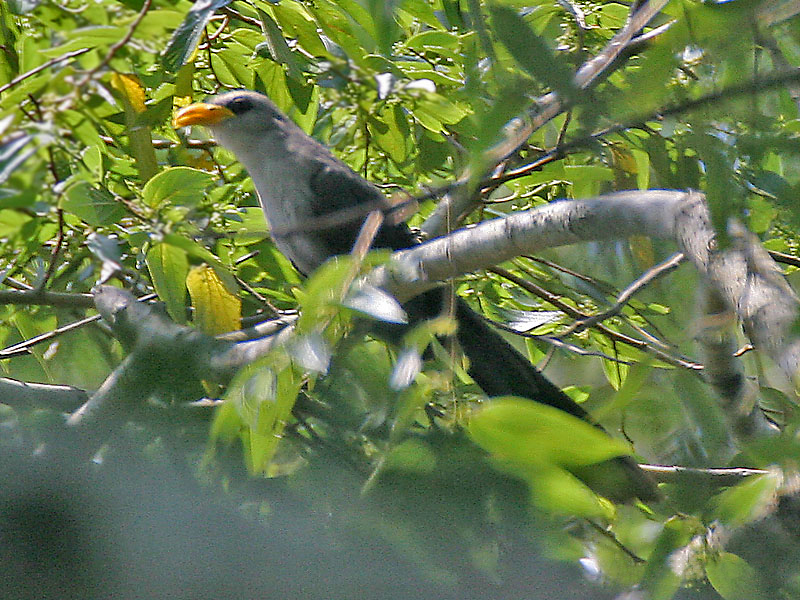
Blue Malkoha

Blue Malkoha

Ceuthmochares aereus

Jim Scarff, CC BY-SA 2.0, via Wikimedia Commons

Greater Coucal

Greater Coucal

Centropus sinensis

J.M.Garg, CC BY-SA 3.0, via Wikimedia Commons

Side by side

Blue MalkohaGreater Coucal
Scientific nameCeuthmochares aereus (Vieillot, 1817)Centropus sinensis (Stephens, 1815)
English nameBlue MalkohaGreater Coucal
GroupBirdsBirds
ClassAves BirdAves Bird
OrderCuculiformes CuckooCuculiformes Cuckoo
FamilyCuculidae CuckooCuculidae Cuckoo
GenusCeuthmochares YellowbillsCentropus Coucal
Named in18171815
Red List categoryLeast ConcernLeast Concern
EnvironmentterrestrialNot recorded
Countries on record27 countries21 countries
GBIF occurrence records15,305 records958,217 records

Rows where the two agree are shown in grey.

Where each is found

Only Blue Malkoha (27)

Only Greater Coucal (21)

From Catalogue of Life checklists and GBIF occurrence records. A country missing from a list means no record is held, which is not proof of absence.

Checked facts

Blue MalkohaGreater Coucal
Appearance
  • The Blue Malkoha has a greyish belly, head and throat and a heavy yellow bill. English Wikipedia
  • The subspecies Ceuthmochares aereus aereus has a greenish and blue tail, wings and back. English Wikipedia
  • The subspecies Ceuthmochares aereus flavirostris has a blue tail, wings and back. English Wikipedia
  • The species is described as an odd, dark blue-and-gray cuckoo with a bright yellow bill. ebird.org
SizeNo checked fact yet
Habitat
  • The Blue Malkoha occurs in thick habitats, including forests, forest edges and thickets. ebird.org
  • The species is widely distributed across the African tropical rainforest. English Wikipedia
  • The species inhabits environments ranging from jungle to cultivated land and urban gardens. English Wikipedia
  • The species occurs in densely vegetated agricultural fields and rainforests. animaldiversity.org
  • The species commonly inhabits areas near large canals and rivers. animaldiversity.org
  • The species has also been recorded in woodland, scrubland, grassland, and gardens near human settlements. animaldiversity.org
  • Its habitats include low hillsides, plains, shrubs, and grassy areas. animaldiversity.org
Diet
  • The Blue Malkoha feeds primarily on insects, including caterpillars, beetles, grasshoppers and crickets. English Wikipedia
  • The species also eats frogs, slugs, fruit, seeds and leaves. English Wikipedia
  • In Tamil Nadu, snails identified as Helix vittata were the predominant food recorded for the species. English Wikipedia
  • The species consumes the toxic fruits of Yellow Oleander (Cascabela thevetia). English Wikipedia
  • The species consumes the fleshy mesocarps of ripe oil palm fruits. English Wikipedia
  • Coleopterans are the most heavily consumed food group during autumn and winter. animaldiversity.org
  • Moths, caterpillars, and beetles account for approximately 95% of the species' diet during spring. animaldiversity.org
  • Small vertebrate prey includes mice, reptiles, lizards, and snakes. animaldiversity.org
Behaviour
  • The Blue Malkoha moves through tangled vegetation by making a series of small hops while catching prey. English Wikipedia
  • The species sometimes accompanies other birds and squirrels to catch insects they flush from vegetation. English Wikipedia
  • The Blue Malkoha is secretive and rarely observed. English Wikipedia
  • The Greater coucal is a weak flier that commonly climbs through vegetation and walks on the ground while foraging. English Wikipedia
  • Individuals sunbathe alone or in pairs with their wings spread on top of vegetation during the morning. English Wikipedia
  • The species is most active during warm morning hours and late afternoons. English Wikipedia
  • The species produces a repeated, deep, resonant coop-coop-coops call. English Wikipedia
  • Female Greater coucals produce lower-pitched calls than males during duets. English Wikipedia
  • The species also produces rapid rattling and harsh scolding calls. English Wikipedia
  • The species may creep through shrubs to steal bird nests while foraging. animaldiversity.org
Reproduction
  • The nest is a rough mass of sticks suspended approximately 2–5 metres above the ground. English Wikipedia
  • Both parents participate in caring for the young. English Wikipedia
  • Greater coucals are monogamous. English Wikipedia
  • Courtship involves males chasing females on the ground and presenting them with food. English Wikipedia
  • The female signals acceptance during courtship by lowering her tail and drooping her wings. English Wikipedia
  • The nest is constructed over approximately three to eight days, mostly by the male. English Wikipedia
  • The nest is a deep cup with a dome, located in dense vegetation among creepers, bamboo, or Pandanus crowns. English Wikipedia
  • Greater coucal nests may be situated as high as six metres above the ground. English Wikipedia
  • The typical clutch contains three to five eggs. English Wikipedia
  • Eggs hatch after approximately 15 to 16 days of incubation. English Wikipedia
  • Chicks generally fledge between 18 and 22 days after hatching. English Wikipedia
  • Both parents participate in raising the young. animaldiversity.org
  • The species' breeding season varies geographically, with breeding chiefly occurring from June to September according to one account. English Wikipedia
  • One account places the breeding season between November and May after the monsoon. animaldiversity.org
Conservation
  • The Blue Malkoha is described as an uncommon species. English Wikipedia
  • The species is not considered threatened and is classified as Least Concern by the IUCN. English Wikipedia
No checked fact yet
UsesNo checked fact yet
  • The species' flesh was historically consumed as a folk remedy for tuberculosis and pulmonary ailments. English Wikipedia
Similar species
  • The Blue Malkoha was formerly treated as conspecific with the Green Malkoha before the two were split in 2016. English Wikipedia
No checked fact yet
OtherNo checked fact yet

In brief

Blue Malkoha

Ceuthmochares aereus occurs in thick habitats, including forests, forest edges and thickets, and is widely distributed across the African tropical rainforest. It has a greyish belly, head and throat, a heavy yellow bill, and a greenish-blue or blue back, wings and tail depending on the subspecies. Full profile

Greater Coucal

The Greater Coucal is a non-parasitic bird in the cuckoo order, belonging to the family Cuculidae and order Cuculiformes. It inhabits environments ranging from jungle and rainforests to cultivated land, woodland, scrubland, grassland, and urban gardens. It is marked by a black head, purple-glossed black plumage, chestnut-brown back and wings, and ruby-red eyes. Full profile

Compare something else

Page built on 28 November 2026 from the data on the two species pages, where every source is listed.

Cite this page

ScientificNames.org. (2026). Blue Malkoha vs Greater Coucal. Retrieved November 28, 2026, from https://scientificnames.org/compare/blue-malkoha-vs-greater-coucal