Comparison

Bluish Top Shell vs Speckled Periwinkle

Bluish Top Shell (Diloma nigerrimum) and Speckled Periwinkle (Diloma concameratum) both belong to the genus Diloma and part ways below it. Both are recorded in 2 countries.
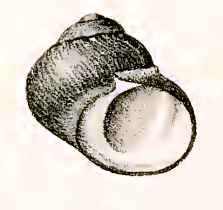
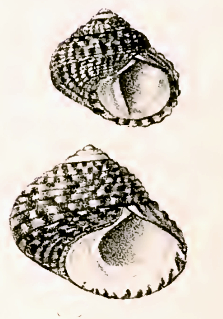
Bluish Top Shell

Bluish Top Shell

Diloma nigerrimum

G.W. Tryon, Public domain, via Wikimedia Commons

Speckled Periwinkle

Speckled Periwinkle

Diloma concameratum

G.W. Tryon, Public domain, via Wikimedia Commons

Side by side

Bluish Top ShellSpeckled Periwinkle
Scientific nameDiloma nigerrimum (Gmelin, 1791)Diloma concameratum (W. Wood, 1828)
English nameBluish Top ShellSpeckled Periwinkle
GroupMolluscsMolluscs
ClassGastropoda GastropodGastropoda Gastropod
OrderTrochidaTrochida
FamilyTrochidae Top ShellsTrochidae Top Shells
GenusDilomaDiloma
Named in17911828
Environmentmarinemarine
Countries on record4 countries2 countries
GBIF occurrence records729 records2,139 records

Rows where the two agree are shown in grey.

Where each is found

Both recorded in 2 countries

Only Bluish Top Shell (2)

From Catalogue of Life checklists and GBIF occurrence records. A country missing from a list means no record is held, which is not proof of absence.

Checked facts

Bluish Top ShellSpeckled Periwinkle
Appearance
  • The shell is solid, black, imperforate, depressed, and globose. English Wikipedia
  • The shell has numerous closely spaced spiral striae that may be nearly obsolete. English Wikipedia
  • Oblique growth lines cross the spiral striae and are often strongly developed. English Wikipedia
  • The shell is bluish-black or black, although beach-worn specimens can be reddish or brownish. English Wikipedia
  • The shell epidermis is fairly thick and solid and appears shiny in fresh specimens. English Wikipedia
  • The shell spire is short and ranges from conoidal to conical. English Wikipedia
  • The shell apex may be rounded or acute. English Wikipedia
  • The protoconch comprises two spirally striate, lightly pearly whorls that are sometimes reddish. English Wikipedia
  • The shell has four to five slightly convex whorls that increase rapidly in size. English Wikipedia
  • The body whorl is generally depressed or subconcave beneath the suture. English Wikipedia
  • The shell base is rounded, eroded, and iridescent near the aperture. English Wikipedia
  • The suture is linear and bordered below by a strong cord. English Wikipedia
  • The aperture is large, oblique, greenish-iridescent, and closely lirate. English Wikipedia
  • The outer lip is convex, relatively thin and sharp, with a narrow black inner margin followed by a broad opaque white band. English Wikipedia
  • The white band inside the outer lip is sometimes brilliantly iridescent. English Wikipedia
  • The columella is concave and slightly subdentate below, with a broad, flattened or excavated face. English Wikipedia
  • The columella consists mainly of an opaque white layer that also lines the base but does not reach the lip edge. English Wikipedia
  • The parietal wall has a nacreous band joining the ends of the peristome. English Wikipedia
  • The outer boundary of the nacreous band is light brown or white. English Wikipedia
  • The shell has a globose-conical shape and is generally rather depressed. English Wikipedia
  • The shell is yellow and black, with tessellated or longitudinally striped patterns. English Wikipedia
  • The shell has a very short conical spire and usually an acute apex. English Wikipedia
  • The shell has five slightly convex whorls. English Wikipedia
  • The shell whorls have strong spiral ridges, with 13 or 14 ridges on the last whorl. English Wikipedia
  • The outer shell layer is thick and typically yellow and purplish-black or black veined with yellow. English Wikipedia
  • Some specimens have predominantly black shells, while others have almost no visible black coloration. English Wikipedia
  • The shell has a large oblique aperture. English Wikipedia
  • The columella is white and has two small teeth below. English Wikipedia
Size
BehaviourNo checked fact yet
  • Some individuals remain exposed to substrate temperatures exceeding 50 °C despite occupying cooler areas beneath boulders. pmc.ncbi.nlm.nih.gov
Distribution
  • The species is endemic to New Zealand and the west coast of South America. English Wikipedia
  • The species occurs off New South Wales, South Australia, Tasmania, Victoria and Western Australia. English Wikipedia
Other
  • Genetic analysis indicates that the New Zealand and South American morphs belong to the same species despite differences in their dentition. English Wikipedia
  • The species is identified as more thermally sensitive than some other intertidal snails studied. pmc.ncbi.nlm.nih.gov

In brief

Bluish Top Shell

The species is endemic to New Zealand and the west coast of South America. It has a solid, black or bluish-black shell with numerous spiral striae and oblique growth lines. Full profile

Speckled Periwinkle

The Speckled Periwinkle is a mollusc with a globose-conical, generally rather depressed shell. It occurs off New South Wales, South Australia, Tasmania, Victoria and Western Australia. It is more thermally sensitive than some other intertidal snails studied. Full profile

Compare something else

Page built on 29 November 2026 from the data on the two species pages, where every source is listed.

Cite this page

ScientificNames.org. (2026). Bluish Top Shell vs Speckled Periwinkle. Retrieved November 29, 2026, from https://scientificnames.org/compare/bluish-top-shell-vs-speckled-periwinkle