Species · Molluscs
Wavy Top Diloma concameratum
The scientific name of the Wavy Top is Diloma concameratum. It is a species of mollusc in the family Trochidae (top shells), order Trochida. The name dates from 1828.
- Scientific name
- Diloma concameratum (W. Wood, 1828)
- Common name
- Wavy Top
- Genus
- Diloma
- Family
- Trochidae (Top Shells)
- Order
- Trochida
- Class
- Gastropoda
- Environment
- marine
- Recorded in
- 2 countries
- Name status
- accepted in the Catalogue of Life
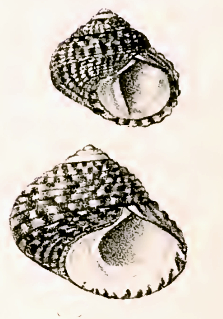
Overview
Diloma concameratum, common name the speckled periwinkle, is a species of sea snail, a marine gastropod mollusk in the family Trochidae, the top snails.
Classification of the Wavy Top
| Kingdom | Animalia |
|---|---|
| Phylum | Mollusca |
| Class | Gastropoda (Gastropod) |
| Subclass | Vetigastropoda |
| Order | Trochida |
| Superfamily | Trochoidea |
| Family | Trochidae (Top Shells) |
| Subfamily | Monodontinae |
| Genus | Diloma |
| Species | Diloma concameratum (W. Wood, 1828) |
Where the Wavy Top is found
Checklists and occurrence records place Diloma concameratum in 2 countries. GBIF holds 2,139 georeferenced records of it.
Countries
Regions and cities with the most records
- Tasmania, Australia 346
- Adelaide, Australia 211
- South Australia, Australia 179
- Victoria, Australia 160
- New South Wales, Australia 118
- Sydney, Australia 53
- Devonport, Australia 45
- Frankston East, Australia 42
- Burnie, Australia 41
- Hobart, Australia 38
- Western Australia, Australia 37
- Torquay, Australia 27
- Burwood, Australia 21
- Adelaide Hills, Australia 17
- Geelong, Australia 16
- Batemans Bay, Australia 12
- Melbourne, Australia 12
- Central Coast, Australia 11
- Warrnambool, Australia 10
- Albany, Australia 9
- Whyalla, Australia 9
- St Albans, Australia 6
- Wollongong, Australia 6
A number beside a place is its count of GBIF occurrence records. A place without a number comes from a checklist alone. Records show where a species has been observed or collected, which can include escapes and vagrants.
Common names
English
- Wavy Top
- Speckled Periwinkle
- Wavy Periwinkle
Names in 1 other language
- Japanese
- イシガキシタダミ
Synonyms
4 other scientific names have been used for this species and are now treated as synonyms of Diloma concameratum.
- Austrocochlea concamerata (W. Wood, 1828)
- Trochus concameratus W. Wood, 1828
- Trochus striolatus Quoy & Gaimard, 1834
- Trochus viridis W. Wood, 1828 ambiguous synonym
Related species
-
 Scorched MonodontDiloma aethiops
-
 Diloma zelandicum
-
 Mudflat Top ShellDiloma subrostratum
-
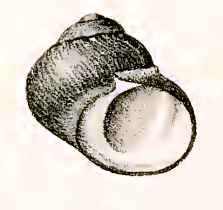 Bluish Top ShellDiloma nigerrimum
-
 Knobbed Top SnailDiloma bicanaliculatum
- Diloma samoaense
-
 Diloma radula
- Diloma durvillaea
Compare
Questions and answers
What is the scientific name of the Wavy Top?
The scientific name of the Wavy Top is Diloma concameratum. Written with its author, the full name is Diloma concameratum (W. Wood, 1828).
Which family does the Wavy Top belong to?
Diloma concameratum belongs to the family Trochidae, in the order Trochida and the class Gastropoda.
Where is the Wavy Top found?
Checklists and occurrence records place Diloma concameratum in 2 countries: Australia and New Zealand.
What other names does the Wavy Top have?
Diloma concameratum is also known in English as Speckled Periwinkle and Wavy Periwinkle.
Sources
Data
- Catalogue of Life, 2026-10-16 XR cc by
- Global Biodiversity Information Facility CC BY 4.0
- Wikidata CC0
- English Wikipedia CC BY-SA 4.0
- GeoNames CC BY 4.0
- Wikimedia Commons per image; credit shown with each image
- Within the Catalogue of Life, this name comes from World Register of Marine Species cc by
This species in other databases
Page built on 26 November 2026. See how the catalog is made and all sources and licences.
Cite this page
ScientificNames.org. (2026). Diloma concameratum (Wavy Top). Retrieved November 26, 2026, from https://scientificnames.org/species/diloma-concameratum
“Diloma concameratum (Wavy Top).” ScientificNames.org, 2026, scientificnames.org/species/diloma-concameratum. Accessed 26 Nov. 2026.
ScientificNames.org. “Diloma concameratum (Wavy Top).” Accessed November 26, 2026. https://scientificnames.org/species/diloma-concameratum.
@misc{scientificnames_diloma_concameratum_wavy_top,
  author = {{ScientificNames.org}},
  title = {Diloma concameratum (Wavy Top)},
  year = {2026},
  url = {https://scientificnames.org/species/diloma-concameratum},
  note = {Accessed 2026-11-26}
}