Comparison

Impressed Odostome vs Two-groove Odostome

Impressed Odostome (Boonea impressa) and Two-groove Odostome (Boonea bisuturalis) both belong to the genus Boonea and part ways below it. Both are recorded in 2 countries.
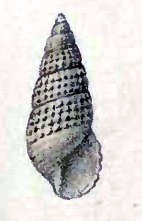
Impressed Odostome

Impressed Odostome

Boonea impressa

G.W. Tryon, Public domain, via Wikimedia Commons

Two-groove Odostome

Two-groove Odostome

Boonea bisuturalis

Eric A. Lazo-Wasem, CC0, via Wikimedia Commons

Side by side

Impressed OdostomeTwo-groove Odostome
Scientific nameBoonea impressa (Say, 1822)Boonea bisuturalis (Say, 1822)
English nameImpressed OdostomeTwo-groove Odostome
GroupMolluscsMolluscs
ClassGastropoda GastropodGastropoda Gastropod
FamilyPyramidellidae PyramsPyramidellidae Pyrams
GenusBooneaBoonea
Named in18221822
Environmentmarinemarine
Countries on record2 countries3 countries
GBIF occurrence records682 records610 records

Rows where the two agree are shown in grey.

Where each is found

Both recorded in 2 countries

Only Two-groove Odostome (1)

From Catalogue of Life checklists and GBIF occurrence records. A country missing from a list means no record is held, which is not proof of absence.

Checked facts

Impressed OdostomeTwo-groove Odostome
Appearance
  • The shell is elongate, conical, and dextrally coiled, with a sharply pointed apex. invasions.si.edu
  • The shell is dull white and covered by a thin brownish periostracum. invasions.si.edu
  • The shell has an oval aperture with a lower lip edge that projects outward. invasions.si.edu
  • An oblique fold is present inside the shell aperture on the columella. invasions.si.edu
  • The operculum is horn-colored. invasions.si.edu
Size
HabitatNo checked fact yet
  • The species inhabits rocky intertidal areas, oyster bars, mudflats, marinas, and docks. invasions.si.edu
  • In San Francisco Bay, the species is known mostly from mudflats. invasions.si.edu
  • The species occurs in shallow water on the shells or bodies of other mollusks. invasions.si.edu
Diet
  • The species feeds on the body fluids of host invertebrates. invasions.si.edu
  • Recorded food hosts include eastern oysters and softshell clams. invasions.si.edu
  • Frequently recorded hosts include common periwinkles, alternate bittiums, blue mussels, and eastern mudsnails. invasions.si.edu
  • In experiments, starved individuals fed on 37 mollusk species. invasions.si.edu
  • Experimental observations did not record feeding on polychaetes or tunicates. invasions.si.edu
Behaviour
  • The species is an ectoparasite whose preferred host is the eastern oyster (Crassostrea virginica). English Wikipedia
  • The species is a pyramidellid endoparasitic gastropod. pmc.ncbi.nlm.nih.gov
  • The principal cohort increases in length throughout the year until death and is subsequently replaced by a new cohort. pmc.ncbi.nlm.nih.gov
  • Juveniles occur predominantly during the middle of summer. pmc.ncbi.nlm.nih.gov
  • The species is an ectoparasite that commonly lives on the shells of other mollusks. invasions.si.edu
Reproduction
  • The species is a simultaneous hermaphrodite. invasions.si.edu
  • Individuals born during June to September spawning events produce spermatophores by October when they are smaller than 3.5 mm. invasions.si.edu
  • Spermatophores are transferred to another individual and stored over winter. invasions.si.edu
  • Egg masses contain between 21 and 276 eggs, with a mean of 92 eggs. invasions.si.edu
  • Egg masses are deposited on host shells, shells of other individuals, or other surfaces. invasions.si.edu
  • At temperatures of 17–20°C, eggs hatch after four days. invasions.si.edu
  • The planktotrophic larvae take 16–20 days to metamorphose. invasions.si.edu
  • Larval development is planktotrophic. invasions.si.edu
LifespanNo checked fact yet
Distribution
  • The species occurs in the Gulf of Mexico off Louisiana and Texas and around Yucatan, Mexico. English Wikipedia
  • The species occurs in the Northwest Atlantic Ocean off Maryland, North Carolina, South Carolina, Virginia, Georgia, and Florida. English Wikipedia
  • The species occurs in the Atlantic Ocean off Brazil. English Wikipedia
  • The species is distributed along the coasts of the Gulf of Mexico and Atlantic Ocean. pmc.ncbi.nlm.nih.gov
No checked fact yet
ConservationNo checked fact yet
  • High densities may affect the growth and survival of mollusks, although these effects have not been quantified. invasions.si.edu
  • The species could threaten local oyster populations in Mexican waters, but its abundance and impacts there are unknown. invasions.si.edu
Other
  • The species belongs to a genus containing twelve known gastropod species. English Wikipedia
  • The species has been used as a biological indicator to estimate the timing of oyster harvesting at archaeological sites. pmc.ncbi.nlm.nih.gov
  • The species is inadvertently collected alongside oysters during harvesting. pmc.ncbi.nlm.nih.gov
  • The species is one of eleven recognized species in the genus Boonea. English Wikipedia

In brief

Impressed Odostome

The impressed odostome (Boonea impressa) is a gastropod mollusc in the family Pyramidellidae. It occurs along the coasts of the Gulf of Mexico and Atlantic Ocean. It is an ectoparasite that preferentially feeds on the soft tissue of eastern oysters (Crassostrea virginica). Full profile

Two-groove Odostome

The two-groove odostome is a mollusc in the family Pyramidellidae and class Gastropoda. It inhabits rocky intertidal areas, oyster bars, mudflats, marinas, and docks. It is an ectoparasite that commonly lives on the shells of other mollusks and feeds on their body fluids. Full profile

Compare something else

Page built on 29 November 2026 from the data on the two species pages, where every source is listed.

Cite this page

ScientificNames.org. (2026). Impressed Odostome vs Two-groove Odostome. Retrieved November 29, 2026, from https://scientificnames.org/compare/impressed-odostome-vs-two-groove-odostome