Comparison

Conservancy Fairy Shrimp vs Circumpolar Fairy Shrimp

Conservancy Fairy Shrimp (Branchinecta conservatio) and Circumpolar Fairy Shrimp (Branchinecta paludosa) both belong to the genus Branchinecta and part ways below it. Both are recorded in 1 country.
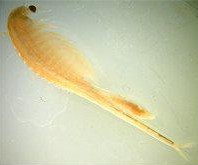
Conservancy Fairy Shrimp

Conservancy Fairy Shrimp

Branchinecta conservatio

Dwight Harvey, USFWS, Public domain, via Wikimedia Commons

Circumpolar Fairy Shrimp

Circumpolar Fairy Shrimp

Branchinecta paludosa

Georg Ossian Sars, zoologist and taxonomist from Norway, Public domain, via Wikimedia Commons

Side by side

Conservancy Fairy ShrimpCircumpolar Fairy Shrimp
Scientific nameBranchinecta conservatio Eng, Belk & Eriksen, 1990Branchinecta paludosa (O. F. Müller, 1788)
English nameConservancy Fairy ShrimpCircumpolar Fairy Shrimp
GroupCrustaceansCrustaceans
ClassBranchiopodaBranchiopoda
OrderAnostraca Brine ShrimpAnostraca Brine Shrimp
FamilyBranchinectidaeBranchinectidae
GenusBranchinectaBranchinecta
Named in19901788
Red List categoryEndangeredNot recorded
Environmentfreshwaterfreshwater
Countries on record1 country9 countries
GBIF occurrence records143 records1,044 records

Rows where the two agree are shown in grey.

Where each is found

Both recorded in 1 country

Only Circumpolar Fairy Shrimp (8)

From Catalogue of Life checklists and GBIF occurrence records. A country missing from a list means no record is held, which is not proof of absence.

Checked facts

Conservancy Fairy ShrimpCircumpolar Fairy Shrimp
Appearance
  • The species has a delicate, elongated body, large stalked compound eyes, no carapace and eleven pairs of swimming legs. English Wikipedia
  • A female specimen of the species is identified in the document. naturalreserves.ucdavis.edu
SizeNo checked fact yet
Habitat
  • The species inhabits relatively large, moderately turbid vernal pools containing cool water. English Wikipedia
  • Its vernal pool habitats fill during the rainy season and gradually dry from their shallow outer edges toward their deeper centres. English Wikipedia
No checked fact yet
Diet
  • The species feeds on algae, bacteria, protozoa, rotifers and detritus. English Wikipedia
No checked fact yet
Behaviour
  • Individuals swim upside down using coordinated, wave-like movements of their legs. English Wikipedia
  • The species has been observed and collected in vernal pools between early November and early April. English Wikipedia
  • Individuals disappear before their vernal pool habitat completely dries out. English Wikipedia
  • Fairy shrimp undergo aestivation using heat- and drought-resistant cysts. naturalreserves.ucdavis.edu
No checked fact yet
Reproduction
  • Females carry their eggs in a ventral brood sac. English Wikipedia
  • Females either release their eggs onto the pool bottom or retain them in the brood sac until they die and sink. English Wikipedia
  • The eggs remain in the dry pool bed after the habitat dries and hatch following rainfall and other environmental stimuli. English Wikipedia
  • The resting eggs of the species are called cysts. English Wikipedia
  • The cysts can withstand heat, cold and prolonged periods of desiccation. English Wikipedia
  • Only some cysts may hatch when the pools refill. English Wikipedia
  • The soil cyst bank can contain eggs produced across several breeding years. English Wikipedia
  • Hatching can start within the first week after a pool begins filling. English Wikipedia
  • The average time to maturity is 49 days. English Wikipedia
  • Maturity can occur in as few as 19 days in warmer pools. English Wikipedia
  • Young individuals spend 20–30 days in the larval stage after hatching. English Wikipedia
  • Individuals reach sexual maturity between late July and mid-August. English Wikipedia
  • Individuals remain reproductively active for 35–45 days after reaching sexual maturity. English Wikipedia
Distribution
  • The species is endemic to California, United States, according to the document's distribution summary. English Wikipedia
  • Recorded populations include Montgomery Field Vernal Pools in San Diego County, California. English Wikipedia
  • The species has been recorded in the Vina Plains in Tehama County, California. English Wikipedia
  • The species has been recorded south of Chico in Butte County, California. English Wikipedia
  • The Jepson Prairie Preserve and its surrounding area in Solano County, California, are recorded locations for the species. English Wikipedia
  • The Sacramento National Wildlife Refuge Complex in Glenn County, California, is a recorded location. English Wikipedia
  • Mapes Ranch west of Modesto, California, is a recorded location for the species. English Wikipedia
  • The species has been recorded at San Luis National Wildlife Refuge in Merced County, California. English Wikipedia
  • The Haystack Mountain and Yosemite Lake area in Merced County, California, is a recorded location. English Wikipedia
  • Two locations on Los Padres National Forest in Ventura County, California, are recorded for the species. English Wikipedia
  • A separate record reports the species in Minnesota. English Wikipedia
  • The species' historical distribution has not been established. English Wikipedia
  • The species may formerly have occupied suitable vernal pool habitats across much of California's Central Valley and southern coastal regions. English Wikipedia
  • Branchinecta paludosa has a Holarctic distribution. English Wikipedia
  • The species is widely distributed across the Arctic tundra of Eurasia, primarily north of latitude 60° N. English Wikipedia
  • The northernmost recorded limit of the species is 77° N at Ivanov Bay in the Novaya Zemlya archipelago. English Wikipedia
  • The species occurs as far south as the Tatra Mountains on the Polish–Slovak border, at approximately 49° N. English Wikipedia
  • Scattered populations of the species have been recorded in North America, mainly near the Arctic Ocean. English Wikipedia
Conservation
  • The conservancy fairy shrimp is classified as endangered under the Endangered Species Act of 1973. English Wikipedia
  • The species' vernal pool habitat is threatened by urban development, water supply and flood control projects, and agricultural land conversion. English Wikipedia
  • Between 60 and 85 percent of the habitat that formerly supported vernal pools was estimated to have been destroyed by 1973. English Wikipedia
  • The estimated annual loss rate of vernal pool habitat in California was two to three percent. English Wikipedia
  • The species is listed as endangered in the US Fish and Wildlife Service species profile. ecos.fws.gov
No checked fact yet
Other
  • The species belongs to the crustaceans category in the US Fish and Wildlife Service taxonomic record. fws.gov
No checked fact yet

In brief

Conservancy Fairy Shrimp

The Conservancy Fairy Shrimp (Branchinecta conservatio Eng, Belk & Eriksen, 1990) is a crustacean in the family Branchinectidae, order Anostraca and class Branchiopoda. The species inhabits relatively large, moderately turbid vernal pools containing cool water in California, United States. It has an elongated body, eleven pairs of swimming legs and resting eggs called cysts that withstand prolonged desiccation. Full profile

Circumpolar Fairy Shrimp

The circumpolar fairy shrimp is a freshwater fairy shrimp. It has a Holarctic distribution and occurs across the Arctic tundra of Eurasia, primarily north of latitude 60° N. Its northernmost recorded limit is 77° N at Ivanov Bay in the Novaya Zemlya archipelago. Full profile

Compare something else

Page built on 27 November 2026 from the data on the two species pages, where every source is listed.

Cite this page

ScientificNames.org. (2026). Conservancy Fairy Shrimp vs Circumpolar Fairy Shrimp. Retrieved November 27, 2026, from https://scientificnames.org/compare/conservancy-fairy-shrimp-vs-circumpolar-fairy-shrimp