Species · Crustaceans
Circumpolar Fairy Shrimp Branchinecta paludosa
The scientific name of the Circumpolar Fairy Shrimp is Branchinecta paludosa. It is a species of crustacean in the family Branchinectidae, order Anostraca. The name dates from 1788.
- Scientific name
- Branchinecta paludosa (O. F. Müller, 1788)
- Common name
- Circumpolar Fairy Shrimp
- Genus
- Branchinecta
- Family
- Branchinectidae
- Order
- Anostraca
- Class
- Branchiopoda
- Environment
- freshwater
- Recorded in
- 9 countries
- Name status
- accepted in the Catalogue of Life

Overview
The circumpolar fairy shrimp is a freshwater fairy shrimp. It has a Holarctic distribution and occurs across the Arctic tundra of Eurasia, primarily north of latitude 60° N. Its northernmost recorded limit is 77° N at Ivanov Bay in the Novaya Zemlya archipelago.
Written 27 November 2026 from the sources listed below. Each statement was checked against the passage it cites; statements that could not be supported were removed.
Appearance
The circumpolar fairy shrimp is a freshwater fairy shrimp.[1]
Habitat
The circumpolar fairy shrimp has a Holarctic distribution. It is widely distributed across the Arctic tundra of Eurasia, primarily north of latitude 60° N.[2][3]
Its northernmost recorded limit is 77° N at Ivanov Bay in the Novaya Zemlya archipelago. It occurs as far south as the Tatra Mountains on the Polish–Slovak border, at approximately 49° N.[4][5]
Scattered populations have been recorded in North America, mainly near the Arctic Ocean.[6]
Reproduction and life cycle
Young individuals spend 20–30 days in the larval stage after hatching. They reach sexual maturity between late July and mid-August.[7][8]
Individuals remain reproductively active for 35–45 days after reaching sexual maturity.[9]
Classification of the Circumpolar Fairy Shrimp
| Kingdom | Animalia |
|---|---|
| Phylum | Arthropoda |
| Subphylum | Crustacea |
| Class | Branchiopoda |
| Order | Anostraca (Brine Shrimp) |
| Suborder | Anostracina |
| Family | Branchinectidae |
| Genus | Branchinecta |
| Species | Branchinecta paludosa (O. F. Müller, 1788) |
Where the Circumpolar Fairy Shrimp is found
Checklists and occurrence records place Branchinecta paludosa in 9 countries across North America. GBIF holds 1,044 georeferenced records of it.
Countries
- Canada 397
- Finland 10
- Greenland 50
- Norway 350
- Poland 5
- Russia 36
- Slovakia 5
- Sweden 124
- United States 67
Regions and cities with the most records
- Nunavut, Canada 217
- Norrbotten, Sweden 71
- Manitoba, Canada 50
- Jämtland, Sweden 47
- Troms, Norway 20
- Finnmark, Norway 18
- Alaska, United States 13
- Tromsdalen, Norway 13
- Tromsø, Norway 13
- Wyoming, United States 11
- Nordland, Norway 9
- Lapland, Finland 8
- Zakopane, Poland 8
- Northwest Territories, Canada 5
- Sakha, Russia 5
- Alberta, Canada 4
- Qeqqata, Greenland 4
- Murmansk, Russia 3
- Nenets, Russia 3
- Newfoundland and Labrador, Canada 3
- Nuuk, Greenland 3
1 more country has a few records outside this range
These countries hold a few records of Branchinecta paludosa but lie outside the range the checklists give for it. Such records are often zoo or garden specimens, museum material or vagrants, so the species is not counted as occurring there.
Range as the checklists state it
Europe & Northern Asia (excluding China)
North America
A number beside a place is its count of GBIF occurrence records. A place without a number comes from a checklist alone. Records show where a species has been observed or collected, which can include escapes and vagrants.
Common names
English
- Circumpolar Fairy Shrimp
Names in 6 other languages
- Czech
- žábronožka severská
- Finnish
- pohjanlehtijalkainen
- Norwegian Bokmål
- langhalet tusenbeinkreps
- Polish
- Skrzelopływka bagienna
- Russian
- Бранхинекта болотная
- Slovak
- žiabronôžka severská
Synonyms
2 other scientific names have been used for this species and are now treated as synonyms of Branchinecta paludosa.
- Branchinecta arctica Packard, 1874
- Branchinecta groenlandica Packard, 1874
Subspecies and varieties
- Branchinecta paludosa paludosa subspecies
- Branchinecta paludosa tjanshanica subspecies
Related species
- Giant Fairy ShrimpBranchinecta gigas
-
 Vernal Pool Fairy ShrimpBranchinecta lynchi
-
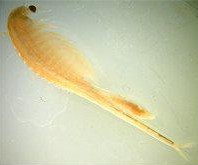 Conservancy Fairy ShrimpBranchinecta conservatio
-
 San Diego Fairy ShrimpBranchinecta sandiegonensis
- Longhorn Fairy ShrimpBranchinecta longiantenna
- Antarctic Fairy ShrimpBranchinecta gaini
- Branchinecta lutulenta
- Midvalley Fairy ShrimpBranchinecta mesovallensis
Compare
Questions and answers
What is the scientific name of the Circumpolar Fairy Shrimp?
The scientific name of the Circumpolar Fairy Shrimp is Branchinecta paludosa. Written with its author, the full name is Branchinecta paludosa (O. F. Müller, 1788).
Which family does the Circumpolar Fairy Shrimp belong to?
Branchinecta paludosa belongs to the family Branchinectidae, in the order Anostraca and the class Branchiopoda.
Where is the Circumpolar Fairy Shrimp found?
Checklists and occurrence records place Branchinecta paludosa in 9 countries, including Canada, Norway, Sweden, United States, Greenland and Russia.
Do fairy shrimp live in freshwater?
The circumpolar fairy shrimp is a freshwater fairy shrimp.[1]
Sources
Passages the profile rests on
- Branchinecta paludosa is a freshwater fairy shrimp. Source passage: “Branchinecta paludosa is a species of freshwater fairy shrimp” — English Wikipedia
- Branchinecta paludosa has a Holarctic distribution. Source passage: “Branchinecta paludosa is a species of freshwater fairy shrimp with a Holarctic distribution.” — English Wikipedia
- The species is widely distributed across the Arctic tundra of Eurasia, primarily north of latitude 60° N. Source passage: “B. paludosa is widely distributed in the Arctic tundra of Eurasia, chiefly above latitudes of 60° north.” — English Wikipedia
- The northernmost recorded limit of the species is 77° N at Ivanov Bay in the Novaya Zemlya archipelago. Source passage: “It reaches its northern limit, 77° north at Ivanov Bay in the Novaya Zemlya archipelago.” — English Wikipedia
- The species occurs as far south as the Tatra Mountains on the Polish–Slovak border, at approximately 49° N. Source passage: “Further populations exist as far south as the Tatra Mountains on the Polish–Slovak border at about 49° north.” — English Wikipedia
- Scattered populations of the species have been recorded in North America, mainly near the Arctic Ocean. Source passage: “There are scattered records from North America, mostly near the Arctic Ocean.” — English Wikipedia
- Young individuals spend 20–30 days in the larval stage after hatching. Source passage: “After hatching, young B. paludosa spend 20–30 days as larvae” — English Wikipedia
- Individuals reach sexual maturity between late July and mid-August. Source passage: “before reaching sexual maturity between the end of July and middle of August.” — English Wikipedia
- Individuals remain reproductively active for 35–45 days after reaching sexual maturity. Source passage: “They are then reproductive for 35–45 days.” — English Wikipedia
Data
- Catalogue of Life, 2026-10-16 XR cc by
- Global Biodiversity Information Facility CC BY 4.0
- Wikidata CC0
- GeoNames CC BY 4.0
- Wikimedia Commons per image; credit shown with each image
- Within the Catalogue of Life, this name comes from The Integrated Taxonomic Information System cc0
References
- Belk, Denton, & and Ján Brtek. (1995). Checklist of the Anostraca. Hydrobiologia, Vol. 298.
- Brtek, & Ján. (1997). Checklist of the valid and invalid names of the “large branchiopods” (Anostraca, Notostraca, Spinicaudata and Laevicaudata), with a survey of the taxonomy of all Branchiopoda. Zborník Slovenského Národného Múzea, Prírodné Vedy, Vol. 43.
- Rogers, & Christopher, D. (2013). Anostraca Catalogus (Crustacea: Branchiopoda). The Raffles Bulletin of Zoology, Vol. 61, No. 2.
This species in other databases
- Catalogue of Life N6H4
- Wikidata Q4020118
- iNaturalist 215441
- WoRMS urn:lsid:marinespecies.org:taxname:1214310
Page built on 27 November 2026. See how the catalog is made and all sources and licences.
Cite this page
ScientificNames.org. (2026). Branchinecta paludosa (Circumpolar Fairy Shrimp). Retrieved November 27, 2026, from https://scientificnames.org/species/branchinecta-paludosa
“Branchinecta paludosa (Circumpolar Fairy Shrimp).” ScientificNames.org, 2026, scientificnames.org/species/branchinecta-paludosa. Accessed 27 Nov. 2026.
ScientificNames.org. “Branchinecta paludosa (Circumpolar Fairy Shrimp).” Accessed November 27, 2026. https://scientificnames.org/species/branchinecta-paludosa.
@misc{scientificnames_branchinecta_paludosa_circumpolar_fairy_shrimp,
  author = {{ScientificNames.org}},
  title = {Branchinecta paludosa (Circumpolar Fairy Shrimp)},
  year = {2026},
  url = {https://scientificnames.org/species/branchinecta-paludosa},
  note = {Accessed 2026-11-27}
}