Comparison

Burrunan Dolphin vs False Killer Whale

Burrunan Dolphin (Tursiops australis) and False Killer Whale (Pseudorca crassidens) both belong to the family Delphinidae (oceanic dolphin) and part ways below it. Both are recorded in 1 country.

Burrunan Dolphin

Burrunan Dolphin

Tursiops australis

Unknown author, CC BY-SA 2.0 fr, via Wikimedia Commons

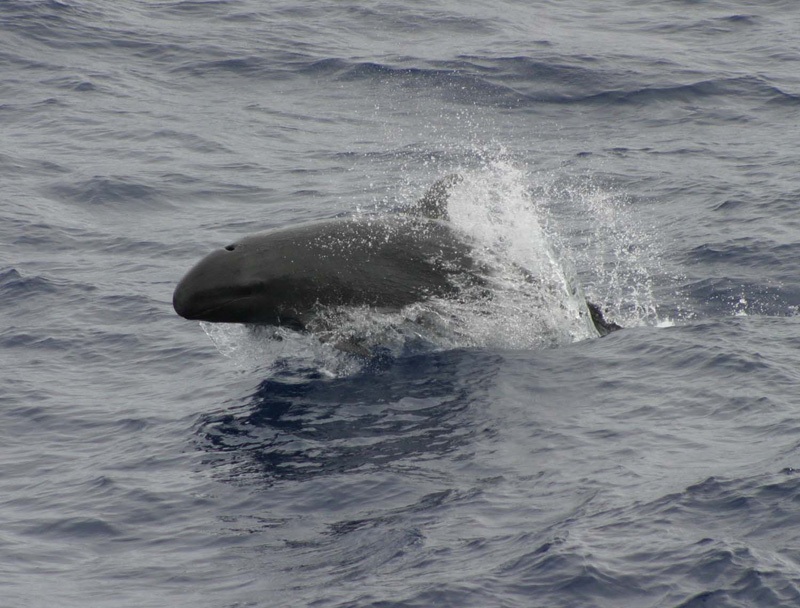
False Killer Whale

False Killer Whale

Pseudorca crassidens

Unknown author, Public domain, via Wikimedia Commons

Side by side

Burrunan DolphinFalse Killer Whale
Scientific nameTursiops australis Charlton-Robb, Gershwin, Thompson, Austin, Owen & McKechnie, 2011Pseudorca crassidens (Owen, 1846)
English nameBurrunan DolphinFalse Killer Whale
GroupMammalsMammals
ClassMammalia MammalMammalia Mammal
OrderCetacea CetaceanCetacea Cetacean
FamilyDelphinidae Oceanic DolphinDelphinidae Oceanic Dolphin
GenusTursiops Bottlenose DolphinPseudorca False Killer Whales
Named in20111846
Red List categoryNot recordedNear Threatened
Environmentmarinemarine
Countries on record1 country32 countries
GBIF occurrence records491 records9,197 records

Rows where the two agree are shown in grey.

Where each is found

Both recorded in 1 country

Only False Killer Whale (31)

From Catalogue of Life checklists and GBIF occurrence records. A country missing from a list means no record is held, which is not proof of absence.

Checked facts

Burrunan DolphinFalse Killer Whale
Appearance
  • The Burrunan dolphin has dark bluish-gray coloration on its upper body, head and sides, with a lighter gray stripe along its midline. English Wikipedia
  • The underside of the Burrunan dolphin is off-white, with this coloration sometimes extending over the eye and flipper. English Wikipedia
  • The false killer whale has a slender, dark gray or black body with a slightly lighter underside. English Wikipedia
  • The species has an elongated, tapered head without a distinct beak. English Wikipedia
  • Its dorsal fin is sickle-shaped. English Wikipedia
  • Its flippers are narrow, short and pointed, with a distinctive bulge along their leading edges. English Wikipedia
  • Its teeth are conical, with 14–21 teeth in the upper jaw and 16–24 in the lower jaw. English Wikipedia
  • The melon organ in its forehead is larger in males than in females. English Wikipedia
Size
  • The Burrunan dolphin measures between 2.27 and 2.78 metres in length. English Wikipedia
  • The Burrunan dolphin is smaller than the common bottlenose dolphin but larger than the Indo-Pacific bottlenose dolphin. English Wikipedia
No checked fact yet
Habitat
  • The Burrunan dolphin inhabits estuaries and sheltered bays along the southern Australian coast. English Wikipedia
  • The Burrunan dolphin uses bathymetric contours at depths of 5–10 metres and 10–15 metres in Port Phillip Bay. pmc.ncbi.nlm.nih.gov
  • The Burrunan dolphin uses the entire Port Phillip Bay region, with significantly more sightings in its southern zone than in other zones. pmc.ncbi.nlm.nih.gov
  • Bathymetry and benthic habitats are potential drivers of Burrunan dolphin distribution and habitat use in Port Phillip Bay. pmc.ncbi.nlm.nih.gov
  • The species inhabits tropical and subtropical marine waters. English Wikipedia
  • It generally inhabits open-ocean and deep-water environments but sometimes occurs near oceanic islands. English Wikipedia
  • The species prefers deep water in the open ocean away from land. australian.museum
DietNo checked fact yet
BehaviourNo checked fact yet
  • The species is highly social and commonly travels in groups of 10–20 individuals. English Wikipedia
  • Large groups can contain more than 500 individuals. English Wikipedia
  • Feeding groups may divide into smaller family groups containing four to six individuals. English Wikipedia
  • Individuals have been recorded remaining with the same pod for as long as 15 years. English Wikipedia
  • It can interact sexually with bottlenose dolphins and pilot whales. English Wikipedia
  • The species uses echolocation to navigate and locate prey. English Wikipedia
  • The species is an efficient pack hunter. australian.museum
ReproductionNo checked fact yet
Distribution
  • The Burrunan dolphin is endemic to south-eastern Australia. pmc.ncbi.nlm.nih.gov
  • The documented distribution of the Burrunan dolphin includes South Australia, eastern Tasmania and Victoria. pmc.ncbi.nlm.nih.gov
No checked fact yet
Conservation
  • The Burrunan dolphin is listed as Critically Endangered under Victoria's Flora and Fauna Guarantee Act 1988. English Wikipedia
  • The Burrunan dolphin has not been listed under Australia's Environment Protection and Biodiversity Conservation Act or the IUCN Red List because of data deficiencies. English Wikipedia
  • Small population size, low genetic diversity, contaminants and pathogen exposure are identified as threats to the Burrunan dolphin. English Wikipedia
  • Dolphin-swim tour vessels can distract Burrunan dolphins from foraging and resting. English Wikipedia
  • The Port Phillip Bay Burrunan dolphin population may benefit from expanding marine protected areas in the northern and southern parts of the bay. pmc.ncbi.nlm.nih.gov
  • The IUCN classifies the species as Near Threatened. English Wikipedia
  • The Hawaiian population was recognized as endangered by the United States National Oceanic and Atmospheric Administration in November 2012. English Wikipedia
  • Incidental deaths associated with fishing operations are a threat to the species. australian.museum
  • Some populations, particularly those off Japan and parts of Asia, are deliberately hunted. australian.museum
  • The species is captured for the oceanarium trade. australian.museum
  • Fishing-gear entanglement can cause drowning, restricted circulation and impaired hunting ability. English Wikipedia
  • The species is covered by the Agreement on the Conservation of Small Cetaceans of the Baltic, North East Atlantic, Irish and North Seas. English Wikipedia
UsesNo checked fact yet
  • False killer whales have been kept in public aquariums in Japan, the United States, the Netherlands, Hong Kong and Australia. English Wikipedia
Similar species
  • The Burrunan dolphin has been taxonomically compared with the Indo-Pacific bottlenose dolphin (Tursiops aduncus). English Wikipedia
  • A 2020 osteological study found that Burrunan dolphin skull measurements fell within the range of Tursiops truncatus. English Wikipedia
  • The false killer whale's closest living relatives include Risso's dolphin, the melon-headed whale, the pygmy killer whale and pilot whales. English Wikipedia
  • The species can hybridize with the common bottlenose dolphin to produce fertile offspring known as wholphins. English Wikipedia
Name originNo checked fact yet
  • The common name refers to the resemblance between the species' skull and that of the killer whale. English Wikipedia
Other
  • The Burrunan dolphin was formally named Tursiops australis in 2011 by Kate Charlton-Robb and colleagues. English Wikipedia
  • The taxonomic status of Tursiops australis is disputed among scientific studies. pmc.ncbi.nlm.nih.gov
  • The American Society of Mammalogists classifies Tursiops australis under Tursiops aduncus while acknowledging debate about its taxonomic status. English Wikipedia
No checked fact yet

In brief

Burrunan Dolphin

The Burrunan Dolphin is a mammal in the family Delphinidae, order Cetacea, and class Mammalia, formally named Tursiops australis in 2011. It is endemic to south-eastern Australia, with a documented distribution including South Australia, eastern Tasmania and Victoria. It has dark bluish-gray upper coloration, a lighter gray midline stripe and an off-white underside. Full profile

False Killer Whale

Pseudorca crassidens inhabits tropical and subtropical marine waters, primarily in open-ocean and deep-water environments. It has a slender, dark gray or black body, an elongated tapered head without a distinct beak and a sickle-shaped dorsal fin. Full profile

Compare something else

Page built on 29 November 2026 from the data on the two species pages, where every source is listed.

Cite this page

ScientificNames.org. (2026). Burrunan Dolphin vs False Killer Whale. Retrieved November 29, 2026, from https://scientificnames.org/compare/burrunan-dolphin-vs-false-killer-whale