Species · Mammals
Burrunan Dolphin Tursiops australis
The scientific name of the Burrunan Dolphin is Tursiops australis. It is a species of mammal in the family Delphinidae (oceanic dolphin), order Cetacea. The name dates from 2011.
- Scientific name
- Tursiops australis Charlton-Robb, Gershwin, Thompson, Austin, Owen & McKechnie, 2011
- Common name
- Burrunan Dolphin
- Genus
- Tursiops
- Family
- Delphinidae (Oceanic Dolphin)
- Order
- Cetacea
- Class
- Mammalia
- Environment
- marine
- Recorded in
- 1 country
- Name status
- accepted in the Catalogue of Life

Overview
The Burrunan Dolphin is a mammal in the family Delphinidae, order Cetacea, and class Mammalia, formally named Tursiops australis in 2011. It is endemic to south-eastern Australia, with a documented distribution including South Australia, eastern Tasmania and Victoria. It has dark bluish-gray upper coloration, a lighter gray midline stripe and an off-white underside.
Written 26 November 2026 from the sources listed below. Each statement was checked against the passage it cites; statements that could not be supported were removed.
Appearance
The Burrunan Dolphin has dark bluish-gray coloration on its upper body, head and sides, with a lighter gray stripe along its midline. Its underside is off-white, and this coloration sometimes extends over the eye and flipper.[1][2]
The Burrunan Dolphin measures between 2.27 and 2.78 metres in length. It is smaller than the common bottlenose dolphin but larger than the Indo-Pacific bottlenose dolphin.[3][4]
Habitat
The Burrunan Dolphin inhabits estuaries and sheltered bays along the southern Australian coast.[5]
In Port Phillip Bay, it uses bathymetric contours at depths of 5–10 metres and 10–15 metres. It uses the entire bay region, with significantly more sightings in its southern zone than in other zones.[6][7]
Bathymetry and benthic habitats are potential drivers of its distribution and habitat use in Port Phillip Bay.[8]
Conservation
The Burrunan Dolphin is listed as Critically Endangered under Victoria's Flora and Fauna Guarantee Act 1988. It has not been listed under Australia's Environment Protection and Biodiversity Conservation Act or the IUCN Red List because of data deficiencies.[9][10]
Small population size, low genetic diversity, contaminants and pathogen exposure are identified threats. Dolphin-swim tour vessels can distract Burrunan Dolphins from foraging and resting.[11][12]
The Port Phillip Bay Burrunan Dolphin population may benefit from expanding marine protected areas in the northern and southern parts of the bay.[13]
Similar species
The Burrunan Dolphin has been taxonomically compared with the Indo-Pacific bottlenose dolphin (Tursiops aduncus). A 2020 osteological study found that its skull measurements fell within the range of Tursiops truncatus.[14][15]
The taxonomic status of Tursiops australis is disputed among scientific studies. The American Society of Mammalogists classifies it under Tursiops aduncus while acknowledging debate about its taxonomic status.[16][17]
Classification of the Burrunan Dolphin
| Kingdom | Animalia |
|---|---|
| Phylum | Chordata |
| Subphylum | Vertebrata |
| Infraphylum | Gnathostomata |
| Parvphylum | Osteichthyes |
| Megaclass | Tetrapoda |
| Class | Mammalia (Mammal) |
| Subclass | Theria |
| Infraclass | Eutheria |
| Order | Cetacea (Cetacean) |
| Suborder | Odontoceti (Toothed Whales) |
| Family | Delphinidae (Oceanic Dolphin) |
| Genus | Tursiops (Bottlenose Dolphin) |
| Species | Tursiops australis Charlton-Robb, Gershwin, Thompson, Austin, Owen & McKechnie, 2011 |
This name was added to the Catalogue of Life from a contributing dataset by automated merging and has not yet been reviewed by its editors.
Where the Burrunan Dolphin is found
Checklists and occurrence records place Tursiops australis in 1 country. GBIF holds 491 georeferenced records of it.
Countries
Regions and cities with the most records
- Victoria, Australia 204
- Bairnsdale, Australia 98
- Frankston East, Australia 89
- Melbourne, Australia 35
- Burwood, Australia 30
- Balwyn North, Australia 22
- St Albans, Australia 16
- Geelong, Australia 13
- Torquay, Australia 5
A number beside a place is its count of GBIF occurrence records. A place without a number comes from a checklist alone. Records show where a species has been observed or collected, which can include escapes and vagrants.
Common names
English
- Burrunan Dolphin
Related species
-
 Common Bottlenose DolphinTursiops truncatus
-
 Indo-Pacific Bottlenose DolphinTursiops aduncus
-
 Tamanend's Bottlenose DolphinTursiops erebennus
-
 Killer WhaleOrcinus orca
-
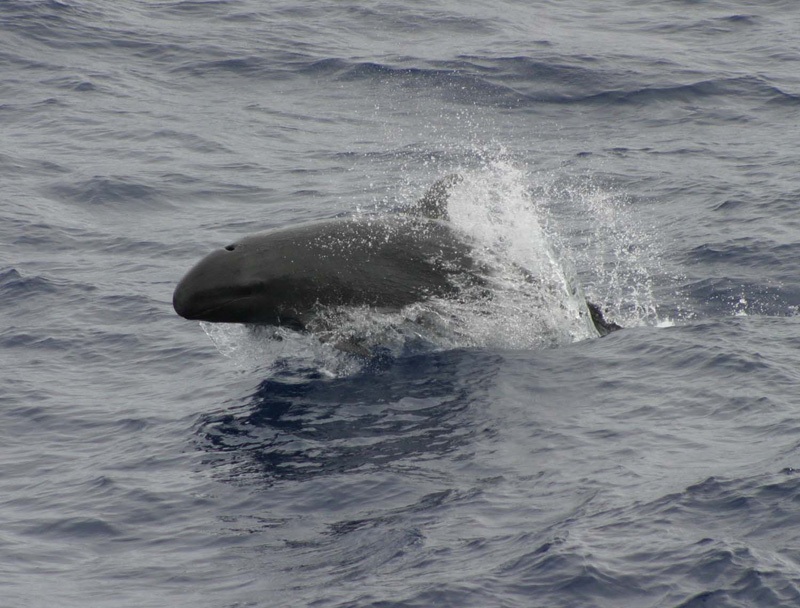 False Killer WhalePseudorca crassidens
-
 Irrawaddy DolphinOrcaella brevirostris
-
 Risso's DolphinGrampus griseus
-
 Common DolphinDelphinus delphis
Compare
Questions and answers
What is the scientific name of the Burrunan Dolphin?
The scientific name of the Burrunan Dolphin is Tursiops australis. Written with its author, the full name is Tursiops australis Charlton-Robb, Gershwin, Thompson, Austin, Owen & McKechnie, 2011.
Which family does the Burrunan Dolphin belong to?
Tursiops australis belongs to the family Delphinidae, in the order Cetacea and the class Mammalia.
Where is the Burrunan Dolphin found?
Checklists and occurrence records place Tursiops australis in 1 country: Australia.
What is dolphin's scientific name?
The scientific name given to the Burrunan Dolphin is Tursiops australis.[18]
What type of habitat do dolphins live in?
The Burrunan Dolphin inhabits estuaries and sheltered bays along the southern Australian coast.[5]
Sources
Passages the profile rests on
- The Burrunan dolphin has dark bluish-gray coloration on its upper body, head and sides, with a lighter gray stripe along its midline. Source passage: “The Burrunan dolphin is dark bluish-gray at the top near to the dorsal fin extending over the head and sides of the body. Along the midline, it is a lighter gray” — English Wikipedia
- The underside of the Burrunan dolphin is off-white, with this coloration sometimes extending over the eye and flipper. Source passage: “Ventrally, it is off-white, which reaches over the eye and the flipper in some instances.” — English Wikipedia
- The Burrunan dolphin measures between 2.27 and 2.78 metres in length. Source passage: “measuring between 2.27 and 2.78 m (7.4 and 9.1 ft) in length.” — English Wikipedia
- The Burrunan dolphin is smaller than the common bottlenose dolphin but larger than the Indo-Pacific bottlenose dolphin. Source passage: “it is smaller than the common bottlenose dolphin, but larger than the Indo-Pacific bottlenose dolphin” — English Wikipedia
- The Burrunan dolphin inhabits estuaries and sheltered bays along the southern Australian coast. Source passage: “The species is found in estuaries and sheltered bays of the southern coasts of Australia” — English Wikipedia
- The Burrunan dolphin uses bathymetric contours at depths of 5–10 metres and 10–15 metres in Port Phillip Bay. Source passage: “with the dolphins significantly favouring the 5–10 and 10–15 m contour depths.” — pmc.ncbi.nlm.nih.gov
- The Burrunan dolphin uses the entire Port Phillip Bay region, with significantly more sightings in its southern zone than in other zones. Source passage: “We found that Burrunan dolphins utilise the entire bay, further extending the species range, and show a significantly higher number of sightings in the southern zone than in any other zones.” — pmc.ncbi.nlm.nih.gov
- Bathymetry and benthic habitats are potential drivers of Burrunan dolphin distribution and habitat use in Port Phillip Bay. Source passage: “we found bathymetry and benthic habitats were potential drivers for the Burrunan dolphins distribution and habitat use within the bay” — pmc.ncbi.nlm.nih.gov
- The Burrunan dolphin is listed as Critically Endangered under Victoria's Flora and Fauna Guarantee Act 1988. Source passage: “it is listed as 'Critically Endangered' under the State of Victoria's Flora and Fauna Guarantee Act 1988.” — English Wikipedia
- The Burrunan dolphin has not been listed under Australia's Environment Protection and Biodiversity Conservation Act or the IUCN Red List because of data deficiencies. Source passage: “The Burrunan dolphin is yet to be listed, or categorized, under the EPBC Act or IUCN Red List due to data deficiencies” — English Wikipedia
- Small population size, low genetic diversity, contaminants and pathogen exposure are identified as threats to the Burrunan dolphin. Source passage: “low genetic diversity and low population sizes, high mercury levels, and increased risk from pathogens and contaminants.” — English Wikipedia
- Dolphin-swim tour vessels can distract Burrunan dolphins from foraging and resting. Source passage: “dolphin-swim tour vessels, distract Burrunan dolphins from foraging and resting.” — English Wikipedia
- The Port Phillip Bay Burrunan dolphin population may benefit from expanding marine protected areas in the northern and southern parts of the bay. Source passage: “We recommend expansion of the current marine protected areas in the north and south of the bay.” — pmc.ncbi.nlm.nih.gov
- The Burrunan dolphin has been taxonomically compared with the Indo-Pacific bottlenose dolphin (Tursiops aduncus). Source passage: “indicate that it is a subspecies of the Indo-Pacific bottlenose dolphin (Tursiops aduncus).” — English Wikipedia
- A 2020 osteological study found that Burrunan dolphin skull measurements fell within the range of Tursiops truncatus. Source passage: “found that the Burrunan dolphin fell well within T. truncatus using both techniques.” — English Wikipedia
- The taxonomic status of Tursiops australis is disputed among scientific studies. Source passage: “The taxonomic status of the Burrunan dolphins, however, is in dispute” — pmc.ncbi.nlm.nih.gov
- The American Society of Mammalogists classifies Tursiops australis under Tursiops aduncus while acknowledging debate about its taxonomic status. Source passage: “The American Society of Mammalogists has followed the results of this study and now classifies T. australis under T. aduncus, although it also acknowledges the debate over its status.” — English Wikipedia
- The Burrunan dolphin was formally named Tursiops australis in 2011 by Kate Charlton-Robb and colleagues. Source passage: “It was formally named Tursiops australis by the researcher who described it, Kate Charlton-Robb of Monash University, and colleagues.” — English Wikipedia
Data
- Catalogue of Life, 2026-10-16 XR cc by
- Global Biodiversity Information Facility CC BY 4.0
- Wikidata CC0
- GeoNames CC BY 4.0
- Wikimedia Commons per image; credit shown with each image
- Within the Catalogue of Life, this name comes from World Register of Marine Species cc by
References
- Charlton-Robb, K., L. Gershwin, R. Thompson, J. Austin, K. Owen and S. McKechnie. 2011. A new dolphin species, the Burrunan dolphin Tursiops australis sp. nov., endemic to southern Australian coastal waters. PLOS one 6:1-17. Link where the name was published
- Looby, A., Erbe, C., Bravo, S., Cox, K., Davies, H. L., Di Iorio, L., Jézéquel, Y., Juanes, F., Martin, C. W., Mooney, T. A., Radford, C., Reynolds, L. K., Rice, A. N., Riera, A., Rountree, R., Spriel, B., Stanley, J., Vela, S., & Parsons, M. J. G. (2023). Global inventory of species categorized by known underwater sonifery.
This species in other databases
- Catalogue of Life TMHK3
- Wikidata Q1016955
- WoRMS urn:lsid:marinespecies.org:taxname:584858
- NCBI Taxonomy txid1086039
Page built on 26 November 2026. See how the catalog is made and all sources and licences.
Cite this page
ScientificNames.org. (2026). Tursiops australis (Burrunan Dolphin). Retrieved November 26, 2026, from https://scientificnames.org/species/tursiops-australis
“Tursiops australis (Burrunan Dolphin).” ScientificNames.org, 2026, scientificnames.org/species/tursiops-australis. Accessed 26 Nov. 2026.
ScientificNames.org. “Tursiops australis (Burrunan Dolphin).” Accessed November 26, 2026. https://scientificnames.org/species/tursiops-australis.
@misc{scientificnames_tursiops_australis_burrunan_dolphin,
  author = {{ScientificNames.org}},
  title = {Tursiops australis (Burrunan Dolphin)},
  year = {2026},
  url = {https://scientificnames.org/species/tursiops-australis},
  note = {Accessed 2026-11-26}
}