Comparison
Butternut Squash vs Buffalo Gourd
Butternut Squash (Cucurbita moschata) and Buffalo Gourd (Cucurbita foetidissima) both belong to the genus Cucurbita (gourd) and part ways below it. Both are recorded in 2 countries.
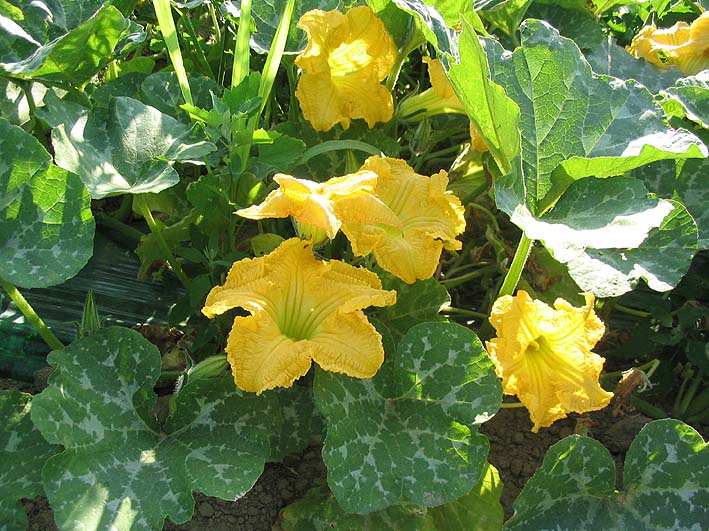


Side by side
| Butternut Squash | Buffalo Gourd | |
|---|---|---|
| Scientific name | Cucurbita moschata (Duchesne) Duchesne ex Poir. | Cucurbita foetidissima Kunth |
| English name | Butternut Squash | Buffalo Gourd |
| Group | Flowering plants | Flowering plants |
| Class | Magnoliopsida | Magnoliopsida |
| Order | Cucurbitales | Cucurbitales |
| Family | Cucurbitaceae Gourd Family | Cucurbitaceae Gourd Family |
| Genus | Cucurbita Gourd | Cucurbita Gourd |
| Red List category | Not recorded | Least Concern |
| Countries on record | 130 countries | 2 countries |
| GBIF occurrence records | 12,078 records | 17,287 records |
Rows where the two agree are shown in grey.
Where each is found
Both recorded in 2 countries
Only Butternut Squash (128)
- Afghanistan
- Albania
- Angola
- Argentina
- Armenia
- Australia
- Austria
- Azerbaijan
- Bahamas
- Bangladesh
- Belgium
- Belize
- Benin
- Bhutan
- Bolivia
- Botswana
- Brazil
- British Indian Ocean Territory
- Bulgaria
- Burkina Faso
- Cabo Verde
- Cambodia
- Cameroon
- Canada
- Chile
- China
- Colombia
- Costa Rica
- Croatia
- Cuba
- Curacao
- Democratic Republic of the Congo
- Dominican Republic
- Ecuador
- Egypt
- El Salvador
- France
- French Guiana
- French Polynesia
- Gabon
- Georgia
- Germany
- Greece
- Guadeloupe
- Guam
- Guatemala
- Guyana
- Haiti
- Honduras
- Hong Kong
- Hungary
- India
- Indonesia
- Iran
- Iraq
- Israel
- Italy
- Jamaica
- Japan
- Jordan
- Kazakhstan
- Kenya
- Laos
- Liberia
- Lithuania
- Madagascar
- Malawi
- Malaysia
- Maldives
- Marshall Islands
- Martinique
- Mauritius
- Montenegro
- Morocco
- Myanmar
- Nepal
- New Caledonia
- Nicaragua
- Nigeria
- North Korea
- North Macedonia
- Pakistan
- Palau
- Panama
- Papua New Guinea
- Paraguay
- Peru
- Philippines
- Portugal
- Puerto Rico
- Romania
- Russia
- Rwanda
- Saint Barthelemy
- Saint Kitts and Nevis
- Saint Martin
- Saudi Arabia
- Seychelles
- Sierra Leone
- Somalia
- South Africa
- South Korea
- Spain
- Sri Lanka
- Sudan
- Suriname
- Sweden
- Switzerland
- Taiwan
- Tajikistan
- Tanzania
- Thailand
- The Netherlands
- Trinidad and Tobago
- Tunisia
- Turkey
- Turkmenistan
- Uganda
- Ukraine
- United Kingdom
- United States Minor Outlying Islands
- Uzbekistan
- Vanuatu
- Venezuela
- Vietnam
- Yemen
- Zambia
- Zimbabwe
From Catalogue of Life checklists and GBIF occurrence records. A country missing from a list means no record is held, which is not proof of absence.
Checked facts
| Butternut Squash | Buffalo Gourd | |
|---|---|---|
| Appearance |
|
|
| Size | No checked fact yet |
|
| Habitat |
|
|
| Diet | No checked fact yet |
|
| Behaviour |
|
|
| Reproduction |
|
|
| Distribution |
|
|
| Conservation | No checked fact yet |
|
| Uses |
|
|
| Similar species |
| No checked fact yet |
| Other |
|
|
In brief
Butternut Squash
Butternut squash (Cucurbita moschata) is among the most cultivated and economically significant species in the genus Cucurbita. It originated in the tropical Americas and is widely cultivated in tropical regions. Its cultivars generally tolerate hot and humid weather better than squash from other domesticated species, and the species resists certain diseases and insect pests, including the squash vine borer. Full profile
Buffalo Gourd
Buffalo gourd (Cucurbita foetidissima Kunth) is a perennial flowering plant in the family Cucurbitaceae. It is native to North America and grows in semiarid and arid environments in the United States and Mexico. It develops a fleshy taproot for storage and overwintering, and its leaves have a strong smell and rough surface. Full profile
Compare something else
Page built on 29 November 2026 from the data on the two species pages, where every source is listed.
Cite this page
ScientificNames.org. (2026). Butternut Squash vs Buffalo Gourd. Retrieved November 29, 2026, from https://scientificnames.org/compare/butternut-squash-vs-buffalo-gourd
“Butternut Squash vs Buffalo Gourd.” ScientificNames.org, 2026, scientificnames.org/compare/butternut-squash-vs-buffalo-gourd. Accessed 29 Nov. 2026.
ScientificNames.org. “Butternut Squash vs Buffalo Gourd.” Accessed November 29, 2026. https://scientificnames.org/compare/butternut-squash-vs-buffalo-gourd.
@misc{scientificnames_butternut_squash_vs_buffalo_gourd,
  author = {{ScientificNames.org}},
  title = {Butternut Squash vs Buffalo Gourd},
  year = {2026},
  url = {https://scientificnames.org/compare/butternut-squash-vs-buffalo-gourd},
  note = {Accessed 2026-11-29}
}