Comparison
Thorn Nerite vs Guamanian Nerite
Thorn Nerite (Clithon corona) and Guamanian Nerite (Clithon oualaniense) both belong to the genus Clithon and part ways below it. Both are recorded in 14 countries.

Thorn Nerite
Clithon corona
Ting Hui Ng, Siong Kiat Tan, Wing Hing Wong, Rudolf Meier, Sow-Yan Chan, Heok Hui Tan & Darren C. J. Yeo, CC BY 4.0, via Wikimedia Commons

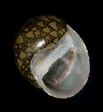
Guamanian Nerite
Clithon oualaniense
Sofya Zvonareva, Yuri Kantor, Xinzheng Li & Temir Britayev, CC BY 4.0, via Wikimedia Commons

Side by side
| Thorn Nerite | Guamanian Nerite | |
|---|---|---|
| Scientific name | Clithon corona (Linnaeus, 1758) | Clithon oualaniense (Lesson, 1831) |
| English name | Thorn Nerite | Guamanian Nerite |
| Group | Molluscs | Molluscs |
| Class | Gastropoda Gastropod | Gastropoda Gastropod |
| Order | Cycloneritida | Cycloneritida |
| Family | Neritidae Nerites | Neritidae Nerites |
| Genus | Clithon | Clithon |
| Named in | 1758 | 1831 |
| Red List category | Least Concern | Not recorded |
| Environment | brackish, freshwater | brackish, freshwater |
| Countries on record | 15 countries | 25 countries |
| GBIF occurrence records | 683 records | 1,156 records |
Rows where the two agree are shown in grey.
Where each is found
Both recorded in 14 countries
- Australia
- Fiji
- French Polynesia
- India
- Indonesia
- Japan
- New Caledonia
- Papua New Guinea
- Philippines
- Samoa
- Solomon Islands
- Taiwan
- Thailand
- Vanuatu
Only Thorn Nerite (1)
Only Guamanian Nerite (11)
From Catalogue of Life checklists and GBIF occurrence records. A country missing from a list means no record is held, which is not proof of absence.
Checked facts
| Thorn Nerite | Guamanian Nerite | |
|---|---|---|
| Appearance |
|
|
| Size |
| No checked fact yet |
| Habitat |
|
|
| Diet |
|
|
| Behaviour |
|
|
| Uses |
| No checked fact yet |
| Other |
|
|
In brief
Thorn Nerite
Clithon corona inhabits freshwater rivers and brackish-water estuaries. It has a rounded shell covered with calcified projections. Full profile
Guamanian Nerite
Clithon oualaniense (Lesson, 1831), known as the Guamanian Nerite, is a brackish-water snail with an operculum belonging to the family Neritidae. The species inhabits soft-bottomed intertidal environments and seagrass beds containing Zostera japonica. Its shell coloration pattern varies considerably among individuals. Full profile
Compare something else
Page built on 28 November 2026 from the data on the two species pages, where every source is listed.
Cite this page
ScientificNames.org. (2026). Thorn Nerite vs Guamanian Nerite. Retrieved November 28, 2026, from https://scientificnames.org/compare/thorn-nerite-vs-guamanian-nerite
“Thorn Nerite vs Guamanian Nerite.” ScientificNames.org, 2026, scientificnames.org/compare/thorn-nerite-vs-guamanian-nerite. Accessed 28 Nov. 2026.
ScientificNames.org. “Thorn Nerite vs Guamanian Nerite.” Accessed November 28, 2026. https://scientificnames.org/compare/thorn-nerite-vs-guamanian-nerite.
@misc{scientificnames_thorn_nerite_vs_guamanian_nerite,
  author = {{ScientificNames.org}},
  title = {Thorn Nerite vs Guamanian Nerite},
  year = {2026},
  url = {https://scientificnames.org/compare/thorn-nerite-vs-guamanian-nerite},
  note = {Accessed 2026-11-28}
}