Comparison
Guamanian Nerite vs Thorn Nerite
Guamanian Nerite (Clithon oualaniense) and Thorn Nerite (Clithon corona) both belong to the genus Clithon and part ways below it. Both are recorded in 14 countries.
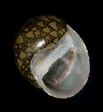
Guamanian Nerite
Clithon oualaniense
Sofya Zvonareva, Yuri Kantor, Xinzheng Li & Temir Britayev, CC BY 4.0, via Wikimedia Commons


Thorn Nerite
Clithon corona
Ting Hui Ng, Siong Kiat Tan, Wing Hing Wong, Rudolf Meier, Sow-Yan Chan, Heok Hui Tan & Darren C. J. Yeo, CC BY 4.0, via Wikimedia Commons

Side by side
| Guamanian Nerite | Thorn Nerite | |
|---|---|---|
| Scientific name | Clithon oualaniense (Lesson, 1831) | Clithon corona (Linnaeus, 1758) |
| English name | Guamanian Nerite | Thorn Nerite |
| Group | Molluscs | Molluscs |
| Class | Gastropoda Gastropod | Gastropoda Gastropod |
| Order | Cycloneritida | Cycloneritida |
| Family | Neritidae Nerites | Neritidae Nerites |
| Genus | Clithon | Clithon |
| Named in | 1831 | 1758 |
| Red List category | Not recorded | Least Concern |
| Environment | brackish, freshwater | brackish, freshwater |
| Countries on record | 25 countries | 15 countries |
| GBIF occurrence records | 1,156 records | 683 records |
Rows where the two agree are shown in grey.
Where each is found
Both recorded in 14 countries
- Australia
- Fiji
- French Polynesia
- India
- Indonesia
- Japan
- New Caledonia
- Papua New Guinea
- Philippines
- Samoa
- Solomon Islands
- Taiwan
- Thailand
- Vanuatu
Only Guamanian Nerite (11)
Only Thorn Nerite (1)
From Catalogue of Life checklists and GBIF occurrence records. A country missing from a list means no record is held, which is not proof of absence.
Checked facts
| Guamanian Nerite | Thorn Nerite | |
|---|---|---|
| Appearance |
|
|
| Size | No checked fact yet |
|
| Habitat |
|
|
| Diet |
|
|
| Behaviour |
|
|
| Uses | No checked fact yet |
|
| Other |
|
|
In brief
Guamanian Nerite
Clithon oualaniense (Lesson, 1831), known as the Guamanian Nerite, is a brackish-water snail with an operculum belonging to the family Neritidae. The species inhabits soft-bottomed intertidal environments and seagrass beds containing Zostera japonica. Its shell coloration pattern varies considerably among individuals. Full profile
Thorn Nerite
Clithon corona inhabits freshwater rivers and brackish-water estuaries. It has a rounded shell covered with calcified projections. Full profile
Compare something else
Page built on 28 November 2026 from the data on the two species pages, where every source is listed.
Cite this page
ScientificNames.org. (2026). Guamanian Nerite vs Thorn Nerite. Retrieved November 28, 2026, from https://scientificnames.org/compare/guamanian-nerite-vs-thorn-nerite
“Guamanian Nerite vs Thorn Nerite.” ScientificNames.org, 2026, scientificnames.org/compare/guamanian-nerite-vs-thorn-nerite. Accessed 28 Nov. 2026.
ScientificNames.org. “Guamanian Nerite vs Thorn Nerite.” Accessed November 28, 2026. https://scientificnames.org/compare/guamanian-nerite-vs-thorn-nerite.
@misc{scientificnames_guamanian_nerite_vs_thorn_nerite,
  author = {{ScientificNames.org}},
  title = {Guamanian Nerite vs Thorn Nerite},
  year = {2026},
  url = {https://scientificnames.org/compare/guamanian-nerite-vs-thorn-nerite},
  note = {Accessed 2026-11-28}
}