Comparison
Boat-billed Heron vs Little Egret
Boat-billed Heron (Cochlearius cochlearius) and Little Egret (Egretta garzetta) both belong to the family Ardeidae (heron) and part ways below it. Both are recorded in 2 countries.
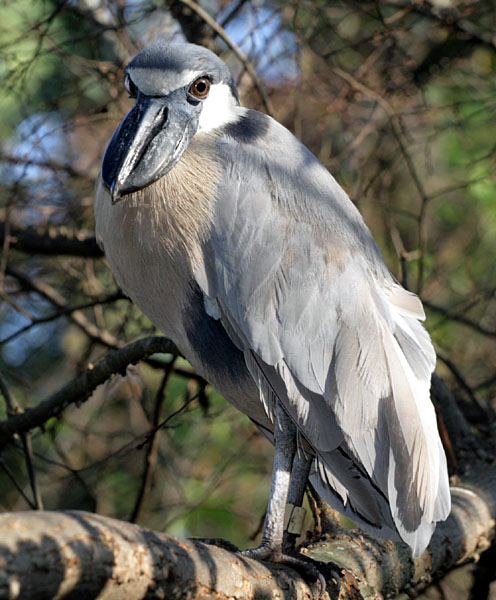
Boat-billed Heron
Cochlearius cochlearius
Patrick Coin (Patrick Coin), CC BY-SA 2.5, via Wikimedia Commons


Side by side
| Boat-billed Heron | Little Egret | |
|---|---|---|
| Scientific name | Cochlearius cochlearius (Linnaeus, 1766) | Egretta garzetta (Linnaeus, 1766) |
| English name | Boat-billed Heron | Little Egret |
| Group | Birds | Birds |
| Class | Aves Bird | Aves Bird |
| Order | Pelecaniformes Herons | Pelecaniformes Herons |
| Family | Ardeidae Heron | Ardeidae Heron |
| Genus | Cochlearius | Egretta Plumed Egrets |
| Named in | 1766 | 1766 |
| Red List category | Least Concern | Least Concern |
| Environment | freshwater, terrestrial | freshwater, marine, terrestrial |
| Countries on record | 21 countries | 181 countries |
| GBIF occurrence records | 61,206 records | 3,879,507 records |
Rows where the two agree are shown in grey.
Where each is found
Both recorded in 2 countries
Only Boat-billed Heron (19)
- Argentina
- Belize
- Bolivia
- Brazil
- Colombia
- Costa Rica
- Ecuador
- El Salvador
- French Guiana
- Guatemala
- Guyana
- Honduras
- Mexico
- Nicaragua
- Panama
- Paraguay
- Peru
- Suriname
- Venezuela
Only Little Egret (179)
- Afghanistan
- Albania
- Algeria
- Andorra
- Angola
- Antigua and Barbuda
- Armenia
- Aruba
- Australia
- Austria
- Azerbaijan
- Bahrain
- Bangladesh
- Barbados
- Belarus
- Belgium
- Benin
- Bermuda
- Bhutan
- Bosnia and Herzegovina
- Botswana
- British Indian Ocean Territory
- Brunei
- Bulgaria
- Burkina Faso
- Burundi
- Cabo Verde
- Cambodia
- Cameroon
- Canada
- Central African Republic
- Chad
- China
- Christmas Island
- Cocos Islands
- Comoros
- Croatia
- Cyprus
- Czechia
- Democratic Republic of the Congo
- Denmark
- Djibouti
- Dominica
- Egypt
- Equatorial Guinea
- Eritrea
- Estonia
- Eswatini
- Ethiopia
- Faroe Islands
- Finland
- France
- Gabon
- Gambia
- Georgia
- Germany
- Ghana
- Gibraltar
- Greece
- Grenada
- Guadeloupe
- Guam
- Guernsey
- Guinea
- Guinea-Bissau
- Hong Kong
- Hungary
- Iceland
- India
- Indonesia
- Iran
- Iraq
- Ireland
- Isle of Man
- Israel
- Italy
- Ivory Coast
- Japan
- Jersey
- Jordan
- Kazakhstan
- Kenya
- Kosovo
- Kuwait
- Laos
- Latvia
- Lebanon
- Lesotho
- Liberia
- Libya
- Lithuania
- Luxembourg
- Macao
- Madagascar
- Malawi
- Malaysia
- Maldives
- Mali
- Malta
- Martinique
- Mauritania
- Micronesia
- Moldova
- Monaco
- Mongolia
- Montenegro
- Morocco
- Mozambique
- Myanmar
- Namibia
- Nepal
- New Zealand
- Niger
- Nigeria
- Norfolk Island
- North Korea
- North Macedonia
- Northern Mariana Islands
- Norway
- Oman
- Pakistan
- Palau
- Palestinian Territory
- Papua New Guinea
- Philippines
- Poland
- Portugal
- Puerto Rico
- Qatar
- Republic of the Congo
- Romania
- Russia
- Rwanda
- Saint Barthelemy
- Saint Kitts and Nevis
- Saint Lucia
- Saint Pierre and Miquelon
- Saint Vincent and the Grenadines
- San Marino
- Sao Tome and Principe
- Saudi Arabia
- Senegal
- Serbia
- Seychelles
- Sierra Leone
- Singapore
- Slovakia
- Slovenia
- Somalia
- South Africa
- South Korea
- South Sudan
- Spain
- Sri Lanka
- Sudan
- Sweden
- Switzerland
- Syria
- Taiwan
- Tajikistan
- Tanzania
- Thailand
- The Netherlands
- Timor Leste
- Togo
- Tunisia
- Turkey
- Turkmenistan
- U.S. Virgin Islands
- Uganda
- Ukraine
- United Arab Emirates
- United Kingdom
- Uzbekistan
- Vietnam
- Western Sahara
- Yemen
- Zambia
- Zimbabwe
From Catalogue of Life checklists and GBIF occurrence records. A country missing from a list means no record is held, which is not proof of absence.
Checked facts
| Boat-billed Heron | Little Egret | |
|---|---|---|
| Appearance |
|
|
| Size |
|
|
| Habitat |
|
|
| Diet |
|
|
| Behaviour |
|
|
| Reproduction |
|
|
| Distribution |
| No checked fact yet |
| Conservation |
|
|
| Similar species | No checked fact yet |
|
| Name origin |
| No checked fact yet |
| Other |
| No checked fact yet |
In brief
Boat-billed Heron
Cochlearius cochlearius is distinguished by its massive, broad, scoop-like black bill and a crest that is larger in males. Full profile
Little Egret
Egretta garzetta inhabits the shores of lakes, rivers, canals, ponds, lagoons and marshes, as well as coastal habitats. It normally has entirely white plumage, a long, slender black bill, black legs and yellow feet. Full profile
Compare something else
Page built on 29 November 2026 from the data on the two species pages, where every source is listed.
Cite this page
ScientificNames.org. (2026). Boat-billed Heron vs Little Egret. Retrieved November 29, 2026, from https://scientificnames.org/compare/boat-billed-heron-vs-little-egret
“Boat-billed Heron vs Little Egret.” ScientificNames.org, 2026, scientificnames.org/compare/boat-billed-heron-vs-little-egret. Accessed 29 Nov. 2026.
ScientificNames.org. “Boat-billed Heron vs Little Egret.” Accessed November 29, 2026. https://scientificnames.org/compare/boat-billed-heron-vs-little-egret.
@misc{scientificnames_boat_billed_heron_vs_little_egret,
  author = {{ScientificNames.org}},
  title = {Boat-billed Heron vs Little Egret},
  year = {2026},
  url = {https://scientificnames.org/compare/boat-billed-heron-vs-little-egret},
  note = {Accessed 2026-11-29}
}