Comparison

Crab Louse vs Gorilla Louse

Crab Louse (Pthirus pubis) and Gorilla Louse (Pthirus gorillae) both belong to the genus Pthirus (crab louse) and part ways below it.
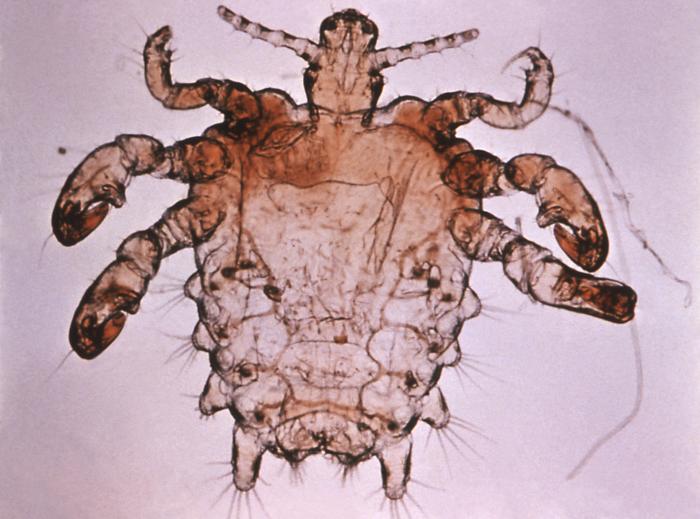
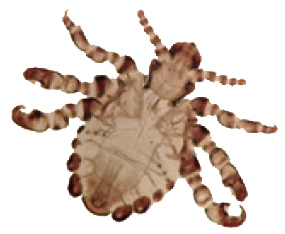
Crab Louse

Crab Louse

Pthirus pubis

Unknown author, Public domain, via Wikimedia Commons

Gorilla Louse

Gorilla Louse

Pthirus gorillae

Reed, David L. et al, CC BY 2.0, via Wikimedia Commons

Side by side

Crab LouseGorilla Louse
Scientific namePthirus pubis (Linnaeus, 1758)Pthirus gorillae Ewing, 1927
English nameCrab LouseGorilla Louse
GroupInsectsInsects
ClassInsecta InsectInsecta Insect
OrderPsocodeaPsocodea
FamilyPthiridae Crab LicePthiridae Crab Lice
GenusPthirus Crab LousePthirus Crab Louse
Named in17581927
Environmentterrestrialterrestrial
Countries on record14 countriesNot recorded
GBIF occurrence records293 recordsNot recorded

Rows where the two agree are shown in grey.

Where each is found

Only Crab Louse (14)

From Catalogue of Life checklists and GBIF occurrence records. A country missing from a list means no record is held, which is not proof of absence.

Checked facts

Crab LouseGorilla Louse
Appearance
  • Adult Pthirus pubis has an almost round body that distinguishes it from human head and body lice. English Wikipedia
  • The second and third pairs of legs are substantially thicker than the front legs and bear large claws. English Wikipedia
  • Pthirus pubis has a relatively small head, simple eyes, and short antennae. animaldiversity.org
  • Each of the six legs terminates in a tarsal claw. animaldiversity.org
  • The claws on the second and third pairs of legs are much larger than those on the front pair. animaldiversity.org
  • The tibial claw region has an extension called the thumb of the tibia that helps the louse grasp flattened human hairs. animaldiversity.org
  • The abdomen has four pairs of tubercles projecting from each side. animaldiversity.org
  • Pthirus pubis is wingless and has a flattened body. pubs.ext.vt.edu
  • The body is approximately as wide as it is long and has a small, narrow head. pubs.ext.vt.edu
  • Individuals range in color from gray to tan. pubs.ext.vt.edu
  • Recently fed individuals appear darker because their blood meal is visible through the body. pubs.ext.vt.edu
No checked fact yet
SizeNo checked fact yet
Habitat
  • Pthirus pubis is an obligate ectoparasite that lives exclusively on human hosts. English Wikipedia
  • The species is most commonly found in human pubic hair. English Wikipedia
  • Pthirus pubis can also inhabit coarse hair in the perianal region, general body, and eyelashes of children. English Wikipedia
  • Pthirus pubis inhabits coarse human body hair, including hair in the pubic, anal, armpit, thigh, abdominal, eyelash, and beard regions. animaldiversity.org
  • The species commonly inhabits coarse pubic hair but can also occur in armpit, chest, and heavy facial hair. pubs.ext.vt.edu
  • Pthirus pubis is occasionally found on human eyelashes and eyebrows. pubs.ext.vt.edu
  • Pthirus pubis is adapted to a relatively sedentary existence on pubic hair and sometimes inhabits eyelashes and other body hair. pmc.ncbi.nlm.nih.gov
No checked fact yet
Behaviour
  • Transmission between humans occurs most commonly through sexual contact. English Wikipedia
  • Bedding and clothing can contribute to transmission, although their role is minor. English Wikipedia
  • Pthirus pubis is less mobile than Pediculus humanus and can remain attached to human skin for days. animaldiversity.org
  • Individuals can travel up to 10 cm in one day. animaldiversity.org
  • Infestations can sometimes occur in infants who acquire lice from infected mothers during birth. animaldiversity.org
  • Most infestations do not produce noticeable symptoms. cdc.gov
  • Pthirus pubis cannot fly or jump and moves only by crawling. pubs.ext.vt.edu
  • The nymphs and adults move quickly and avoid light. pubs.ext.vt.edu
  • Transmission occurs through direct and intimate contact between humans. pubs.ext.vt.edu
  • Individuals may acquire the species from recently contaminated furniture, bedding, or towels. pubs.ext.vt.edu
  • Individuals generally remain on the infested human body rather than leaving it. pmc.ncbi.nlm.nih.gov
No checked fact yet
ReproductionNo checked fact yet
Similar species
  • Pthirus gorillae is a closely related species that infects gorillas. English Wikipedia
No checked fact yet
Other
  • The evolutionary divergence between Pthirus pubis and Pthirus gorillae is estimated to have occurred approximately 3.3 million years ago. English Wikipedia
  • The species injects saliva into the host during feeding, causing itching. animaldiversity.org
  • The presence of Pthirus pubis on children may indicate sexual abuse. pubs.ext.vt.edu
No checked fact yet

In brief

Crab Louse

Pthirus pubis lives primarily in human pubic hair and can also inhabit other coarse body hair, including hair in the perianal region and eyelashes. Adults have an almost round body and substantially thicker second and third pairs of legs with large claws. Full profile

Compare something else

Page built on 26 November 2026 from the data on the two species pages, where every source is listed.

Cite this page

ScientificNames.org. (2026). Crab Louse vs Gorilla Louse. Retrieved November 26, 2026, from https://scientificnames.org/compare/crab-louse-vs-gorilla-louse