Comparison

Himalayan Cuckoo vs Lesser Cuckoo

Himalayan Cuckoo (Cuculus saturatus) and Lesser Cuckoo (Cuculus poliocephalus) both belong to the genus Cuculus (eurasian cuckoos) and part ways below it. Both are recorded in 16 countries.

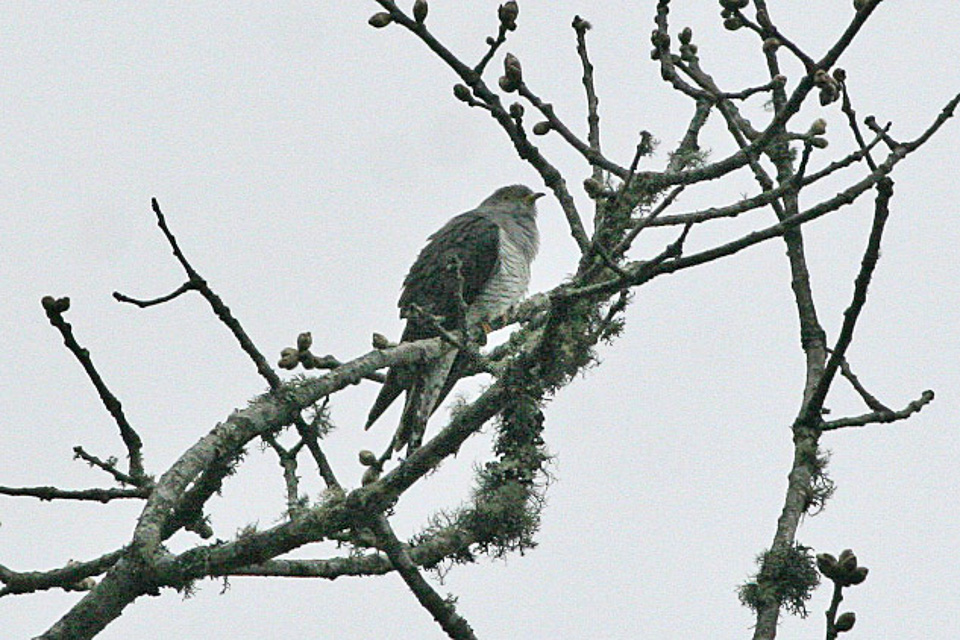
Himalayan Cuckoo

Himalayan Cuckoo

Cuculus saturatus

Ron Knight from Seaford, East Sussex, United Kingdom, CC BY 2.0, via Wikimedia Commons

Lesser Cuckoo

Lesser Cuckoo

Cuculus poliocephalus

Ron Knight from Seaford, East Sussex, United Kingdom, CC BY 2.0, via Wikimedia Commons
Side by side

Himalayan CuckooLesser Cuckoo
Scientific nameCuculus saturatus Blyth, 1843Cuculus poliocephalus Latham, 1790
English nameHimalayan CuckooLesser Cuckoo
GroupBirdsBirds
ClassAves BirdAves Bird
OrderCuculiformes CuckooCuculiformes Cuckoo
FamilyCuculidae CuckooCuculidae Cuckoo
GenusCuculus Eurasian CuckoosCuculus Eurasian Cuckoos
Named in18431790
Red List categoryLeast ConcernLeast Concern
Countries on record23 countries19 countries
GBIF occurrence records23,180 records19,094 records

Rows where the two agree are shown in grey.

Where each is found

Both recorded in 16 countries

Only Himalayan Cuckoo (7)

Only Lesser Cuckoo (3)

From Catalogue of Life checklists and GBIF occurrence records. A country missing from a list means no record is held, which is not proof of absence.

Checked facts

Himalayan CuckooLesser Cuckoo
Appearance
  • Adult males have dark ashy-grey upperparts and a brown, almost black tail with white spots and tips. English Wikipedia
  • Adult males have ash-grey throats and breasts, with white lower breasts and abdomens marked by black bars. English Wikipedia
  • The legs and feet range in color from yellow to orange. English Wikipedia
  • The eye-ring is yellow, while the irises range from yellow to brown. English Wikipedia
  • The bill is black with an orange-yellow or green-yellow base. English Wikipedia
  • Females resemble males but may have a rufous tinge on the breast and sometimes on the rump and upper tail-coverts. English Wikipedia
  • Juveniles have slate-grey upperparts with white edges and white-and-black barred underparts. English Wikipedia
  • Both sexes occur in grey and hepatic plumage morphs. English Wikipedia
No checked fact yet
SizeNo checked fact yet
Habitat
  • During spring and summer, the species inhabits mixed coniferous and deciduous forests, thickets, birch habitats, mountain forests, wooded steppes and orchards. English Wikipedia
  • In Kashmir, Myanmar and Nepal, the species commonly occurs above the tree line at elevations of 1,500–3,300 m. English Wikipedia
  • In southwest China, the species has been recorded at elevations reaching 4,500 m. English Wikipedia
  • During colder seasons, the species inhabits primary and secondary tropical forests, savannas, gardens, teak plantations and monsoon rainforests. English Wikipedia
  • The species has also been recorded in swamps and mangroves. English Wikipedia
No checked fact yet
Diet
  • The species feeds mainly on insects, particularly both hairy and hairless caterpillars. English Wikipedia
  • Recorded caterpillar prey families include Arctiidae, Lasiocampidae, Sphingidae, Saturnidae and Noctuidae. English Wikipedia
  • Before eating caterpillars, the species removes their gut contents. English Wikipedia
  • Other recorded animal foods include grasshoppers, large beetles, spiders, stick-insects, crickets, mantids, flies and ants. English Wikipedia
  • The species also consumes certain fruits, pine shoots and pine needles. English Wikipedia
  • The species occasionally eats eggs and nestlings of other birds, including Asian Stubtails and Grey-cheeked Fulvettas. English Wikipedia
No checked fact yet
Behaviour
  • The species generally forages in trees but also searches for food on forest floors, grassy landscapes and lawns. English Wikipedia
  • Individuals generally forage alone and sometimes make short aerial sallies to catch prey. English Wikipedia
  • Small groups gather at abundant food sources and remain until the food is exhausted. English Wikipedia
  • At least 300 individuals were observed during a teak moth infestation in New Guinea. English Wikipedia
  • Males are frequently recorded calling at dawn and dusk from elevated lookouts or while flying. English Wikipedia
  • Male calls consist of a high note followed by three lower, flat notes. English Wikipedia
  • Females produce a bubbling call described as 'quick-quick-quick'. English Wikipedia
  • The Lesser Cuckoo's song is frequently praised in Japanese senryu poetry. English Wikipedia
  • In Korean literature, the Lesser Cuckoo's song represents sadness. English Wikipedia
Reproduction
  • The species is a brood parasite that lays its eggs in the nests of other bird species. English Wikipedia
  • A female may lay approximately fifteen eggs in separate locations, placing them individually. English Wikipedia
  • Common host bird families include flycatchers, shrikes and white-eyes. English Wikipedia
  • The eggs are incubated and the chicks are raised by the host birds. English Wikipedia
  • Young cuckoos are fed insects and larvae by their host parents. English Wikipedia
  • A newly hatched cuckoo may push other eggs and chicks out of its host nest. English Wikipedia
  • Egg coloration ranges from pale blue to white, with fine black, brown or red stippling. English Wikipedia
  • Reported egg dimensions include 20–25 mm by 12–16 mm and 19–22 mm by 13–16 mm. English Wikipedia
  • Breeding in Kashmir generally occurs from May through June. English Wikipedia
  • Breeding in Nepal generally occurs from March through August. English Wikipedia
  • Prinia flaviventris is the only recorded host species in Taiwan according to the document. English Wikipedia
No checked fact yet
Distribution
  • The breeding range extends from the Himalayas eastward to southern China and Taiwan. English Wikipedia
  • The species migrates to Southeast Asia and the Greater Sunda Islands for winter. English Wikipedia
  • The species occurs in northeast Pakistan and the northern Indian subcontinent during warm weather. English Wikipedia
  • Its recorded winter distribution includes Malaysia, the Philippines, Indonesia and New Guinea. English Wikipedia
  • The species is recorded in Thailand, Taiwan, Nepal, Assam, Kashmir and Burma. English Wikipedia
  • During the non-breeding season, the species occurs in Southeast Asia, the Greater Sundas and the Philippines. English Wikipedia
Conservation
  • The species is classified as Least Concern and is not considered globally threatened. English Wikipedia
  • Population numbers depend on the condition of forest habitats. English Wikipedia
  • The species is described as a common local bird that is widely dispersed throughout the Himalayas. English Wikipedia
  • The Lesser Cuckoo is classified as Least Concern on the IUCN Red List. iucnredlist.org
Similar species
  • The Himalayan Cuckoo differs from the Common Cuckoo in having broader and more widely spaced black wing bars. English Wikipedia
No checked fact yet
Other
  • In Japan, the Lesser Cuckoo is known as hototogisu. English Wikipedia
  • The Lesser Cuckoo has been celebrated by Japanese waka poets since the Kokin wakashū anthology of 920. English Wikipedia
  • The Lesser Cuckoo is mentioned in Sei Shōnagon's essay The Pillow Book, published in 1002. English Wikipedia
  • The Lesser Cuckoo is the central image in poem 81 by Tokudaiji Sanesada in the Hyakunin Isshu anthology. English Wikipedia
  • The Japanese haiku magazine Hototogisu is named after the Lesser Cuckoo. English Wikipedia
  • The pen name Shiki adopted by Masaoka Shiki refers to the Lesser Cuckoo. English Wikipedia
  • The Chinese common name for the Lesser Cuckoo is xiāodùjuān (小杜鵑). English Wikipedia

In brief

Himalayan Cuckoo

The breeding range extends from the Himalayas eastward to southern China and Taiwan, and it migrates to Southeast Asia and the Greater Sunda Islands for winter. It is a brood parasite that lays its eggs individually in the nests of other bird species. Full profile

Lesser Cuckoo

The Lesser Cuckoo is native to East Asia and the Himalayas and winters in East Africa and Sri Lanka. The Lesser Cuckoo is known as hototogisu in Japan and is represented in Japanese and Korean literature. Full profile

Compare something else

Page built on 27 November 2026 from the data on the two species pages, where every source is listed.

Cite this page

ScientificNames.org. (2026). Himalayan Cuckoo vs Lesser Cuckoo. Retrieved November 27, 2026, from https://scientificnames.org/compare/himalayan-cuckoo-vs-lesser-cuckoo