Comparison
Dawn Redwood vs Japanese Cedar
Dawn Redwood (Metasequoia glyptostroboides) and Japanese Cedar (Cryptomeria japonica) both belong to the family Cupressaceae (cypress) and part ways below it. Both are recorded in 23 countries.



How they differ
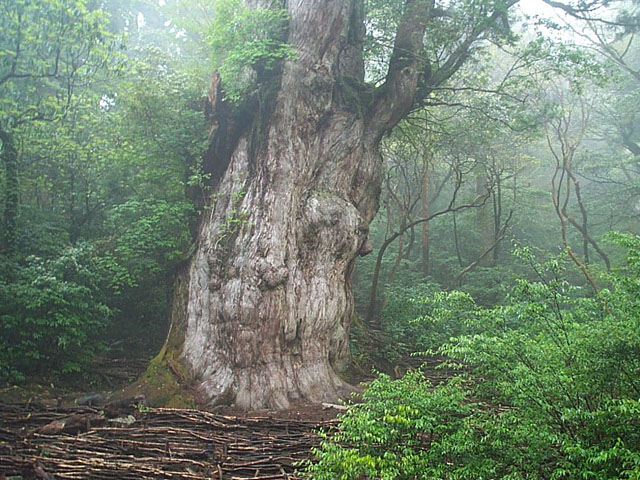
Dawn Redwood is a deciduous conifer with oppositely arranged leaves, while Japanese Cedar has needle-like leaves arranged spirally. Dawn Redwood has globose to ovoid cones with 16–28 scales in four rows, while Japanese Cedar has globular seed cones with approximately 20–40 scales. Dawn Redwood is native to a small region of central China, while Japanese Cedar is considered endemic to Japan and has been extensively introduced outside its native range. Dawn Redwood can reach approximately 51 m in height, while Japanese Cedar can reach 60 metres.
| Dawn Redwood | Japanese Cedar | |
|---|---|---|
| Foliage | Dawn Redwood has soft, feathery, flat, linear needles arranged in two rows, and its foliage is bright green before turning reddish brown in autumn. | Japanese Cedar has needle-like leaves arranged spirally. |
| Bark | Dawn Redwood has vertically fissured bark that peels away in ribbon-like strips. | Japanese Cedar has red-brown bark that peels in vertical strips. |
| Cones | Dawn Redwood has globose to ovoid mature cones containing 16–28 scales arranged in four rows. | Japanese Cedar has globular seed cones with approximately 20–40 scales. |
| Habitat | Dawn Redwood grows naturally in floodplain environments and tolerates standing water and waterlogged soils. | Japanese Cedar grows in forests on deep, well-drained soils under warm and moist conditions. |
| Conservation | Dawn Redwood is classified as endangered in the wild. | Japanese Cedar is extensively introduced outside its native range. |
| Leaf length | Dawn Redwood's leaves measure 1–3 cm in length. | Japanese Cedar's needle-like leaves measure 0.5–1 centimetres in length. |
Written from the checked facts listed further down. Statements that the sources did not support were removed.
Side by side
| Dawn Redwood | Japanese Cedar | |
|---|---|---|
| Scientific name | Metasequoia glyptostroboides Hu & W.C.Cheng | Cryptomeria japonica (Thunb. ex L.) D.Don |
| English name | Dawn Redwood | Japanese Cedar |
| Group | Conifers and allies | Conifers and allies |
| Class | Pinopsida Conifer | Pinopsida Conifer |
| Order | Cupressales | Cupressales |
| Family | Cupressaceae Cypress | Cupressaceae Cypress |
| Genus | Metasequoia Dawn Redwood | Cryptomeria Sugis |
| Red List category | Endangered | Near Threatened |
| Countries on record | 23 countries | 50 countries |
| GBIF occurrence records | 7,709 records | 15,755 records |
Rows where the two agree are shown in grey.
Where each is found
Both recorded in 23 countries
- Austria
- Belgium
- Canada
- China
- Czechia
- Denmark
- France
- Germany
- Ireland
- Isle of Man
- Japan
- Luxembourg
- Norway
- Poland
- South Korea
- Spain
- Sweden
- Switzerland
- Taiwan
- The Netherlands
- Ukraine
- United Kingdom
- United States
Only Japanese Cedar (27)
- Bhutan
- Brazil
- Bulgaria
- Cambodia
- Croatia
- Finland
- Georgia
- Guadeloupe
- Hong Kong
- Hungary
- India
- Indonesia
- Israel
- Italy
- Jamaica
- Latvia
- Martinique
- Mexico
- Nepal
- Philippines
- Portugal
- Reunion
- Russia
- Slovakia
- Slovenia
- Sri Lanka
- Turkey
From Catalogue of Life checklists and GBIF occurrence records. A country missing from a list means no record is held, which is not proof of absence.
Checked facts
| Dawn Redwood | Japanese Cedar | |
|---|---|---|
| Appearance |
|
|
| Size |
|
|
| Habitat |
|
|
| Diet | No checked fact yet |
|
| Behaviour | No checked fact yet |
|
| Reproduction |
| No checked fact yet |
| Distribution |
|
|
| Conservation |
| No checked fact yet |
| Uses |
|
|
| Similar species | No checked fact yet |
|
| Other |
|
|
In brief
Dawn Redwood
Dawn Redwood (Metasequoia glyptostroboides Hu & W.C.Cheng) is a deciduous conifer in the family Cupressaceae, order Cupressales and class Pinopsida. The species is native to a small region of central China, where surviving wild populations occur in Hubei, Hunan and Chongqing. Its foliage turns reddish brown in autumn before falling, and its trunk develops distinctive indentations beneath each branch. Full profile
Japanese Cedar
The species is considered endemic to Japan and has been introduced and cultivated in several places outside its native range. It has red-brown bark that peels in vertical strips, spirally arranged needle-like leaves and globular seed cones. Full profile
Compare something else
Page built on 24 November 2026 from the data on the two species pages, where every source is listed.
Cite this page
ScientificNames.org. (2026). Dawn Redwood vs Japanese Cedar. Retrieved November 24, 2026, from https://scientificnames.org/compare/dawn-redwood-vs-japanese-cedar
“Dawn Redwood vs Japanese Cedar.” ScientificNames.org, 2026, scientificnames.org/compare/dawn-redwood-vs-japanese-cedar. Accessed 24 Nov. 2026.
ScientificNames.org. “Dawn Redwood vs Japanese Cedar.” Accessed November 24, 2026. https://scientificnames.org/compare/dawn-redwood-vs-japanese-cedar.
@misc{scientificnames_dawn_redwood_vs_japanese_cedar,
  author = {{ScientificNames.org}},
  title = {Dawn Redwood vs Japanese Cedar},
  year = {2026},
  url = {https://scientificnames.org/compare/dawn-redwood-vs-japanese-cedar},
  note = {Accessed 2026-11-24}
}