Comparison

Discobatis marginipinnis vs Reticulate Whipray

Discobatis marginipinnis (Discobatis marginipinnis) and Reticulate Whipray (Himantura uarnak) both belong to the family Dasyatidae (whiptail stingray) and part ways below it.
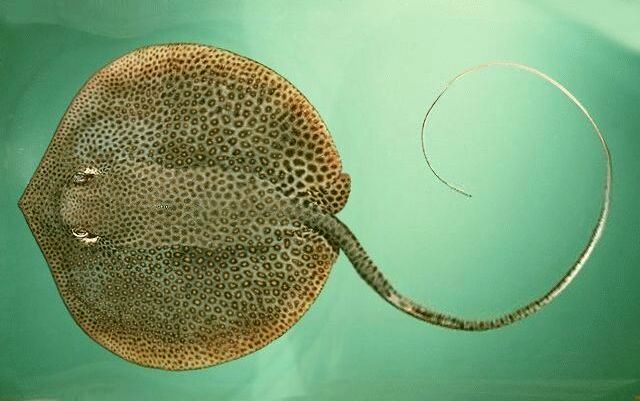
Reticulate Whipray

Reticulate Whipray

Himantura uarnak

Doka54 at Russian Wikipedia, Public domain, via Wikimedia Commons

Side by side

Discobatis marginipinnisReticulate Whipray
Scientific nameDiscobatis marginipinnis Miklukho-Maclay & MacLeay, 1886Himantura uarnak (Gmelin, 1789)
English nameNot recordedReticulate Whipray
GroupFishesFishes
ClassElasmobranchiiElasmobranchii
OrderMyliobatiformesMyliobatiformes
FamilyDasyatidae Whiptail StingrayDasyatidae Whiptail Stingray
GenusTaeniura Ribbontail StingraysHimantura Whip Rays
Named in18861789
Red List categoryNot recordedEndangered
EnvironmentNot recordedbrackish, marine
Countries on recordNot recorded30 countries
GBIF occurrence recordsNot recorded1,396 records

Rows where the two agree are shown in grey.

Where each is found

Only Reticulate Whipray (30)

From Catalogue of Life checklists and GBIF occurrence records. A country missing from a list means no record is held, which is not proof of absence.

Checked facts

Discobatis marginipinnisReticulate Whipray
AppearanceNo checked fact yet
  • The reticulate whipray has a diamond-shaped pectoral disc that is wider than it is long. English Wikipedia
  • Adult reticulate whiprays generally have closely spaced dark brown spots or reticulations against a beige to yellow-brown dorsal background. English Wikipedia
  • The underside of the reticulate whipray is pale white and unmarked. English Wikipedia
  • Juvenile reticulate whiprays have yellowish upper surfaces with densely packed tiny dark spots. English Wikipedia
  • Adult reticulate whiprays develop a broad band of flattened, heart-shaped dermal denticles extending from between the eyes to the tail spine. English Wikipedia
  • The reticulate whipray has two large pearl thorns at the center of its back. English Wikipedia
  • The reticulate whipray has small triangular pelvic fins. English Wikipedia
  • The reticulate whipray has a whip-like, extremely thin tail that lacks fin folds. English Wikipedia
  • The reticulate whipray usually has one serrated stinging spine on the upper surface of its tail. English Wikipedia
SizeNo checked fact yet
  • The reticulate whipray can reach a disc width of 2 metres. English Wikipedia
  • The reticulate whipray can reach a total length of 6 metres. English Wikipedia
  • The reticulate whipray has been reported to weigh up to 120 kilograms. English Wikipedia
  • An intact reticulate whipray tail measures approximately 3–3.5 times the length of its disc. English Wikipedia
  • Newborn reticulate whiprays off South Africa measure approximately 28–30 centimetres across. English Wikipedia
  • Newborn reticulate whiprays off Australia measure approximately 21–28 centimetres across. English Wikipedia
HabitatNo checked fact yet
  • The reticulate whipray inhabits coral reefs, brackish waters and marine environments. English Wikipedia
  • The reticulate whipray occurs over sandy flats near beaches, in lagoons and around coral reefs. English Wikipedia
  • The reticulate whipray occurs from the intertidal zone to offshore waters at depths of 50 metres or more. English Wikipedia
  • The reticulate whipray tolerates low salinities and can enter estuaries and mangrove swamps. English Wikipedia
  • The preferred water temperature of the reticulate whipray is 23–26 °C. English Wikipedia
  • In Shark Bay, Western Australia, the reticulate whipray uses intertidal sand flats during warm periods and deeper seagrass patches during cold periods. English Wikipedia
DietNo checked fact yet
  • The reticulate whipray feeds on crabs, shrimps, mantis shrimps, bivalves, gastropods, worms, jellyfish and bony fishes. English Wikipedia
  • Fishes constitute approximately two-thirds of the reticulate whipray's diet in the western Indian Ocean. English Wikipedia
  • Ponyfish and anchovies are particularly important fish prey for reticulate whiprays in the western Indian Ocean. English Wikipedia
  • Reticulate whiprays in Australian waters are known to consume penaeid prawns. English Wikipedia
BehaviourNo checked fact yet
  • The reticulate whipray is generally inactive during daytime and rests motionless on the seabed, sometimes buried in sand. English Wikipedia
  • In Shark Bay, Western Australia, reticulate whiprays rest individually or in small groups in very shallow water during high tide. English Wikipedia
  • Reticulate whiprays sometimes form mixed-species resting groups with cowtail stingrays. English Wikipedia
  • Mixed-species resting groups of reticulate whiprays and cowtail stingrays can form circular arrangements with their tails pointing outward. English Wikipedia
ReproductionNo checked fact yet
DistributionNo checked fact yet
  • The reticulate whipray occurs in the Red Sea, western Indian Ocean and Arabian Sea. English Wikipedia
  • The reticulate whipray has expanded into the eastern Mediterranean through the Suez Canal. English Wikipedia
  • The reticulate whipray is now common in the southeastern Mediterranean. English Wikipedia
ConservationNo checked fact yet
  • The reticulate whipray is classified as Endangered by the International Union for Conservation of Nature. English Wikipedia
  • The reticulate whipray is vulnerable to population depletion because of its large size, inshore habitat preferences and slow reproductive rate. English Wikipedia
  • Global reticulate whipray populations are suspected to have declined by 50–75% over the last 75 years. English Wikipedia
  • Habitat degradation threatens the reticulate whipray. English Wikipedia
UsesNo checked fact yet
  • Reticulate whiprays are fished for their meat, skin and cartilage. English Wikipedia
  • Reticulate whiprays are sometimes processed into fishmeal for the poultry industry. English Wikipedia
  • Some reticulate whipray wings are exported to Malaysia and Thailand. English Wikipedia
  • The tail of the reticulate whipray may be sold as a curio. English Wikipedia
  • The reticulate whipray is occasionally sold in the home aquarium trade. English Wikipedia
OtherNo checked fact yet
  • The reticulate whipray is closely related to Himantura undulata, Himantura leoparda, Himantura tutul and Himantura australis. English Wikipedia
  • The reticulate whipray has a very low minimum population doubling rate, requiring more than 14 years. fishbase.se
  • FishBase reports a vulnerability score of 90 out of 100 for the reticulate whipray. fishbase.se

In brief

Reticulate Whipray

Adults generally have closely spaced dark brown spots or reticulations against a beige to yellow-brown dorsal background. Full profile

Compare something else

Page built on 27 November 2026 from the data on the two species pages, where every source is listed.

Cite this page

ScientificNames.org. (2026). Discobatis marginipinnis vs Reticulate Whipray. Retrieved November 27, 2026, from https://scientificnames.org/compare/discobatis-marginipinnis-vs-reticulate-whipray