Comparison

Drosera derbyensis vs Drosera capensis

Drosera derbyensis (Drosera derbyensis) and Drosera capensis (Drosera capensis) both belong to the genus Drosera (sundew) and part ways below it.

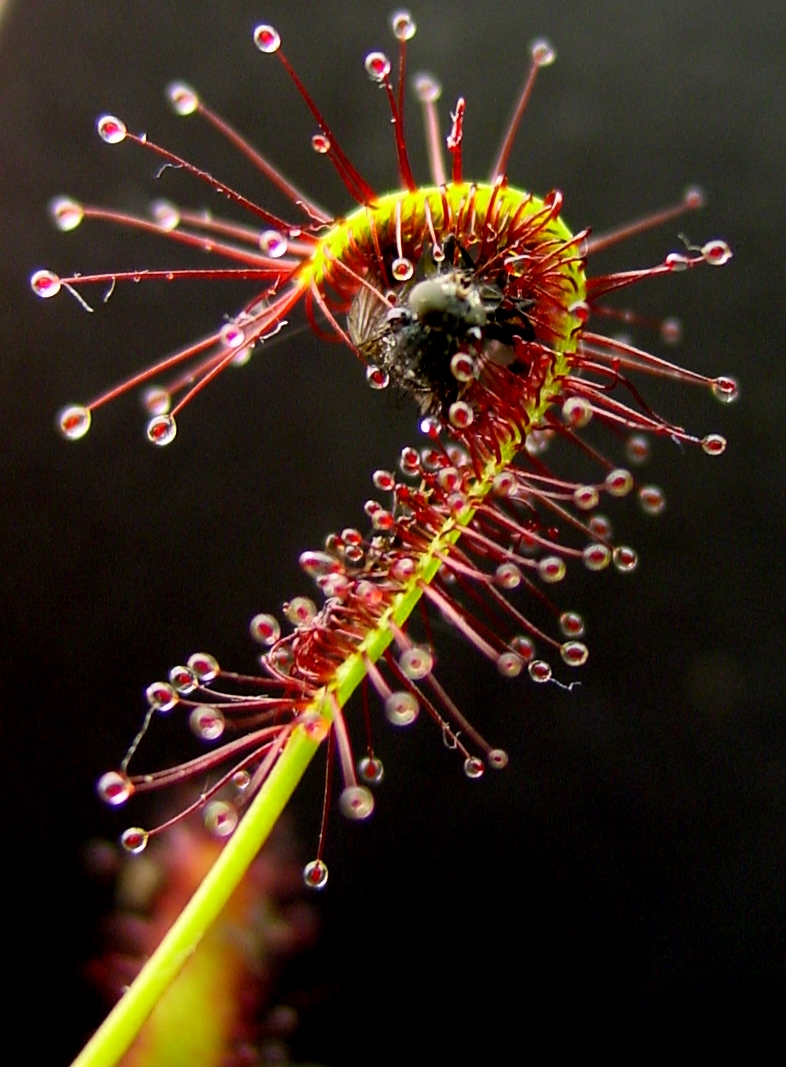
Drosera derbyensis

Drosera derbyensis

NoahElhardt, CC BY 2.5, via Wikimedia Commons

Drosera capensis

Drosera capensis

NoahElhardt, CC BY-SA 3.0, via Wikimedia Commons

Side by side

Drosera derbyensisDrosera capensis
Scientific nameDrosera derbyensis LowrieDrosera capensis L.
GroupFlowering plantsFlowering plants
ClassMagnoliopsidaMagnoliopsida
OrderCaryophyllalesCaryophyllales
FamilyDroseraceae Sundew FamilyDroseraceae Sundew Family
GenusDrosera SundewDrosera Sundew
Red List categoryLeast ConcernNot recorded
Countries on record1 country3 countries
GBIF occurrence records124 records1,364 records

Rows where the two agree are shown in grey.

Where each is found

Only Drosera derbyensis (1)

Only Drosera capensis (3)

From Catalogue of Life checklists and GBIF occurrence records. A country missing from a list means no record is held, which is not proof of absence.

Checked facts

Drosera derbyensisDrosera capensis
Appearance
  • The leaves are erect or semi-erect and arranged in rosettes, with one or more rosettes emerging from the rootstock. English Wikipedia
  • The petioles are narrowly oblanceolate and measure 0.8–1.0 mm wide at their proximal ends and 1.3–1.7 mm wide at their apices. English Wikipedia
  • The petioles narrow to 0.5–0.7 mm at the laminar base. English Wikipedia
  • The petioles are covered with white woolly non-dendritic hairs. English Wikipedia
  • The insect-trapping leaf lamina is orbicular. English Wikipedia
  • The adaxial surface of the lamina is covered with insect-trapping glands. English Wikipedia
  • Each inflorescence bears 30–50 white flowers. English Wikipedia
  • The upper portion of the scape is covered with white woolly non-dendritic hairs. English Wikipedia
  • The abaxial surface of the sepals is covered with white woolly non-dendritic hairs. English Wikipedia
  • The plant has fibrous roots. English Wikipedia
Size
Habitat
  • Drosera derbyensis grows in sandy soils in floodways or near rock outcrops. English Wikipedia
  • The species grows in permanently wet, nutrient-poor habitats. English Wikipedia
  • It occurs in wet seeps, creek margins and coastal wetlands. English Wikipedia
  • It can grow in peaty or sandy soils, on moss-covered rocks and in Sphagnum moss beds. English Wikipedia
  • The species occurs at elevations ranging from sea level to 1,800 m. English Wikipedia
DietNo checked fact yet
  • The plant captures and digests insects and other arthropods. English Wikipedia
  • The species obtains nutrients from captured arthropods in addition to nutrients absorbed from its growing substrate. English Wikipedia
  • Fruit flies (Drosophila melanogaster) have been used as prey in feeding experiments involving this species. pmc.ncbi.nlm.nih.gov
BehaviourNo checked fact yet
  • Marginal tentacles bend toward the centre of the leaf when potential prey contacts them. English Wikipedia
  • The leaf blade bends inward around captured prey and can roll through more than 180 degrees. English Wikipedia
  • The extent of leaf bending increases when prey is located closer to the leaf tip. English Wikipedia
  • Red tentacle coloration did not attract fruit flies in experimental trials. pmc.ncbi.nlm.nih.gov
  • Digestive phosphatase, phosphodiesterase and protease activities are induced within 24 hours of prey capture. pmc.ncbi.nlm.nih.gov
Reproduction
Distribution
  • Drosera derbyensis is endemic to Western Australia. English Wikipedia
  • The species occurs between Derby and Beverley Springs in the Kimberley region of Western Australia. English Wikipedia
No checked fact yet
Conservation
  • Allen Lowrie assessed Drosera derbyensis as locally common and not under threat in 1996. English Wikipedia
Uses
  • The species has been cultivated in Europe as a botanical curiosity since the mid-18th century. English Wikipedia
  • The species has been investigated as a potential source of pharmacologically interesting bioactive compounds. English Wikipedia
Similar species
  • Drosera derbyensis is closely related to Drosera lanata within the Drosera petiolaris complex. English Wikipedia
  • Drosera derbyensis differs from Drosera lanata by having non-dendritic hairs covering its leaves. English Wikipedia
No checked fact yet
Other
  • Drosera derbyensis is a perennial carnivorous plant belonging to the genus Drosera. English Wikipedia
  • The non-dendritic hairs of Drosera derbyensis are assumed to help prevent desiccation during the dry season. English Wikipedia
  • Drosera derbyensis has been found to thrive in heated water. English Wikipedia
  • Feeding on fruit flies increases the phosphorus and nitrogen content of the plant's leaf tissue. pmc.ncbi.nlm.nih.gov
  • Prey feeding increases aboveground biomass, leaf number and chlorophyll content in the species. pmc.ncbi.nlm.nih.gov

In brief

Drosera derbyensis

Drosera derbyensis is a perennial carnivorous plant belonging to the genus Drosera. The species is endemic to Western Australia and occurs between Derby and Beverley Springs in the Kimberley region of Western Australia. It is distinguished from Drosera lanata by the non-dendritic hairs covering its leaves. Full profile

Drosera capensis

Drosera capensis L. is a perennial flowering herb in the family Droseraceae, order Caryophyllales and class Magnoliopsida. It grows in permanently wet, nutrient-poor habitats, including wet seeps, creek margins and coastal wetlands. It captures and digests insects and other arthropods using leaves with stalked glands that produce sticky mucilage. Full profile

Compare something else

Page built on 27 November 2026 from the data on the two species pages, where every source is listed.

Cite this page

ScientificNames.org. (2026). Drosera derbyensis vs Drosera capensis. Retrieved November 27, 2026, from https://scientificnames.org/compare/drosera-derbyensis-vs-drosera-capensis