Comparison
Eastern Brown Snake vs Red-bellied Black Snake
Eastern Brown Snake (Pseudonaja textilis) and Red-bellied Black Snake (Pseudechis porphyriacus) both belong to the subfamily Hydrophiinae and part ways below it. Both are recorded in 1 country.



How they differ
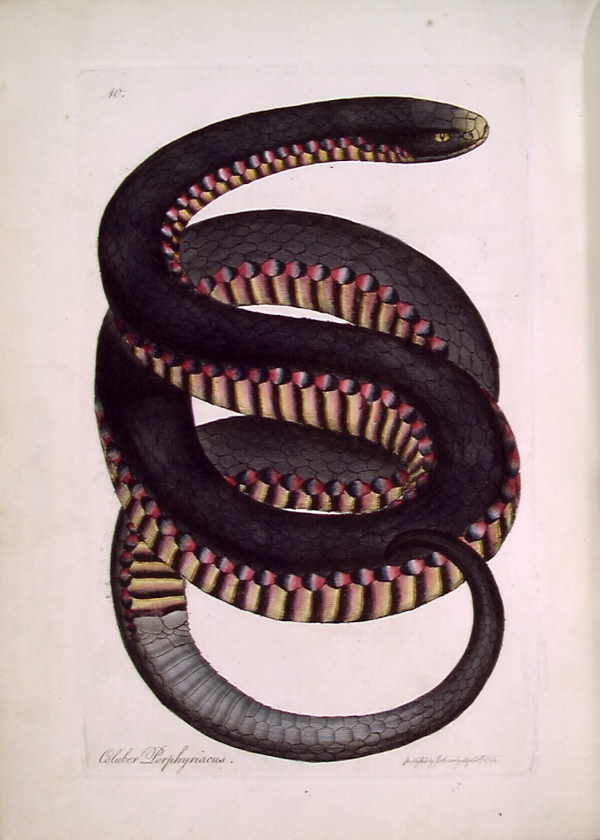
The eastern brown snake has body colours ranging from near-black and light tan to chestnut and burnt-orange, while the red-bellied black snake has glossy black upperparts, bright red or orange flanks and a pink or dull red belly. The eastern brown snake has a head barely distinct from its neck, while the red-bellied black snake has a head that merges into its body without a clearly defined neck. The eastern brown snake inhabits dry environments including arid scrublands and farmland, while the red-bellied black snake is particularly associated with moist environments such as streams, swamps and lagoons. The eastern brown snake consumes a range of vertebrates, including frogs, reptiles, birds and mammals, while frogs are the principal prey of the red-bellied black snake.
| Eastern Brown Snake | Red-bellied Black Snake | |
|---|---|---|
| Appearance | The eastern brown snake has body colours ranging from near-black and light tan to chestnut and burnt-orange. | The red-bellied black snake has glossy black upperparts, bright red or orange flanks and a pink or dull red belly. |
| Head | The eastern brown snake has a head barely distinct from its neck. | The red-bellied black snake has a head that merges into its body without a clearly defined neck. |
| Scales | The eastern brown snake has smooth, slightly glossy body scales and 17 rows of midbody scales. | The red-bellied black snake has glossy, smooth body scales and 17 rows of scales around the middle of its body. |
| Activity | The eastern brown snake is primarily active during daylight. | The red-bellied black snake is primarily active during daylight hours. |
| Defence | The eastern brown snake may raise its body and flatten its neck when threatened. | The red-bellied black snake raises its head and forebody horizontally and flattens its neck when threatened. |
| Diet | The eastern brown snake consumes vertebrates including frogs, reptiles, reptile eggs, birds and mammals. | The red-bellied black snake consumes frogs, fish, tadpoles, lizards, other snakes and mammals. |
| Distribution | The eastern brown snake occurs along eastern Australia's coast from northern Queensland through New South Wales and Victoria to South Australia's Yorke Peninsula. | The red-bellied black snake occurs continuously from southeastern Queensland through eastern New South Wales and Victoria, with a separate population in the southern Mount Lofty Ranges of South Australia. |
| Habitat | The eastern brown snake inhabits dry sclerophyll forests, coastal heathlands, savannah woodlands, grasslands, arid scrublands and farmland. | The red-bellied black snake commonly inhabits woodlands, forests, swamplands and riverbanks, particularly moist environments such as streams, swamps and lagoons. |
Written from the checked facts listed further down. Statements that the sources did not support were removed.
Side by side
| Eastern Brown Snake | Red-bellied Black Snake | |
|---|---|---|
| Scientific name | Pseudonaja textilis (Duméril, Bibron & Duméril, 1854) | Pseudechis porphyriacus (Shaw, 1794) |
| English name | Eastern Brown Snake | Red-bellied Black Snake |
| Group | Reptiles | Reptiles |
| Class | Reptilia Reptile | Reptilia Reptile |
| Order | Squamata Snakes | Squamata Snakes |
| Family | Elapidae Cobras | Elapidae Cobras |
| Genus | Pseudonaja Australian Brown Snakes | Pseudechis Black Snakes |
| Named in | 1854 | 1794 |
| Red List category | Least Concern | Least Concern |
| Countries on record | 2 countries | 1 country |
| GBIF occurrence records | 23,519 records | 37,871 records |
Rows where the two agree are shown in grey.
Where each is found
Both recorded in 1 country
Only Eastern Brown Snake (1)
From Catalogue of Life checklists and GBIF occurrence records. A country missing from a list means no record is held, which is not proof of absence.
Checked facts
| Eastern Brown Snake | Red-bellied Black Snake | |
|---|---|---|
| Appearance |
|
|
| Size |
|
|
| Habitat |
|
|
| Diet |
|
|
| Behaviour |
|
|
| Reproduction |
|
|
| Distribution |
|
|
| Conservation |
|
|
| Similar species |
|
|
In brief
Eastern Brown Snake
The eastern brown snake is a reptile with a slender to moderate build and a head barely distinct from its neck. It occurs along eastern Australia's coast, in parts of the Northern Territory, Papua New Guinea and the Indonesian region of New Guinea. Its body colour ranges from near-black and light tan to chestnut and burnt-orange, and its underside is cream, yellow or orange with coloured blotches. Full profile
Red-bellied Black Snake
Pseudechis porphyriacus is native to the eastern coast of Australia, occurring from southeastern Queensland through eastern New South Wales and Victoria, with separate populations in Queensland and South Australia. It is distinguished by glossy black upperparts, bright red or orange flanks and a pink or dull red belly. Full profile
Compare something else
Page built on 24 November 2026 from the data on the two species pages, where every source is listed.
Cite this page
ScientificNames.org. (2026). Eastern Brown Snake vs Red-bellied Black Snake. Retrieved November 24, 2026, from https://scientificnames.org/compare/eastern-brown-snake-vs-red-bellied-black-snake
“Eastern Brown Snake vs Red-bellied Black Snake.” ScientificNames.org, 2026, scientificnames.org/compare/eastern-brown-snake-vs-red-bellied-black-snake. Accessed 24 Nov. 2026.
ScientificNames.org. “Eastern Brown Snake vs Red-bellied Black Snake.” Accessed November 24, 2026. https://scientificnames.org/compare/eastern-brown-snake-vs-red-bellied-black-snake.
@misc{scientificnames_eastern_brown_snake_vs_red_bellied_black_snake,
  author = {{ScientificNames.org}},
  title = {Eastern Brown Snake vs Red-bellied Black Snake},
  year = {2026},
  url = {https://scientificnames.org/compare/eastern-brown-snake-vs-red-bellied-black-snake},
  note = {Accessed 2026-11-24}
}