Comparison
Short-snouted Sengi vs Bushveld Sengi
Short-snouted Sengi (Elephantulus brachyrhynchus) and Bushveld Sengi (Elephantulus intufi) both belong to the genus Elephantulus (long-eared elephant shrews) and part ways below it. Both are recorded in 4 countries.

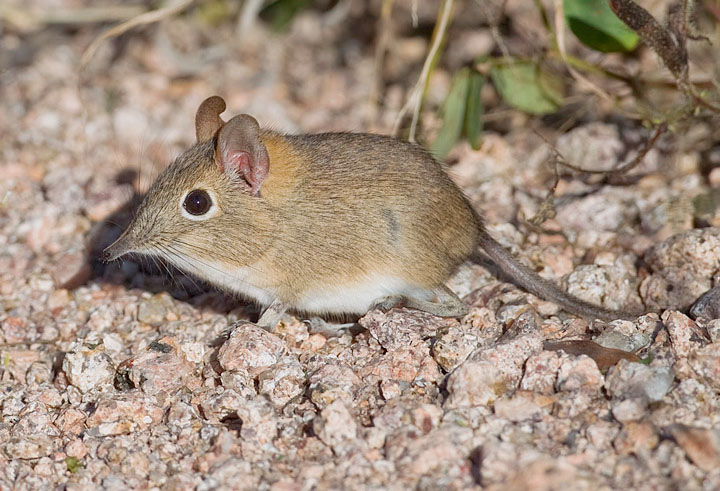


Side by side
| Short-snouted Sengi | Bushveld Sengi | |
|---|---|---|
| Scientific name | Elephantulus brachyrhynchus (A. Smith, 1836) | Elephantulus intufi (A. Smith, 1836) |
| English name | Short-snouted Sengi | Bushveld Sengi |
| Group | Mammals | Mammals |
| Class | Mammalia Mammal | Mammalia Mammal |
| Order | Macroscelidea Sengi | Macroscelidea Sengi |
| Family | Macroscelididae Sengi | Macroscelididae Sengi |
| Genus | Elephantulus Long-eared Elephant Shrews | Elephantulus Long-eared Elephant Shrews |
| Named in | 1836 | 1836 |
| Red List category | Least Concern | Least Concern |
| Countries on record | 11 countries | 4 countries |
| GBIF occurrence records | 871 records | 757 records |
Rows where the two agree are shown in grey.
Where each is found
Both recorded in 4 countries
Only Short-snouted Sengi (7)
From Catalogue of Life checklists and GBIF occurrence records. A country missing from a list means no record is held, which is not proof of absence.
Checked facts
| Short-snouted Sengi | Bushveld Sengi | |
|---|---|---|
| Appearance |
|
|
| Size |
| No checked fact yet |
| Habitat |
|
|
| Diet |
| No checked fact yet |
| Behaviour |
|
|
| Reproduction |
| No checked fact yet |
| Distribution |
|
|
| Conservation |
| No checked fact yet |
In brief
Short-snouted Sengi
Elephantulus brachyrhynchus occurs across southern and eastern Africa, from northern South Africa and northeastern Namibia northward to the Democratic Republic of Congo. It has a relatively short, slightly tapered snout, variable brown-toned fur and pale rings around its eyes. Full profile
Bushveld Sengi
The Bushveld Sengi is a small mammal belonging to the sengi family. It occurs in Angola, Botswana, Namibia, and South Africa. It lives in monogamous pairs with weak pair bonds, within territories separated from other pairs. Full profile
Compare something else
Page built on 29 November 2026 from the data on the two species pages, where every source is listed.
Cite this page
ScientificNames.org. (2026). Short-snouted Sengi vs Bushveld Sengi. Retrieved November 29, 2026, from https://scientificnames.org/compare/short-snouted-sengi-vs-bushveld-sengi
“Short-snouted Sengi vs Bushveld Sengi.” ScientificNames.org, 2026, scientificnames.org/compare/short-snouted-sengi-vs-bushveld-sengi. Accessed 29 Nov. 2026.
ScientificNames.org. “Short-snouted Sengi vs Bushveld Sengi.” Accessed November 29, 2026. https://scientificnames.org/compare/short-snouted-sengi-vs-bushveld-sengi.
@misc{scientificnames_short_snouted_sengi_vs_bushveld_sengi,
  author = {{ScientificNames.org}},
  title = {Short-snouted Sengi vs Bushveld Sengi},
  year = {2026},
  url = {https://scientificnames.org/compare/short-snouted-sengi-vs-bushveld-sengi},
  note = {Accessed 2026-11-29}
}