Comparison

African Hobby vs Gyrfalcon

African Hobby (Falco cuvierii) and Gyrfalcon (Falco rusticolus) both belong to the genus Falco (falcons) and part ways below it.

African Hobby

African Hobby

Falco cuvierii

Aviceda, CC BY-SA 3.0, via Wikimedia Commons

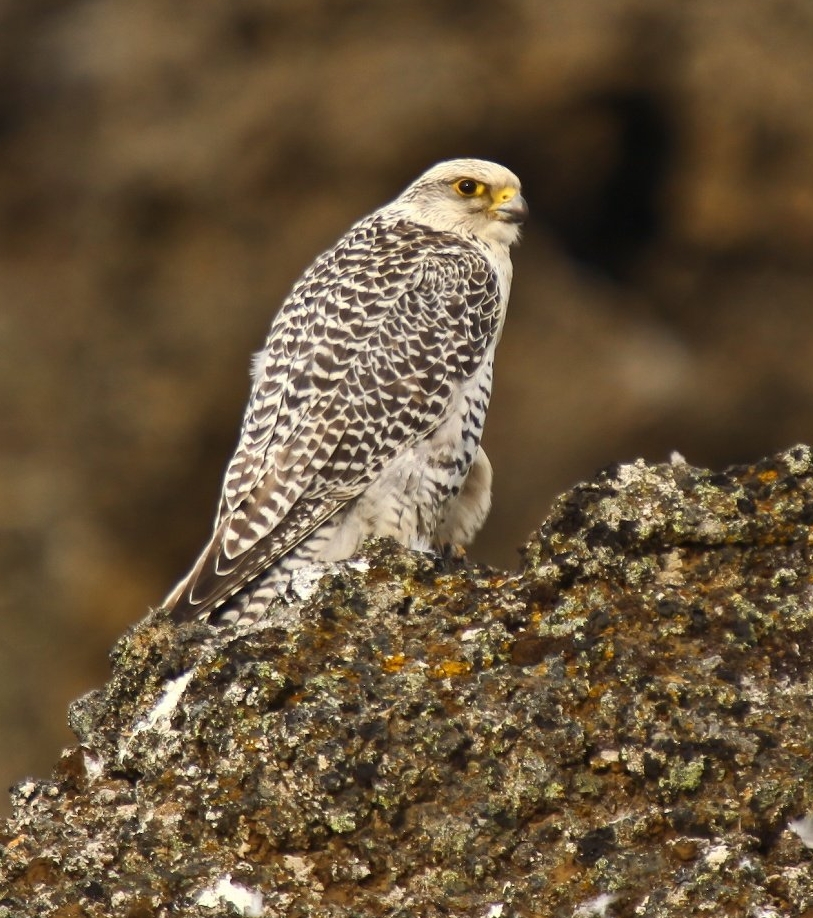
Gyrfalcon

Gyrfalcon

Falco rusticolus

Falco_rusticolus_white.jpg: Ólafur Larsen derivative work: Bogbumper (talk), CC BY-SA 2.0, via Wikimedia Commons

Side by side

African HobbyGyrfalcon
Scientific nameFalco cuvierii A. Smith, 1830Falco rusticolus Linnaeus, 1758
English nameAfrican HobbyGyrfalcon
GroupBirdsBirds
ClassAves BirdAves Bird
OrderFalconiformes FalconsFalconiformes Falcons
FamilyFalconidae FalconsFalconidae Falcons
GenusFalco FalconsFalco Falcons
Named in18301758
Red List categoryLeast ConcernLeast Concern
EnvironmentNot recordedterrestrial
Countries on record33 countries24 countries
GBIF occurrence records5,362 records26,842 records

Rows where the two agree are shown in grey.

Where each is found

Only African Hobby (33)

Only Gyrfalcon (24)

From Catalogue of Life checklists and GBIF occurrence records. A country missing from a list means no record is held, which is not proof of absence.

Checked facts

African HobbyGyrfalcon
Appearance
  • The African hobby has blackish upperparts and deep rufous underparts, cheeks, nape, and throat. English Wikipedia
  • The African hobby has black streaks on its throat and flanks that are visible at close range. English Wikipedia
  • The facial skin and feet of the African hobby are yellow. English Wikipedia
  • Juvenile African hobbies are browner above and have heavier underpart streaking than adults. English Wikipedia
  • Juvenile African hobbies have paler cheeks, napes, and throats than adults. English Wikipedia
  • Adult African hobbies have faint or absent streaking on their underparts. ebird.org
  • The gyrfalcon exhibits plumage colours ranging from entirely white to dark grey-brown. English Wikipedia
  • The species has four principal colour morphs: white, silver, brown and black. English Wikipedia
  • Juvenile gyrfalcons have darker and browner plumage than adults. English Wikipedia
  • Adult gyrfalcons have yellow ceres, eye-rings and legs, whereas juveniles have blue versions of these features. animaldiversity.org
  • The gyrfalcon has long pointed wings, a long tail and a notched bill. animaldiversity.org
  • The Greenland population most commonly exhibits white plumage flecked with grey on the back and wings. English Wikipedia
SizeNo checked fact yet
Habitat
  • The African hobby is mostly found along the edges of moist woodlands and forests. English Wikipedia
  • Palm savannah and gallery forest are the most common habitats of the African hobby in western Africa and western parts of East Africa. English Wikipedia
Diet
  • Outside the breeding season, the African hobby is thought to feed almost entirely on flying insects. English Wikipedia
  • Recorded insect prey of the African hobby includes termite alates, grasshoppers, locusts, beetles, and cicadas. English Wikipedia
  • During breeding, the African hobby favours small birds including weavers, estrildid finches, and swallows. English Wikipedia
  • During breeding, the African hobby also takes birds as large as doves. English Wikipedia
Behaviour
  • The African hobby hunts while flying, mainly at dawn and dusk. English Wikipedia
  • Groups of up to 30 African hobbies have been recorded feeding when termite alates or locusts swarm. English Wikipedia
  • The African hobby hunts by making sorties from a perch or by quartering across favoured hunting areas. English Wikipedia
  • The African hobby hunts across areas at heights of approximately 50–100 metres. English Wikipedia
  • The African hobby is normally encountered alone but can also occur in pairs or small family groups. English Wikipedia
  • The African hobby can be nomadic and follow available food sources. English Wikipedia
  • Gyrfalcons may cache large prey items, including Arctic hares, between feeding periods during nesting. animaldiversity.org
  • Gyrfalcons generally hunt, forage and roost alone outside the breeding season. animaldiversity.org
  • Gyrfalcons are generally non-migratory but may disperse from their breeding range during winter. animaldiversity.org
Reproduction
  • The African hobby nests in old stick nests built by other birds. English Wikipedia
  • The African hobby particularly uses old nests of black kites. English Wikipedia
  • The African hobby uses nesting sites situated high in trees. English Wikipedia
  • Breeding in the western part of the African hobby's range has been recorded from December through June. English Wikipedia
  • Breeding in equatorial East Africa has been recorded from August through December. English Wikipedia
  • Breeding in southern Africa has been recorded from September through January. English Wikipedia
  • Gyrfalcons generally nest on cliff faces and frequently reuse abandoned nests belonging to other birds. English Wikipedia
  • Gyrfalcon clutches usually contain two to four eggs. English Wikipedia
  • The average gyrfalcon egg measures approximately 58.46 × 45 mm. English Wikipedia
  • Gyrfalcon eggs have an average incubation period of 35 days. English Wikipedia
  • Gyrfalcon nestlings generally leave the nest at seven to eight weeks of age. English Wikipedia
  • Immature gyrfalcons become independent of their parents at three to four months of age. English Wikipedia
  • Gyrfalcons in the studied northern populations generally lay eggs near the end of April. animaldiversity.org
LifespanNo checked fact yet
Distribution
  • The African hobby occurs in Angola, Benin, Botswana, Burkina Faso, Burundi, Cameroon, the Central African Republic, Chad, the Republic of the Congo, and the Democratic Republic of the Congo. English Wikipedia
  • The African hobby occurs in Ivory Coast, Eswatini, Ethiopia, Gabon, Gambia, Ghana, Guinea, Guinea-Bissau, Kenya, Liberia, Malawi, Mali, and Mozambique. English Wikipedia
  • The African hobby occurs in Namibia, Niger, Nigeria, Rwanda, Senegal, Sierra Leone, Somalia, South Africa, Sudan, Tanzania, Togo, Uganda, Zambia, and Zimbabwe. English Wikipedia
ConservationNo checked fact yet
  • The gyrfalcon is classified as Least Concern on the IUCN Red List. English Wikipedia
  • Pesticide pollution depressed gyrfalcon populations during the mid-twentieth century. English Wikipedia
  • Improved environmental standards in developed countries have contributed to the recovery of gyrfalcon populations. English Wikipedia
UsesNo checked fact yet
  • The gyrfalcon is the official bird of Canada's Northwest Territories. English Wikipedia
Other
  • The African hobby is a monotypic species. English Wikipedia
  • The African hobby has traditionally been placed in the subgenus Falco because of its morphological similarity to other hobbies. English Wikipedia
No checked fact yet

In brief

African Hobby

The African Hobby is a monotypic bird species. It is mostly found along the edges of moist woodlands and forests. It has blackish upperparts, deep rufous underparts, and yellow facial skin and feet. Full profile

Gyrfalcon

Falco rusticolus has a Holarctic distribution, with most of its breeding range north of 60 degrees latitude. It exhibits four principal colour morphs: white, silver, brown and black. Full profile

Compare something else

Page built on 27 November 2026 from the data on the two species pages, where every source is listed.

Cite this page

ScientificNames.org. (2026). African Hobby vs Gyrfalcon. Retrieved November 27, 2026, from https://scientificnames.org/compare/african-hobby-vs-gyrfalcon