Species · Birds
African Hobby Falco cuvierii
The scientific name of the African Hobby is Falco cuvierii. It is a species of bird in the family Falconidae (falcons), order Falconiformes. The name dates from 1830.
- Scientific name
- Falco cuvierii A. Smith, 1830
- Common name
- African Hobby
- Genus
- Falco
- Family
- Falconidae (Falcons)
- Order
- Falconiformes
- Class
- Aves
- Red List category
- LC Least Concern
- Recorded in
- 33 countries
- Name status
- accepted in the Catalogue of Life

Overview
The African Hobby is a monotypic bird species. It is mostly found along the edges of moist woodlands and forests. It has blackish upperparts, deep rufous underparts, and yellow facial skin and feet.
Written 26 November 2026 from the sources listed below. Each statement was checked against the passage it cites; statements that could not be supported were removed.
Appearance
The African Hobby has blackish upperparts and deep rufous underparts, cheeks, nape, and throat. Its facial skin and feet are yellow.[1][2]
Black streaks on the throat and flanks are visible at close range. Adults have faint or absent underpart streaking.[3][4]
Juveniles are browner above and have heavier underpart streaking than adults. Their cheeks, napes, and throats are paler.[5][6]
Habitat
The African Hobby is mostly found along the edges of moist woodlands and forests. Palm savannah and gallery forest are its most common habitats in western Africa and western parts of East Africa.[7][8]
Diet
Outside the breeding season, the African Hobby is thought to feed almost entirely on flying insects. Recorded insect prey includes termite alates, grasshoppers, locusts, beetles, and cicadas.[9][10]
During breeding, the African Hobby favours small birds, including weavers, estrildid finches, and swallows. It also takes birds as large as doves.[11][12]
Behaviour
The African Hobby hunts while flying, mainly at dawn and dusk. It hunts by making sorties from a perch or by quartering across favoured hunting areas, at heights of approximately 50–100 metres.[13][14][15]
It is normally encountered alone but can also occur in pairs or small family groups. Groups of up to 30 have been recorded feeding when termite alates or locusts swarm.[16][17]
The African Hobby can be nomadic and follow available food sources.[18]
Reproduction and life cycle
The African Hobby nests in old stick nests built by other birds, particularly old nests of black kites. Its nesting sites are situated high in trees.[19][20][21]
Breeding in the western part of its range has been recorded from December through June. In equatorial East Africa, breeding has been recorded from August through December.[22][23]
In southern Africa, breeding has been recorded from September through January.[24]
Classification of the African Hobby
| Kingdom | Animalia |
|---|---|
| Phylum | Chordata |
| Subphylum | Vertebrata |
| Infraphylum | Gnathostomata |
| Parvphylum | Osteichthyes |
| Megaclass | Tetrapoda |
| Class | Aves (Bird) |
| Order | Falconiformes (Falcons) |
| Family | Falconidae (Falcons) |
| Subfamily | Falconinae |
| Genus | Falco (Falcons) |
| Species | Falco cuvierii A. Smith, 1830 |
Where the African Hobby is found
Checklists and occurrence records place Falco cuvierii in 33 countries across Africa. GBIF holds 5,362 georeferenced records of it.
Countries
- Angola 65
- Benin 123
- Botswana 49
- Burkina Faso 15
- Burundi 14
- Cameroon 58
- Central African Republic 12
- Democratic Republic of the Congo 82
- Ethiopia 165
- Gabon 5
- Gambia 317
- Ghana 1,100
- Guinea 13
- Guinea-Bissau 19
- Ivory Coast 79
- Kenya 392
- Liberia 19
- Malawi 4
- Mali 4
- Mozambique 159
- Namibia 124
- Niger 4
- Nigeria 149
- Republic of the Congo 10
- Rwanda 175
- Senegal 84
- Sierra Leone 15
- South Africa 10
- Tanzania 393
- Togo 25
- Uganda 1,527
- Zambia 106
- Zimbabwe 46
Regions and cities with the most records
- Kajansi, Uganda 890
- Katabi, Uganda 859
- Kasanje, Uganda 855
- Entebbe, Uganda 852
- Central, Ghana 306
- Arusha, Tanzania 236
- Greater Accra, Ghana 226
- Bunamwaya, Uganda 218
- Kampala, Uganda 203
- Kyengera, Uganda 201
- Kireka, Uganda 162
- Nansana, Uganda 162
- Eastern, Ghana 151
- Kira, Uganda 150
- Arusha, Tanzania 148
- Savannah, Ghana 139
- Kasangati, Uganda 136
- Busumbala, Gambia 128
- Adenta, Ghana 121
- Anyinam, Ghana 121
- Ashanti, Ghana 116
- Medina Estates, Ghana 115
- Sinchu Alagi, Gambia 115
- Mukono, Uganda 114
- Sakumona, Ghana 112
- Lashibi, Ghana 111
- Western, Gambia 111
- Kunkujang, Gambia 110
- Abuko, Gambia 109
- Accra, Ghana 109
- Inhambane Province, Mozambique 109
- Welingara, Gambia 108
- Faji Kunda, Gambia 107
- Ashaiman, Ghana 105
- Oromiya, Ethiopia 99
- Elmina, Ghana 98
Range as the checklists state it
Africa
A number beside a place is its count of GBIF occurrence records. A place without a number comes from a checklist alone. Records show where a species has been observed or collected, which can include escapes and vagrants.
Common names
English
- African Hobby
- AFHO
Names in 26 other languages
- Arabic
- شاهين أفريقي
- Catalan
- falcó mostatxut africà
- Chinese
- 非洲隼
- Croatian
- kestenjastotrbi sokol
- Czech
- ostříž africký
- Danish
- Afrikansk Lærkefalk
- Dutch
- Afrikaanse Boomvalk
- Esperanto
- afrika falko
- Estonian
- aafrika lõopistrik
- Finnish
- afrikannuolihaukka
- French
- Faucon de Cuvier, Hobereau africain
- German
- Afrikabaumfalke, Afrikanischer Baumfalke
- Hungarian
- afrikai kabasólyom
- Italian
- Lodolaio africano
- Japanese
- アフリカチゴハヤブサ
- Lithuanian
- afrikinis sakalas
- Norwegian
- termittfalk
- Polish
- sokół afrykański
- Portuguese
- ógea-africana
- Russian
- Африканский чеглок
- Serbian
- Afrički lastavičar
- Slovak
- sokol hrdzavobruchý
- Spanish
- Alcotán africano
- Swedish
- afrikansk lärkfalk
- Turkish
- Afrika Delice Doğanı, Afrika doğanı
- Ukrainian
- підсоколик африканський
Synonyms
3 other scientific names have been used for this species and are now treated as synonyms of Falco cuvierii.
- Cuvieria cuvieri
- Falco bosschii Schlegel, H, 1863
- Falco cuvieri A. Smith, 1830
Related species
-
 Peregrine FalconFalco peregrinus
-
 Common KestrelFalco tinnunculus
-
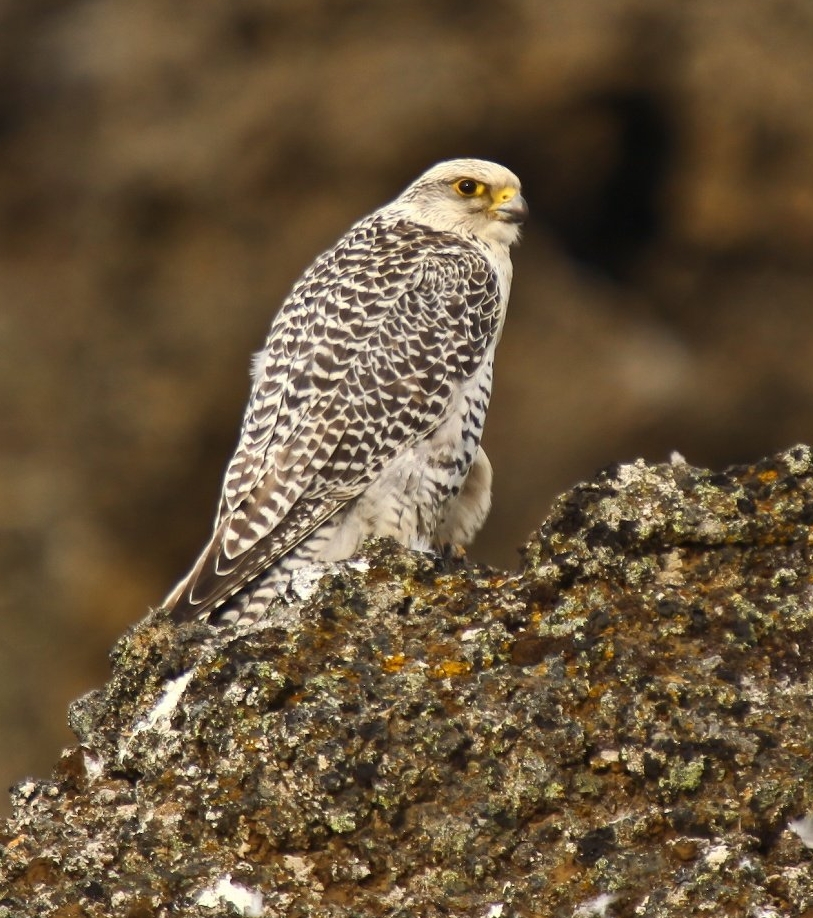 GyrfalconFalco rusticolus
-
 MerlinFalco columbarius
-
 American KestrelFalco sparverius
-
 Saker FalconFalco cherrug
-
 Eurasian HobbyFalco subbuteo
-
 Amur FalconFalco amurensis
Compare
Questions and answers
What is the scientific name of the African Hobby?
The scientific name of the African Hobby is Falco cuvierii. Written with its author, the full name is Falco cuvierii A. Smith, 1830.
Which family does the African Hobby belong to?
Falco cuvierii belongs to the family Falconidae, in the order Falconiformes and the class Aves.
Where is the African Hobby found?
Checklists and occurrence records place Falco cuvierii in 33 countries, including Uganda, Ghana, Tanzania, Kenya, Gambia and Rwanda.
What is the conservation status of the African Hobby?
The IUCN Red List category recorded for Falco cuvierii is Least Concern (LC).
What other names does the African Hobby have?
Falco cuvierii is also known in English as AFHO.
What kind of bird is Falco supposed to be?
Falco cuvierii is a bird in the family Falconidae, order Falconiformes, and class Aves. The African Hobby is a monotypic species traditionally placed in the subgenus Falco because of its morphological similarity to other hobbies.[25][26]
Do falcons live in Africa?
Yes. The African Hobby occurs in Angola, Benin, Botswana, Burkina Faso, Burundi, Cameroon, the Central African Republic, Chad, the Republic of the Congo, the Democratic Republic of the Congo, Ivory Coast, Eswatini, Ethiopia, Gabon, Gambia, Ghana, Guinea, Guinea-Bissau, Kenya, Liberia, Malawi, Mali, Mozambique, Namibia, Niger, Nigeria, Rwanda, Senegal, Sierra Leone, Somalia, South Africa, Sudan, Tanzania, Togo, Uganda, Zambia, and Zimbabwe.[27][28][29]
Sources
Passages the profile rests on
- The African hobby has blackish upperparts and deep rufous underparts, cheeks, nape, and throat. Source passage: “A small, slim falcon with blackish upperparts and deep rufous underparts with rufous cheek, nape and throat.” — English Wikipedia
- The facial skin and feet of the African hobby are yellow. Source passage: “The facial skin and feet are yellow.” — English Wikipedia
- The African hobby has black streaks on its throat and flanks that are visible at close range. Source passage: “At close range black streaks can be seen on the throat and flanks.” — English Wikipedia
- Adult African hobbies have faint or absent streaking on their underparts. Source passage: “The adults have faint or no streaking below” — ebird.org
- Juvenile African hobbies are browner above and have heavier underpart streaking than adults. Source passage: “Juvenile birds are browner above with heavier streaking on the underparts” — English Wikipedia
- Juvenile African hobbies have paler cheeks, napes, and throats than adults. Source passage: “paler on cheek, nape and throat.” — English Wikipedia
- The African hobby is mostly found along the edges of moist woodlands and forests. Source passage: “They are mostly found in the edge of moist woodlands and forests” — English Wikipedia
- Palm savannah and gallery forest are the most common habitats of the African hobby in western Africa and western parts of East Africa. Source passage: “commonest in palm savannah and gallery forest in west and western regions of East Africa.” — English Wikipedia
- Outside the breeding season, the African hobby is thought to feed almost entirely on flying insects. Source passage: “When not breeding the African hobby is thought to feed almost entirely on flying insects” — English Wikipedia
- Recorded insect prey of the African hobby includes termite alates, grasshoppers, locusts, beetles, and cicadas. Source passage: “termite alates, grasshoppers, locusts, beetles and cicadas have all been recorded.” — English Wikipedia
- During breeding, the African hobby favours small birds including weavers, estrildid finches, and swallows. Source passage: “When breeding a high proportion of small birds such as weavers, estrildid finches and swallows” — English Wikipedia
- During breeding, the African hobby also takes birds as large as doves. Source passage: “up to the size of doves are favoured.” — English Wikipedia
- The African hobby hunts while flying, mainly at dawn and dusk. Source passage: “Hunts on the wing, mainly at dawn and dusk.” — English Wikipedia
- The African hobby hunts by making sorties from a perch or by quartering across favoured hunting areas. Source passage: “It hunts either by making sorties from a perch or quartering across favoured hunting areas” — English Wikipedia
- The African hobby hunts across areas at heights of approximately 50–100 metres. Source passage: “at 50–100 metres (160–330 ft).” — English Wikipedia
- Groups of up to 30 African hobbies have been recorded feeding when termite alates or locusts swarm. Source passage: “Feeding concentrations of up to 30 birds have been recorded when termite alates or locusts are swarming.” — English Wikipedia
- The African hobby is normally encountered alone but can also occur in pairs or small family groups. Source passage: “Normally encountered as solitary birds but sometimes in pairs or small family groups.” — English Wikipedia
- The African hobby can be nomadic and follow available food sources. Source passage: “This species can be nomadic, following food sources.” — English Wikipedia
- The African hobby nests in old stick nests built by other birds. Source passage: “For nesting they use the old stick nests of other birds” — English Wikipedia
- The African hobby particularly uses old nests of black kites. Source passage: “especially black kite” — English Wikipedia
- The African hobby uses nesting sites situated high in trees. Source passage: “which are situated high in a tree.” — English Wikipedia
- Breeding in the western part of the African hobby's range has been recorded from December through June. Source passage: “Breeding has been recorded in December to June in the western part of the range” — English Wikipedia
- Breeding in equatorial East Africa has been recorded from August through December. Source passage: “August to December in equatorial East Africa” — English Wikipedia
- Breeding in southern Africa has been recorded from September through January. Source passage: “September to January in southern Africa.” — English Wikipedia
- The African hobby is a monotypic species. Source passage: “African hobby is a monotypic species.” — English Wikipedia
- The African hobby has traditionally been placed in the subgenus Falco because of its morphological similarity to other hobbies. Source passage: “As a typical hobby it has been traditionally considered a member of the subgenus Falco due to its similar morphology to the other hobbies.” — English Wikipedia
- The African hobby occurs in Angola, Benin, Botswana, Burkina Faso, Burundi, Cameroon, the Central African Republic, Chad, the Republic of the Congo, and the Democratic Republic of the Congo. Source passage: “It is found in Angola, Benin, Botswana, Burkina Faso, Burundi, Cameroon, Central African Republic, Chad, Republic of the Congo, Democratic Republic of the Congo” — English Wikipedia
- The African hobby occurs in Ivory Coast, Eswatini, Ethiopia, Gabon, Gambia, Ghana, Guinea, Guinea-Bissau, Kenya, Liberia, Malawi, Mali, and Mozambique. Source passage: “Ivory Coast, Eswatini, Ethiopia, Gabon, Gambia, Ghana, Guinea, Guinea-Bissau, Kenya, Liberia, Malawi, Mali, Mozambique” — English Wikipedia
- The African hobby occurs in Namibia, Niger, Nigeria, Rwanda, Senegal, Sierra Leone, Somalia, South Africa, Sudan, Tanzania, Togo, Uganda, Zambia, and Zimbabwe. Source passage: “Namibia, Niger, Nigeria, Rwanda, Senegal, Sierra Leone, Somalia, South Africa, Sudan, Tanzania, Togo, Uganda, Zambia, and Zimbabwe.” — English Wikipedia
Data
- Catalogue of Life, 2026-10-16 XR cc by
- Global Biodiversity Information Facility CC BY 4.0
- Wikidata CC0
- GeoNames CC BY 4.0
- Wikimedia Commons per image; credit shown with each image
- Within the Catalogue of Life, this name comes from The Integrated Taxonomic Information System cc0
References
- Sibley, Charles G., and Burt L. Monroe, Jr. (1993). A Supplement to Distribution and Taxonomy of Birds of the World.
- del Hoyo, Josep, Andrew Elliott, and Jordi Sargatal, eds. (1994). New World Vultures to Guineafowl. Handbook of the Birds of the World, Vol. 2.
- Gill, Frank, & and Minturn Wright. (2006). Birds of the World: Recommended English Names.
- Dickinson, E. C., and J. V. Remsen Jr., eds. (2013). The Howard and Moore Complete Checklist of the Birds of the World, 4th Edition, Vol. 1 Non-Passerines.
This species in other databases
Page built on 27 November 2026. See how the catalog is made and all sources and licences.
Cite this page
ScientificNames.org. (2026). Falco cuvierii (African Hobby). Retrieved November 27, 2026, from https://scientificnames.org/species/falco-cuvierii
“Falco cuvierii (African Hobby).” ScientificNames.org, 2026, scientificnames.org/species/falco-cuvierii. Accessed 27 Nov. 2026.
ScientificNames.org. “Falco cuvierii (African Hobby).” Accessed November 27, 2026. https://scientificnames.org/species/falco-cuvierii.
@misc{scientificnames_falco_cuvierii_african_hobby,
  author = {{ScientificNames.org}},
  title = {Falco cuvierii (African Hobby)},
  year = {2026},
  url = {https://scientificnames.org/species/falco-cuvierii},
  note = {Accessed 2026-11-27}
}