Comparison

Common Freshwater Amphipod vs Roeseli's Scud

Common Freshwater Amphipod (Gammarus pulex) and Roeseli's Scud (Gammarus roeselii) both belong to the genus Gammarus (scuds) and part ways below it. Both are recorded in 13 countries.

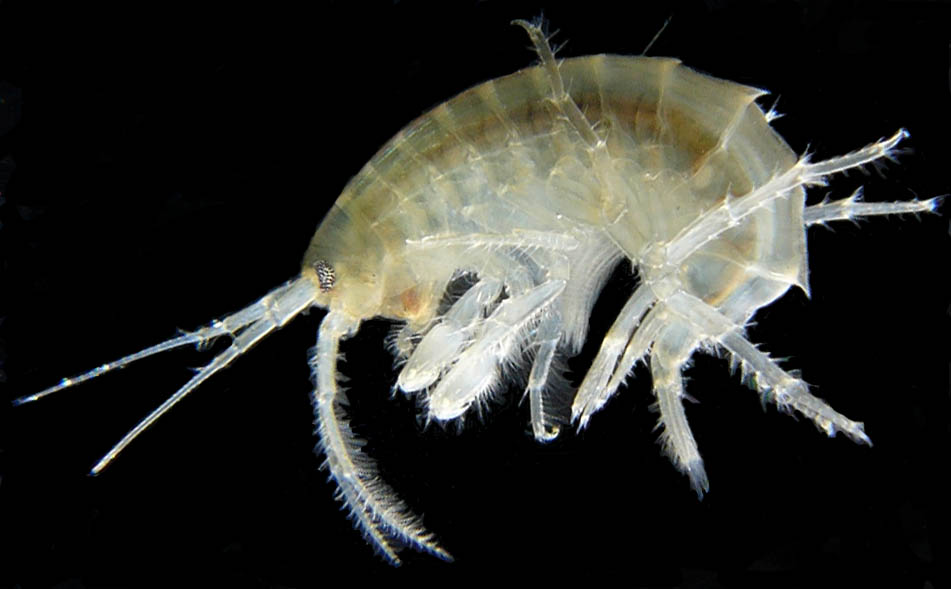
Common Freshwater Amphipod

Common Freshwater Amphipod

Gammarus pulex

MdE, CC BY-SA 3.0 de, via Wikimedia Commons

Roeseli's Scud

Roeseli's Scud

Gammarus roeselii

Michal Maňas, CC BY 2.5, via Wikimedia Commons

Side by side

Common Freshwater AmphipodRoeseli's Scud
Scientific nameGammarus pulex (Linnaeus, 1758)Gammarus roeselii Gervais, 1835
English nameCommon Freshwater AmphipodRoeseli's Scud
GroupCrustaceansCrustaceans
ClassMalacostracaMalacostraca
OrderAmphipodaAmphipoda
FamilyGammaridae ScudsGammaridae Scuds
GenusGammarus ScudsGammarus Scuds
Named in17581835
Environmentfreshwaterfreshwater
Countries on record26 countries21 countries
GBIF occurrence records34,163 records6,807 records

Rows where the two agree are shown in grey.

Where each is found

Both recorded in 13 countries

Only Common Freshwater Amphipod (13)

Only Roeseli's Scud (8)

From Catalogue of Life checklists and GBIF occurrence records. A country missing from a list means no record is held, which is not proof of absence.

Checked facts

Common Freshwater AmphipodRoeseli's Scud
Appearance
  • Adults are generally translucent gray with brown or green markings that vary according to habitat, age, and diet. English Wikipedia
  • Individuals living in caves have less coloration than those living at the surface. English Wikipedia
  • Infection by the parasite Pomphorhynchus laevis is associated with bright orange coloration in the gills. English Wikipedia
  • The species has compound eyes, two pairs of antennae, and seven pairs of thoracic limbs. English Wikipedia
  • Its first two thoracic limbs are gnathopods used for feeding and mating. English Wikipedia
  • It has abdominal gills for respiration. English Wikipedia
  • Adults have spines on their fifth through seventh pereiopods, distinguishing this species from many other common amphipods. English Wikipedia
  • Individuals can be green, brown, gray, or yellow, sometimes with reddish markings on parts of their carapaces. English Wikipedia
SizeNo checked fact yet
Habitat
  • The species primarily inhabits flowing freshwater systems with high oxygen levels, including streams, rivers, and springs. English Wikipedia
  • It also occurs in lakes that have inflow and outflow currents. English Wikipedia
  • It prefers stony substrates that provide camouflage from predators. English Wikipedia
  • During daylight, individuals occupy deeper and more shaded habitats. English Wikipedia
  • The species inhabits freshwater ponds, lakes, and streams. English Wikipedia
  • Populations tend to be most abundant in rivers with moderate water flow and plentiful plants that provide shelter. English Wikipedia
  • The species is more abundant at warmer temperatures than some amphipod species occurring alongside it. English Wikipedia
  • The study indicates that ancestral populations could have occupied either lake or river habitats. pmc.ncbi.nlm.nih.gov
  • Several present-day river populations descended from ancestors that occupied lake habitats during the Pleistocene. pmc.ncbi.nlm.nih.gov
Diet
  • The species is a detritivore that feeds on dead organic material. English Wikipedia
  • Its natural diet primarily consists of decomposing leaves, fungi, and bacteria. English Wikipedia
  • It prefers conditioned leaves that have been colonized by microorganisms. English Wikipedia
  • Juveniles consume adult feces until they become capable of eating conditioned leaves. English Wikipedia
  • Cannibalism has been observed in laboratory environments with scarce resources. English Wikipedia
No checked fact yet
Behaviour
  • The species is primarily nocturnal, increasing its activity during nighttime. English Wikipedia
  • Feeding activity is generally highest at night when light levels are lower. English Wikipedia
  • Individuals seek shelter among leaves and other submerged vegetation to reduce predation risk. English Wikipedia
  • Populations exposed to fish predators are less active and spend more time hiding than populations exposed to invertebrate predators. English Wikipedia
  • The species exhibits passive movement and drifting, particularly among juveniles and during disturbances. English Wikipedia
  • Individuals can detect and respond to light, vibrations, and environmental chemical cues. English Wikipedia
  • Infection by Pomphorhynchus laevis can cause individuals to seek light and fish odors rather than avoid them. English Wikipedia
  • Individuals can attach their bodies to substrates using spines on their metasomes. English Wikipedia
  • Individuals can survive outside water for several days. English Wikipedia
Reproduction
  • The species reproduces sexually and typically produces several broods annually, depending on water temperature and food availability. English Wikipedia
  • Mating and fertilization occur immediately after the female molts and releases her eggs. English Wikipedia
  • Males guard females by grasping them in a precopulatory position for hours or days. English Wikipedia
  • Females carry developing embryos in a ventral brood pouch until hatching. English Wikipedia
  • Males and females form precopulatory mating pairs. English Wikipedia
  • After mating, females carry eggs in a brood pouch before releasing juveniles. English Wikipedia
  • Some females produce clutches containing 80 or more eggs. English Wikipedia
  • Winter clutches are smaller but contain larger eggs than clutches produced during warmer months. English Wikipedia
  • Egg development in the brood pouch takes between 10 and more than 200 days depending on water temperature. English Wikipedia
  • Embryo survival is highest at water temperatures between 10 and 16 °C. English Wikipedia
  • Females can produce as many as eight broods during their lifetimes. English Wikipedia
  • Juveniles undergo nine or ten moults before reaching sexual maturity. English Wikipedia
ConservationNo checked fact yet
  • The species is considered an established non-native species in central, northern, and western Europe. English Wikipedia
  • The species can tolerate some anthropogenic environmental disturbance. English Wikipedia
  • Populations exposed to pesticide-contaminated river environments in Central Europe have developed increased tolerance to neonicotinoid insecticides over time. English Wikipedia
Uses
  • The species has been used as a biomonitor for stream pollution, oxygen depletion, and chemical contamination. English Wikipedia
  • The species was formerly used as a food source in commercial fisheries. English Wikipedia

In brief

Common Freshwater Amphipod

Gammarus pulex primarily inhabits flowing freshwater systems with high oxygen levels, including streams, rivers, and springs. It is a detritivore that feeds primarily on decomposing leaves, fungi, and bacteria. Full profile

Roeseli's Scud

Gammarus roeselii inhabits freshwater ponds, lakes, and streams. Adults have spines on their fifth through seventh pereiopods, distinguishing the species from many other common amphipods. Full profile

Compare something else

Page built on 28 November 2026 from the data on the two species pages, where every source is listed.

Cite this page

ScientificNames.org. (2026). Common Freshwater Amphipod vs Roeseli's Scud. Retrieved November 28, 2026, from https://scientificnames.org/compare/common-freshwater-amphipod-vs-roeselis-scud