Comparison

Hemiptelea davidii vs Japanese Zelkova

Hemiptelea davidii (Hemiptelea davidii) and Japanese Zelkova (Zelkova serrata) both belong to the family Ulmaceae (elm family) and part ways below it. Both are recorded in 4 countries.
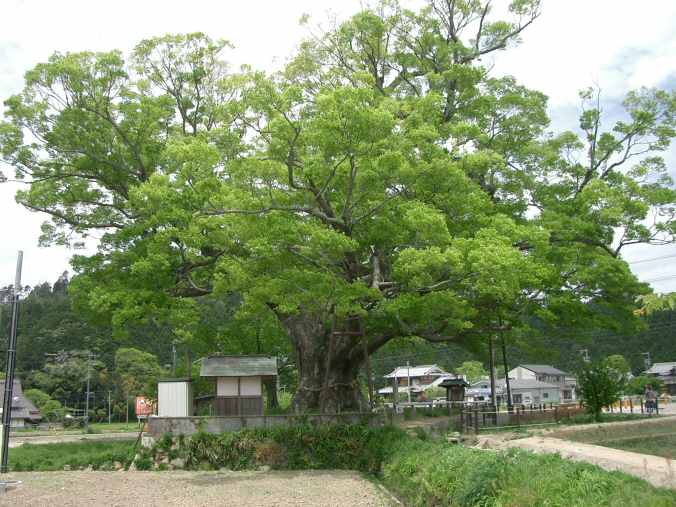
Japanese Zelkova

Japanese Zelkova

Zelkova serrata

ja:User:Miya, CC BY-SA 4.0, via Wikimedia Commons

Side by side

Hemiptelea davidiiJapanese Zelkova
Scientific nameHemiptelea davidii (Hance) Planch.Zelkova serrata (Thunb.) Makino
English nameNot recordedJapanese Zelkova
GroupFlowering plantsFlowering plants
ClassMagnoliopsidaMagnoliopsida
OrderRosalesRosales
FamilyUlmaceae Elm FamilyUlmaceae Elm Family
GenusHemipteleaZelkova Zelkovas
Red List categoryNot recordedNear Threatened
Countries on record4 countries7 countries
GBIF occurrence records1,228 records56,865 records

Rows where the two agree are shown in grey.

Where each is found

Both recorded in 4 countries

Only Japanese Zelkova (3)

From Catalogue of Life checklists and GBIF occurrence records. A country missing from a list means no record is held, which is not proof of absence.

Checked facts

Hemiptelea davidiiJapanese Zelkova
AppearanceNo checked fact yet
  • Zelkova serrata is a deciduous tree with a short trunk that divides into numerous upright and spreading stems, forming a broad, rounded crown. English Wikipedia
  • Its leaves are simple, ovate to oblong-ovate, and have serrated or crenate margins. English Wikipedia
  • The leaves have between eight and fourteen pairs of veins. English Wikipedia
  • The upper leaf surfaces are rough, while the undersides are hairless or nearly hairless. English Wikipedia
  • The leaves are green to dark green during spring and summer, turning yellow, orange and red in autumn. English Wikipedia
  • The bark ranges from grayish white to grayish brown and may be smooth with lenticels or exfoliate in patches to expose orange inner bark. English Wikipedia
  • The tree has slender twigs with small, dark, conical buds arranged in a zigzag pattern. English Wikipedia
  • The branches are usually hairless. English Wikipedia
  • The branchlets are brownish-purple to brown. English Wikipedia
  • The tree produces small, ovate, wingless drupes that mature from green to brown. English Wikipedia
  • Its flowers are yellow-green, inconspicuous and arranged in tight groups along new stems. English Wikipedia
SizeNo checked fact yet
  • Its leaves can reach 5 centimetres in both length and width. English Wikipedia
  • Its fruits measure approximately 2.5 to 3.5 millimetres in diameter. English Wikipedia
  • The staminate flowers are approximately 3 millimetres in diameter. English Wikipedia
  • The pistillate flowers are usually approximately 1.5 millimetres in diameter. English Wikipedia
HabitatNo checked fact yet
  • The tree grows in moist, well-drained soils under full or partial sunlight. English Wikipedia
BehaviourNo checked fact yet
  • The tree grows rapidly when young, but its growth rate slows to a medium rate at middle age and maturity. English Wikipedia
  • Zelkova serrata tolerates heat, limited water, nutrient-poor soils and a range of soil pH conditions. English Wikipedia
ReproductionNo checked fact yet
  • Zelkova serrata is monoecious. English Wikipedia
  • The tree produces flowers in spring at the same time as its leaves develop. English Wikipedia
  • The staminate flowers occur in clusters in the axils of lower leaves, whereas the pistillate flowers occur singly or in small groups in the axils of upper leaves. English Wikipedia
  • The fruits ripen from late summer through autumn. English Wikipedia
  • The species can be propagated using seeds, rooted stem cuttings and grafting. English Wikipedia
  • Its seeds can germinate without pretreatment, although stratification at 5 degrees Celsius for 60 days improves germination percentage. English Wikipedia
DistributionNo checked fact yet
  • Zelkova serrata is native to Japan, Korea, eastern China and Taiwan. English Wikipedia
ConservationNo checked fact yet
  • Colder temperatures can cause twig dieback in this species. English Wikipedia
  • The species is highly resistant to Dutch elm disease. English Wikipedia
  • Zelkova serrata shows good resistance to elm leaf beetle and Japanese beetle. English Wikipedia
  • The tree is susceptible to the fungus Griphosphaerioma zelkovicola, which was first observed on its bark in Japan in 2003. English Wikipedia
UsesNo checked fact yet
  • Zelkova serrata is cultivated as an ornamental tree in its native range, Europe and North America. English Wikipedia
  • The tree is planted in lawns and parks for its attractive bark, foliage colour and vase-shaped form. English Wikipedia
  • The tree provides good shade. English Wikipedia
  • Zelkova serrata is commonly cultivated as a bonsai tree. English Wikipedia
  • Its wood is used in Japan to make furniture, including tansu chests. English Wikipedia
  • Its wood is considered ideal for making taiko drums. English Wikipedia
Similar speciesNo checked fact yet
  • Zelkova serrata resembles elm trees but can be distinguished by its wingless fruits and symmetrical leaf bases. English Wikipedia
Name originNo checked fact yet
  • The specific epithet serrata refers to the serrated margins of the leaves. English Wikipedia
OtherNo checked fact yet
  • The variety Zelkova serrata var. tarokoensis differs from the typical variety by having smaller leaves with less deeply cut marginal serrations. English Wikipedia

In brief

Japanese Zelkova

The species is native to Japan, Korea, eastern China and Taiwan. It is distinguished by its serrated leaves, broad rounded crown and wingless fruits. Full profile

Compare something else

Page built on 28 November 2026 from the data on the two species pages, where every source is listed.

Cite this page

ScientificNames.org. (2026). Hemiptelea davidii vs Japanese Zelkova. Retrieved November 28, 2026, from https://scientificnames.org/compare/hemiptelea-davidii-vs-japanese-zelkova