Species · Flowering plants
Japanese Zelkova Zelkova serrata
The scientific name of the Japanese Zelkova is Zelkova serrata. It is a species of flowering plant in the family Ulmaceae (elm family), order Rosales.
- Scientific name
- Zelkova serrata (Thunb.) Makino
- Common name
- Japanese Zelkova
- Genus
- Zelkova
- Family
- Ulmaceae (Elm Family)
- Order
- Rosales
- Class
- Magnoliopsida
- Red List category
- NT Near Threatened
- Recorded in
- 7 countries
- Name status
- accepted in the Catalogue of Life
Overview
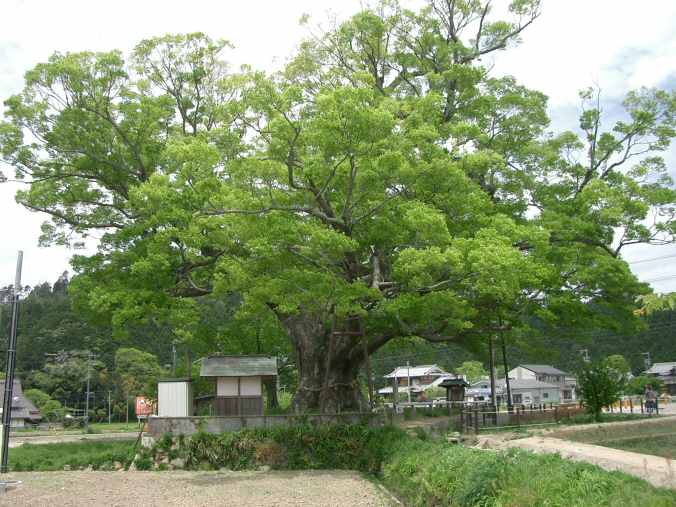
The species is native to Japan, Korea, eastern China and Taiwan. It is distinguished by its serrated leaves, broad rounded crown and wingless fruits.
Written 26 November 2026 from the sources listed below. Each statement was checked against the passage it cites; statements that could not be supported were removed.
Appearance
Its simple leaves are ovate to oblong-ovate, with serrated or crenate margins, and can reach 5 centimetres in both length and width. They have between eight and fourteen pairs of veins, rough upper surfaces and undersides that are hairless or nearly hairless.[1][2][3][4]
The leaves are green to dark green during spring and summer, turning yellow, orange and red in autumn. The bark ranges from grayish white to grayish brown and may be smooth with lenticels or exfoliate in patches to expose orange inner bark.[5][6]
The tree has slender twigs with small, dark, conical buds arranged in a zigzag pattern. Its branches are usually hairless, and its branchlets are brownish-purple to brown.[7][8][9]
The tree produces small, ovate, wingless drupes that mature from green to brown. Its fruits measure approximately 2.5 to 3.5 millimetres in diameter.[10][11]
Its flowers are yellow-green, inconspicuous and arranged in tight groups along new stems.[12]
Habitat
Japanese Zelkova grows in moist, well-drained soils under full or partial sunlight.[13]
Behaviour
The tree grows rapidly when young, but its growth rate slows to a medium rate at middle age and maturity.[14]
Japanese Zelkova tolerates heat, limited water, nutrient-poor soils and a range of soil pH conditions.[15]
Reproduction and life cycle
Japanese Zelkova is monoecious and produces flowers in spring at the same time as its leaves develop. The staminate flowers are approximately 3 millimetres in diameter, while the pistillate flowers are usually approximately 1.5 millimetres in diameter.[16][17][18][19]
The staminate flowers occur in clusters in the axils of lower leaves, whereas the pistillate flowers occur singly or in small groups in the axils of upper leaves. The fruits ripen from late summer through autumn.[20][21]
The species can be propagated using seeds, rooted stem cuttings and grafting. Its seeds can germinate without pretreatment, although stratification at 5 degrees Celsius for 60 days improves germination percentage.[22][23]
Conservation
Colder temperatures can cause twig dieback in Japanese Zelkova. The species is highly resistant to Dutch elm disease and shows good resistance to elm leaf beetle and Japanese beetle.[24][25][26]
The tree is susceptible to the fungus Griphosphaerioma zelkovicola, which was first observed on its bark in Japan in 2003.[27]
Uses
Japanese Zelkova is cultivated as an ornamental tree in its native range, Europe and North America. It is planted in lawns and parks for its attractive bark, foliage colour and vase-shaped form, and provides good shade.[28][29][30]
The tree is commonly cultivated as a bonsai tree. Its wood is used in Japan to make furniture, including tansu chests, and is considered ideal for making taiko drums.[31][32][33]
Similar species
Japanese Zelkova resembles elm trees but can be distinguished by its wingless fruits and symmetrical leaf bases.[34]
The specific epithet serrata refers to the serrated margins of the leaves.[35]
The variety Zelkova serrata var. tarokoensis differs from the typical variety by having smaller leaves with less deeply cut marginal serrations.[36]
Classification of the Japanese Zelkova
| Kingdom | Plantae |
|---|---|
| Subkingdom | Pteridobiotina |
| Phylum | Tracheophyta |
| Class | Magnoliopsida |
| Order | Rosales |
| Family | Ulmaceae (Elm Family) |
| Genus | Zelkova (Zelkovas) |
| Species | Zelkova serrata (Thunb.) Makino |
Where the Japanese Zelkova is found
Checklists and occurrence records place Zelkova serrata in 7 countries across Asia, Europe and North America. GBIF holds 56,865 georeferenced records of it.
Countries where it is native or its origin is not stated
Countries where it has been introduced
Regions and cities with the most records
- New York, United States 49,092
- Queens, United States 41,762
- New York City, United States 41,027
- Manhattan, United States 40,786
- Brooklyn, United States 39,954
- Hoboken, United States 38,281
- Union City, United States 36,791
- West New York, United States 36,004
- North Bergen, United States 32,531
- Jersey City, United States 32,461
- Cliffside Park, United States 30,889
- The Bronx, United States 30,405
- Secaucus, United States 30,338
- Fort Lee, United States 26,312
- Bayonne, United States 25,723
- Palisades Park, United States 24,862
- Elmont, United States 22,545
- Floral Park, United States 21,788
- Port Washington, United States 20,573
- North Valley Stream, United States 19,825
- Valley Stream, United States 19,774
- Woodmere, United States 19,047
- Englewood, United States 18,249
- Mount Vernon, United States 16,582
- Franklin Square, United States 16,198
- Teaneck, United States 16,095
- Hackensack, United States 15,990
- Harrison, United States 15,931
- Kearny, United States 15,863
- North Arlington, United States 15,847
- Rutherford, United States 15,465
- New Rochelle, United States 14,746
- Lyndhurst, United States 14,509
- Yonkers, United States 14,343
- Lynbrook, United States 14,036
- Newark, United States 13,600
16 more countries have a few records outside this range
These countries hold a few records of Zelkova serrata but lie outside the range the checklists give for it. Such records are often zoo or garden specimens, museum material or vagrants, so the species is not counted as occurring there.
Range as the checklists state it
Germany [I]; Russian Far East (Kuril Isl.); China (Anhui, Fujian, Gansu, N-Guangdong, Guizhou, Henan, Hubei, Hunan, Jiangsu, Jiangxi, Liaoning, Shaanxi, Shandong, Sichuan, Zhejiang); North Korea; South Korea (incl. Cheju Isl.); Japan (Honshu, Shikoku, Kyushu); Taiwan; USA [I] (Georgia [I], Ohio [I], Pennsylvania [I])
A number beside a place is its count of GBIF occurrence records. A place without a number comes from a checklist alone. Records show where a species has been observed or collected, which can include escapes and vagrants.
Common names
English
- Japanese Zelkova
- Grey-bark Elm
- Japanese Elm
- Japanese-elm
- Keaki
- Sawleaf Zelkova
- Saw-leaf Zelkova
- Water-elm
Names in 17 other languages
- Chinese
- ju shu, 光葉櫸, 榉树 (Ju shu), 櫸, 臺灣櫸, 雞油
- Czech
- zelkova pilovitá
- Dutch
- Japanse schijniep, Japanse zelkova
- Estonian
- jaapani tselkva
- Finnish
- idänselkova
- German
- Japanische Zelkove
- Hungarian
- Japán gyertyánszil
- Japanese
- keyaki, ケヤキ, ケヤキ(欅), 槻, 欅, 欅 (Keyaki)
- Korean
- 느티나무
- Lithuanian
- Japoninis skirpstulas
- Polish
- Brzostownica japońska
- Portuguese
- zelkova-japonesa
- Russian
- Дзельква пильчатая
- Slovak
- zelkova pílkovitá
- Spanish
- Olmo del Japón, Zelkova japonesa
- Swedish
- japansk zelkova
- Turkish
- Japon Karaağacı
Synonyms
24 other scientific names have been used for this species and are now treated as synonyms of Zelkova serrata.
- Abelicea acuminata (Lindl.) Kuntze
- Abelicea hirta C.K.Schneid.
- Abelicea keaki (K.Koch) C.K.Schneid.
- Abelicea serrata (Thunb.) Makino
- Corchorus serratus Thunb.
- Planera acuminata Lindl.
- Planera japonica Miq.
- Planera kaki hort. ex Planch.
- Planera keaki (Siebold) K.Koch
- Ulmus keaki Siebold
- Ulmus keaki Jacob-Makoy
- Ulmus keia-ki Planch.
- Zelkova acuminata (Lindl.) Planch.
- Zelkova formosana Hayata
- Zelkova hirta (C.K.Schneid.) C.K.Schneid.
- Zelkova japonica Dippel
- Zelkova japonica var. japonica
- Zelkova keaki (K.Koch) Maxim.
- Zelkova serrata var. longifolia Nakai
- Zelkova serrata var. stipulacea (Franch. & Sav.) Makino
- Zelkova serrata var. tarokoensis (Hayata) H.L.Li
- Zelkova stipulacea Franch. & Sav.
- Zelkova tarokoensis Hayata
- Corchorus hirtus Thunb. ambiguous synonym
Related species
-
 Caucasian ElmZelkova carpinifolia
-
 Cretan ZelkovaZelkova abelicea
-
 Sicilian ZelkovaZelkova sicula
- Chinese ZelkovaZelkova sinica
-
 Chinese ZelkovaZelkova schneideriana
-
 White ElmUlmus americana
-
 Lacebark ElmUlmus parvifolia
- Red ElmUlmus rubra
Compare
Questions and answers
What is the scientific name of the Japanese Zelkova?
The scientific name of the Japanese Zelkova is Zelkova serrata. Written with its author, the full name is Zelkova serrata (Thunb.) Makino.
Which family does the Japanese Zelkova belong to?
Zelkova serrata belongs to the family Ulmaceae, in the order Rosales and the class Magnoliopsida.
Where is the Japanese Zelkova found?
Checklists and occurrence records place Zelkova serrata in 7 countries, including Japan, South Korea, Taiwan, China and North Korea.
What is the conservation status of the Japanese Zelkova?
The IUCN Red List category recorded for Zelkova serrata is Near Threatened (NT).
What other names does the Japanese Zelkova have?
Zelkova serrata is also known in English as Grey-bark Elm, Japanese Elm, Japanese-elm, Keaki, Sawleaf Zelkova and Saw-leaf Zelkova.
What is the common name for the Japanese zelkova tree?
Japanese Zelkova.[37]
Is Japanese Zelkova a type of elm?
Japanese Zelkova resembles elm trees but can be distinguished by its wingless fruits and symmetrical leaf bases.[34]
How fast does a Japanese zelkova tree grow?
It grows rapidly when young, but its growth rate slows to a medium rate at middle age and maturity.[14]
Sources
Passages the profile rests on
- Its leaves are simple, ovate to oblong-ovate, and have serrated or crenate margins. Source passage: “The leaves themselves are simple and ovate to oblong-ovate with serrated or crenate margins” — English Wikipedia
- Its leaves can reach 5 centimetres in both length and width. Source passage: “It has alternately arranged leaves growing to 5 cm (2 in) long and broad.” — English Wikipedia
- The leaves have between eight and fourteen pairs of veins. Source passage: “and contain 8–14 pairs of veins.” — English Wikipedia
- The upper leaf surfaces are rough, while the undersides are hairless or nearly hairless. Source passage: “The leaves are rough on top and glabrous or nearly glabrous on the underside.” — English Wikipedia
- The leaves are green to dark green during spring and summer, turning yellow, orange and red in autumn. Source passage: “They are green to dark green in spring and throughout the summer, changing to yellows, oranges and reds in autumn.” — English Wikipedia
- The bark ranges from grayish white to grayish brown and may be smooth with lenticels or exfoliate in patches to expose orange inner bark. Source passage: “The bark is grayish white to grayish brown and either smooth with lenticels or exfoliating in patches to reveal orange inner bark.” — English Wikipedia
- The tree has slender twigs with small, dark, conical buds arranged in a zigzag pattern. Source passage: “The twigs are slender with small, dark conical buds in a zigzag pattern.” — English Wikipedia
- The branches are usually hairless. Source passage: “The branches are usually glabrous.” — English Wikipedia
- The branchlets are brownish-purple to brown. Source passage: “The branchlets are brownish-purple to brown.” — English Wikipedia
- The tree produces small, ovate, wingless drupes that mature from green to brown. Source passage: “They give rise to small, ovate, wingless drupes that ripen in late summer to autumn. The drupe is green maturing to brown” — English Wikipedia
- Its fruits measure approximately 2.5 to 3.5 millimetres in diameter. Source passage: “2.5 to 3.5 mm (3⁄32 to 1⁄8 in) in diameter.” — English Wikipedia
- Its flowers are yellow-green, inconspicuous and arranged in tight groups along new stems. Source passage: “The flowers are yellow-green, not showy, and occur in tight groups along new stems.” — English Wikipedia
- The tree grows in moist, well-drained soils under full or partial sunlight. Source passage: “This tree requires full to partial sun and prefers moist, well-drained soils.” — English Wikipedia
- The tree grows rapidly when young, but its growth rate slows to a medium rate at middle age and maturity. Source passage: “The tree grows rapidly when young though the growth rate slows to medium upon middle age and maturity.” — English Wikipedia
- Zelkova serrata tolerates heat, limited water, nutrient-poor soils and a range of soil pH conditions. Source passage: “It is adaptable and tolerant of heat, little water, nutrient-poor soils and various pH.” — English Wikipedia
- Zelkova serrata is monoecious. Source passage: “Zelkova serrata is monoecious.” — English Wikipedia
- The tree produces flowers in spring at the same time as its leaves develop. Source passage: “It develops flowers in spring with the leaves.” — English Wikipedia
- The staminate flowers are approximately 3 millimetres in diameter. Source passage: “approximately 3 mm in diameter” — English Wikipedia
- The pistillate flowers are usually approximately 1.5 millimetres in diameter. Source passage: “usually about 1.5 mm in diameter.” — English Wikipedia
- The staminate flowers occur in clusters in the axils of lower leaves, whereas the pistillate flowers occur singly or in small groups in the axils of upper leaves. Source passage: “The staminate flowers are shortly pedicellate and approximately 3 mm in diameter, clustered in the axils of the lower leaves. The pistillate flowers are solitary or few in axils of the upper leaves” — English Wikipedia
- The fruits ripen from late summer through autumn. Source passage: “that ripen in late summer to autumn.” — English Wikipedia
- The species can be propagated using seeds, rooted stem cuttings and grafting. Source passage: “Zelkova Serrata is propagated by seeds, rooted stem cuttings and grafting.” — English Wikipedia
- Its seeds can germinate without pretreatment, although stratification at 5 degrees Celsius for 60 days improves germination percentage. Source passage: “The seeds germinate without pretreatment, though the percentage is better when stratified at 5 °C (41 °F) for 60 days.” — English Wikipedia
- Colder temperatures can cause twig dieback in this species. Source passage: “The threats to this tree include colder temperature, which often result in twig dieback.” — English Wikipedia
- The species is highly resistant to Dutch elm disease. Source passage: “It is highly resistant to Dutch elm disease” — English Wikipedia
- Zelkova serrata shows good resistance to elm leaf beetle and Japanese beetle. Source passage: “Zelkova serrata also shows good resistance to elm leaf beetle and Japanese beetle.” — English Wikipedia
- The tree is susceptible to the fungus Griphosphaerioma zelkovicola, which was first observed on its bark in Japan in 2003. Source passage: “The tree is prone to fungus Griphosphaerioma zelkovicola which was first observed in Japan on the bark of Zelkova serrata trees in 2003.” — English Wikipedia
- Zelkova serrata is cultivated as an ornamental tree in its native range, Europe and North America. Source passage: “It is often grown as an ornamental tree, both in its native area and in Europe and North America.” — English Wikipedia
- The tree is planted in lawns and parks for its attractive bark, foliage colour and vase-shaped form. Source passage: “Zelkova serrata is planted as a lawn or park tree for its attractive bark, leaf color and vase shape.” — English Wikipedia
- The tree provides good shade. Source passage: “It provides good shade” — English Wikipedia
- Zelkova serrata is commonly cultivated as a bonsai tree. Source passage: “It is also commonly used for bonsai” — English Wikipedia
- Its wood is used in Japan to make furniture, including tansu chests. Source passage: “Keyaki wood is valued in Japan and used often for furniture, such as tansu” — English Wikipedia
- Its wood is considered ideal for making taiko drums. Source passage: “as well as being considered the ideal wood for the creation of taiko drums.” — English Wikipedia
- Zelkova serrata resembles elm trees but can be distinguished by its wingless fruits and symmetrical leaf bases. Source passage: “Zelkova serrata is similar in appearance to the elms, though may be distinguished by its unwinged fruit and leaves which are symmetrical rather than uneven at their base.” — English Wikipedia
- The specific epithet serrata refers to the serrated margins of the leaves. Source passage: “with serrated or crenate margins, to which the tree owes its specific epithet serrata.” — English Wikipedia
- The variety Zelkova serrata var. tarokoensis differs from the typical variety by having smaller leaves with less deeply cut marginal serrations. Source passage: “which differs from the type in its smaller leaves with less deeply cut serration on the margins.” — English Wikipedia
- Zelkova serrata is a deciduous tree with a short trunk that divides into numerous upright and spreading stems, forming a broad, rounded crown. Source passage: “It is characterized by a short trunk dividing into many upright and erect spreading stems forming a broad, round-topped head.” — English Wikipedia
Data
- Catalogue of Life, 2026-10-16 XR cc by
- Global Biodiversity Information Facility CC BY 4.0
- Wikidata CC0
- GeoNames CC BY 4.0
- Wikimedia Commons per image; credit shown with each image
- Within the Catalogue of Life, this name comes from Synonymic Checklists of the Vascular Plants of the World cc by
References
- Makino. (1903). Bot. Mag. (Tokyo) 17: 13 (1903). where the name was published
This species in other databases
- Catalogue of Life 5CZ8S
- Wikidata Q920344
- iNaturalist 129055
- World Flora Online wfo-0001143208
- GRIN 42215
Page built on 27 November 2026. See how the catalog is made and all sources and licences.
Cite this page
ScientificNames.org. (2026). Zelkova serrata (Japanese Zelkova). Retrieved November 27, 2026, from https://scientificnames.org/species/zelkova-serrata
“Zelkova serrata (Japanese Zelkova).” ScientificNames.org, 2026, scientificnames.org/species/zelkova-serrata. Accessed 27 Nov. 2026.
ScientificNames.org. “Zelkova serrata (Japanese Zelkova).” Accessed November 27, 2026. https://scientificnames.org/species/zelkova-serrata.
@misc{scientificnames_zelkova_serrata_japanese_zelkova,
  author = {{ScientificNames.org}},
  title = {Zelkova serrata (Japanese Zelkova)},
  year = {2026},
  url = {https://scientificnames.org/species/zelkova-serrata},
  note = {Accessed 2026-11-27}
}