Comparison
Hume's Leaf Warbler vs Common Chiffchaff
Hume's Leaf Warbler (Phylloscopus humei) and Common Chiffchaff (Phylloscopus collybita) both belong to the genus Phylloscopus (leaf warbler) and part ways below it. Both are recorded in 50 countries.
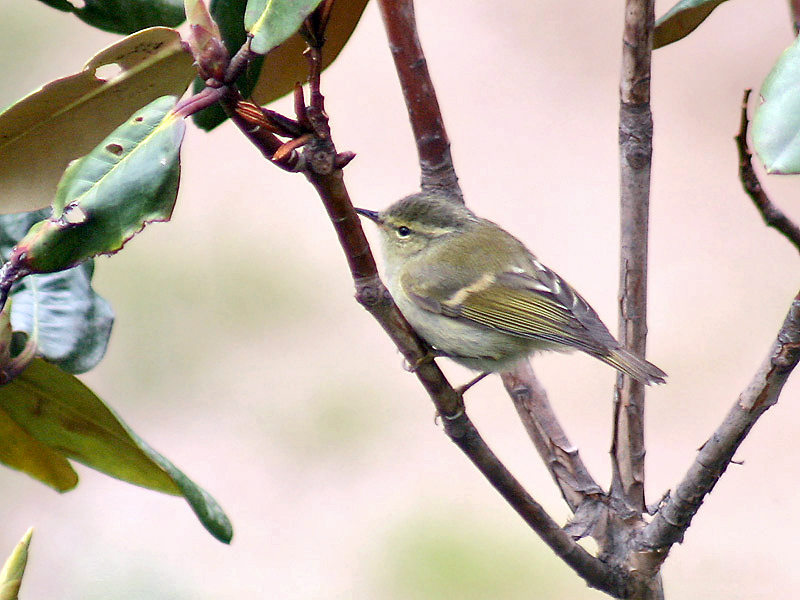


Side by side
| Hume's Leaf Warbler | Common Chiffchaff | |
|---|---|---|
| Scientific name | Phylloscopus humei (W. E. Brooks, 1878) | Phylloscopus collybita (Vieillot, 1817) |
| English name | Hume's Leaf Warbler | Common Chiffchaff |
| Group | Birds | Birds |
| Class | Aves Bird | Aves Bird |
| Order | Passeriformes Passerine | Passeriformes Passerine |
| Family | Phylloscopidae Leaf Warbler | Phylloscopidae Leaf Warbler |
| Genus | Phylloscopus Leaf Warbler | Phylloscopus Leaf Warbler |
| Named in | 1878 | 1817 |
| Red List category | Least Concern | Least Concern |
| Environment | Not recorded | terrestrial |
| Countries on record | 60 countries | 85 countries |
| GBIF occurrence records | 120,870 records | 7,770,099 records |
Rows where the two agree are shown in grey.
Where each is found
Both recorded in 50 countries
- Aland Islands
- Austria
- Azerbaijan
- Belarus
- Belgium
- Bulgaria
- China
- Cyprus
- Denmark
- Estonia
- Faroe Islands
- Finland
- France
- Georgia
- Germany
- Greece
- Hungary
- Iceland
- India
- Iran
- Ireland
- Israel
- Italy
- Kazakhstan
- Kuwait
- Kyrgyzstan
- Latvia
- Lithuania
- Mongolia
- Nepal
- Norway
- Oman
- Pakistan
- Palestinian Territory
- Poland
- Portugal
- Qatar
- Romania
- Russia
- Serbia
- Spain
- Sweden
- Switzerland
- Tajikistan
- The Netherlands
- Turkey
- Ukraine
- United Arab Emirates
- United Kingdom
- Uzbekistan
Only Hume's Leaf Warbler (10)
Only Common Chiffchaff (35)
- Albania
- Algeria
- Andorra
- Armenia
- Bosnia and Herzegovina
- Croatia
- Czechia
- Egypt
- Ethiopia
- Gambia
- Gibraltar
- Guernsey
- Iraq
- Isle of Man
- Jersey
- Jordan
- Kosovo
- Lebanon
- Libya
- Liechtenstein
- Luxembourg
- Malta
- Moldova
- Monaco
- Montenegro
- Morocco
- North Macedonia
- San Marino
- Saudi Arabia
- Senegal
- Slovakia
- Slovenia
- Svalbard and Jan Mayen
- Tunisia
- Vatican
From Catalogue of Life checklists and GBIF occurrence records. A country missing from a list means no record is held, which is not proof of absence.
Checked facts
| Hume's Leaf Warbler | Common Chiffchaff | |
|---|---|---|
| Appearance |
|
|
| Size |
|
|
| Habitat |
|
|
| Diet |
|
|
| Behaviour |
|
|
| Reproduction |
|
|
| Distribution |
|
|
| Conservation |
|
|
| Similar species |
|
|
| Name origin | No checked fact yet |
|
In brief
Hume's Leaf Warbler
Hume's Leaf Warbler is one of the smallest Old World warblers. It breeds in the mountains of inner Asia, and both eastern and western populations migrate across the Himalayas to winter in India and adjacent regions. It has greenish upperparts, off-white underparts, a long supercilium, a crown stripe, and one prominent light wing bar. Full profile
Common Chiffchaff
Phylloscopus collybita breeds across Europe and Asia as far east as eastern Siberia and winters in southern and western Europe, southern Asia and northern Africa. It produces a repetitive chiff-chaff song and performs a characteristic downward tail dip followed by a sideways wag. Full profile
Compare something else
Page built on 27 November 2026 from the data on the two species pages, where every source is listed.
Cite this page
ScientificNames.org. (2026). Hume's Leaf Warbler vs Common Chiffchaff. Retrieved November 27, 2026, from https://scientificnames.org/compare/humes-leaf-warbler-vs-common-chiffchaff
“Hume's Leaf Warbler vs Common Chiffchaff.” ScientificNames.org, 2026, scientificnames.org/compare/humes-leaf-warbler-vs-common-chiffchaff. Accessed 27 Nov. 2026.
ScientificNames.org. “Hume's Leaf Warbler vs Common Chiffchaff.” Accessed November 27, 2026. https://scientificnames.org/compare/humes-leaf-warbler-vs-common-chiffchaff.
@misc{scientificnames_humes_leaf_warbler_vs_common_chiffchaff,
  author = {{ScientificNames.org}},
  title = {Hume's Leaf Warbler vs Common Chiffchaff},
  year = {2026},
  url = {https://scientificnames.org/compare/humes-leaf-warbler-vs-common-chiffchaff},
  note = {Accessed 2026-11-27}
}