Comparison
Japanese Cedar vs Common Juniper
Japanese Cedar (Cryptomeria japonica) and Common Juniper (Juniperus communis) both belong to the family Cupressaceae (cypress) and part ways below it. Both are recorded in 31 countries.


How they differ
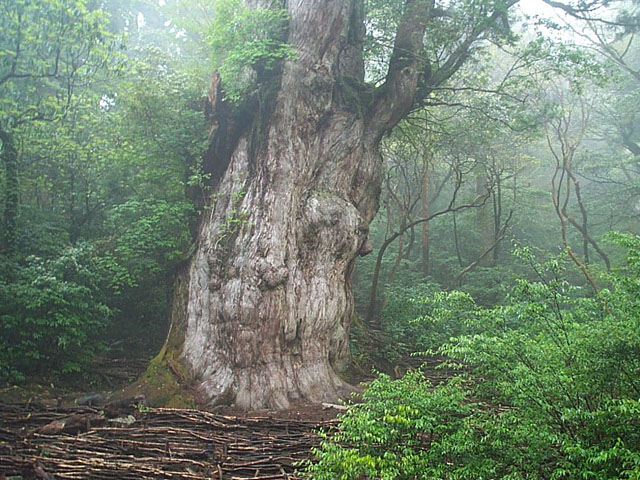
Japanese Cedar (Cryptomeria japonica) has spirally arranged needle-like leaves and globular seed cones with approximately 20–40 scales, whereas Malchangel (Juniperus communis) has needle-shaped leaves arranged in whorls of three and spherical mature cones generally containing three fleshy fused scales. Japanese Cedar (Cryptomeria japonica) is considered endemic to Japan, whereas Malchangel (Juniperus communis) has a circumpolar distribution extending from the Arctic southward to approximately 30°N in North America, Europe, and Asia.
| Japanese Cedar | Common Juniper | |
|---|---|---|
| Leaves | Japanese Cedar has needle-like leaves arranged spirally, measuring 0.5–1 centimetres in length. | Malchangel has green, needle-shaped leaves arranged in whorls of three, with a single white stomatal band on the inner surface. |
| Cones | Japanese Cedar has globular seed cones measuring 1–2 centimetres in diameter, with approximately 20–40 scales. | Malchangel has spherical mature cones that generally contain three fleshy fused scales and develop a blue waxy coating. |
| Growth conditions | Japanese Cedar grows rapidly under warm, moist conditions with deep, well-drained soils and does not tolerate poor soils or cold, drier climates. | Malchangel's typical subspecies communis occurs at low to moderate elevations in temperate climates. |
| Diet | Japanese Cedar serves as a food plant for larvae of several moths in the genus Endoclita. | Birds eat the fleshy cones of Malchangel and disperse the seeds through their droppings. |
| Reproduction | Japanese Cedar has globular seed cones with approximately 20–40 scales. | Malchangel is dioecious, with male and female reproductive cones occurring on separate plants, and its berry-like cones take approximately 18 months to mature. |
Written from the checked facts listed further down. Statements that the sources did not support were removed.
Side by side
| Japanese Cedar | Common Juniper | |
|---|---|---|
| Scientific name | Cryptomeria japonica (Thunb. ex L.) D.Don | Juniperus communis L. |
| English name | Japanese Cedar | Common Juniper |
| Group | Conifers and allies | Conifers and allies |
| Class | Pinopsida Conifer | Pinopsida Conifer |
| Order | Cupressales | Cupressales |
| Family | Cupressaceae Cypress | Cupressaceae Cypress |
| Genus | Cryptomeria Sugis | Juniperus Juniper |
| Red List category | Near Threatened | Least Concern |
| Countries on record | 50 countries | 51 countries |
| GBIF occurrence records | 15,755 records | 770,177 records |
Rows where the two agree are shown in grey.
Where each is found
Both recorded in 31 countries
- Austria
- Belgium
- Bulgaria
- Canada
- Croatia
- Czechia
- Denmark
- Finland
- France
- Germany
- Hungary
- Ireland
- Isle of Man
- Italy
- Japan
- Latvia
- Luxembourg
- Mexico
- Norway
- Poland
- Portugal
- Russia
- Slovakia
- Slovenia
- Spain
- Sweden
- Switzerland
- The Netherlands
- Ukraine
- United Kingdom
- United States
Only Japanese Cedar (19)
- Bhutan
- Brazil
- Cambodia
- China
- Georgia
- Guadeloupe
- Hong Kong
- India
- Indonesia
- Israel
- Jamaica
- Martinique
- Nepal
- Philippines
- Reunion
- South Korea
- Sri Lanka
- Taiwan
- Turkey
Only Common Juniper (20)
- Aland Islands
- Albania
- Andorra
- Belarus
- Bosnia and Herzegovina
- Estonia
- Faroe Islands
- Greece
- Greenland
- Iceland
- Kosovo
- Liechtenstein
- Lithuania
- Moldova
- Montenegro
- North Macedonia
- Romania
- Saint Pierre and Miquelon
- Serbia
- Svalbard and Jan Mayen
From Catalogue of Life checklists and GBIF occurrence records. A country missing from a list means no record is held, which is not proof of absence.
Checked facts
| Japanese Cedar | Common Juniper | |
|---|---|---|
| Appearance |
|
|
| Size |
| No checked fact yet |
| Habitat |
|
|
| Diet |
|
|
| Behaviour |
|
|
| Reproduction | No checked fact yet |
|
| Distribution |
|
|
| Uses |
|
|
| Similar species |
| No checked fact yet |
| Other |
| No checked fact yet |
In brief
Japanese Cedar
The species is considered endemic to Japan and has been introduced and cultivated in several places outside its native range. It has red-brown bark that peels in vertical strips, spirally arranged needle-like leaves and globular seed cones. Full profile
Common Juniper
Juniperus communis occurs in cool temperate regions of the Northern Hemisphere, from the Arctic southward to approximately 30°N in North America, Europe, and Asia. Full profile
Compare something else
Page built on 24 November 2026 from the data on the two species pages, where every source is listed.
Cite this page
ScientificNames.org. (2026). Japanese Cedar vs Common Juniper. Retrieved November 24, 2026, from https://scientificnames.org/compare/japanese-cedar-vs-common-juniper
“Japanese Cedar vs Common Juniper.” ScientificNames.org, 2026, scientificnames.org/compare/japanese-cedar-vs-common-juniper. Accessed 24 Nov. 2026.
ScientificNames.org. “Japanese Cedar vs Common Juniper.” Accessed November 24, 2026. https://scientificnames.org/compare/japanese-cedar-vs-common-juniper.
@misc{scientificnames_japanese_cedar_vs_common_juniper,
  author = {{ScientificNames.org}},
  title = {Japanese Cedar vs Common Juniper},
  year = {2026},
  url = {https://scientificnames.org/compare/japanese-cedar-vs-common-juniper},
  note = {Accessed 2026-11-24}
}