Comparison
Japanese Cedar vs Hinoki Cypress
Japanese Cedar (Cryptomeria japonica) and Hinoki Cypress (Chamaecyparis obtusa) both belong to the family Cupressaceae (cypress) and part ways below it. Both are recorded in 19 countries.


How they differ
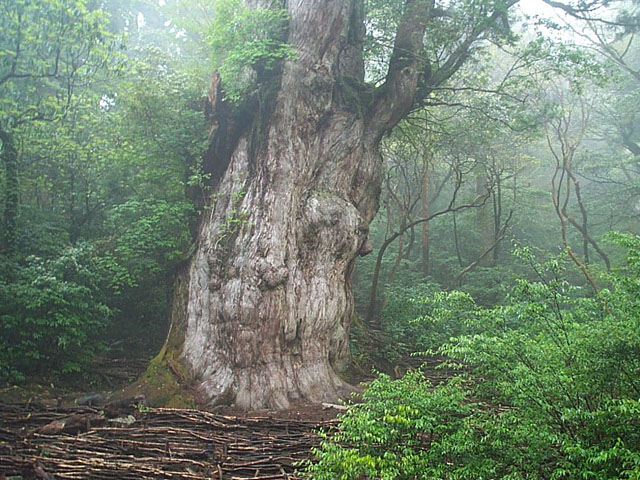
Japanese Cedar has needle-like leaves arranged spirally and globular seed cones measuring 1–2 centimetres in diameter, while Hinoki Cypress has blunt-tipped scale leaves measuring 2–4 mm long and spherical cones measuring 8–12 mm in diameter. Japanese Cedar can reach 60 metres in height, while wild Hinoki Cypress trees can reach approximately 35 m. Japanese Cedar is considered endemic to Japan, while Hinoki Cypress is native to central Japan and naturally occurs on Honshu, Shikoku and Kyushu. Japanese Cedar grows rapidly under warm, moist conditions, while Hinoki Cypress is slow-growing.
| Japanese Cedar | Hinoki Cypress | |
|---|---|---|
| Appearance | Japanese Cedar has red-brown bark that peels in vertical strips. | Hinoki Cypress has dark red-brown bark. |
| Leaves | Japanese Cedar has needle-like leaves arranged spirally, measuring 0.5–1 centimetres in length. | Hinoki Cypress has blunt-tipped scale leaves measuring 2–4 mm long, with green upper surfaces and white stomatal bands on their lower surfaces. |
| Cones | Japanese Cedar has globular seed cones measuring 1–2 centimetres in diameter, with approximately 20–40 scales. | Hinoki Cypress has spherical cones measuring 8–12 mm in diameter, with 8–12 scales arranged in opposite pairs. |
| Habitat | Japanese Cedar grows in forests on deep, well-drained soils in warm and moist environments. | Hinoki Cypress grows naturally in mountain forests in Japan, in moderately humid climates at elevations of 300–1,500 m. |
| Soil and climate tolerance | Japanese Cedar does not tolerate poor soils or cold, drier climates. | Hinoki Cypress tolerates dry and arid soils but has poor tolerance of cold and salt. |
| Size | Japanese Cedar can reach 60 metres in height, and its trunk can reach 4 metres in diameter. | Wild Hinoki Cypress trees can reach approximately 35 m in height, while cultivated specimens typically grow 40–60 feet tall. |
| Uses | Japanese Cedar is cultivated for timber production and as an ornamental tree, with dwarf cultivars used in rock gardens and for bonsai. | Hinoki Cypress is cultivated for timber and ornamental qualities, with dwarf varieties grown as houseplants and bonsai. |
Written from the checked facts listed further down. Statements that the sources did not support were removed.
Side by side
| Japanese Cedar | Hinoki Cypress | |
|---|---|---|
| Scientific name | Cryptomeria japonica (Thunb. ex L.) D.Don | Chamaecyparis obtusa (Siebold & Zucc.) Endl. |
| English name | Japanese Cedar | Hinoki Cypress |
| Group | Conifers and allies | Conifers and allies |
| Class | Pinopsida Conifer | Pinopsida Conifer |
| Order | Cupressales | Cupressales |
| Family | Cupressaceae Cypress | Cupressaceae Cypress |
| Genus | Cryptomeria Sugis | Chamaecyparis Cypress |
| Red List category | Near Threatened | Near Threatened |
| Countries on record | 50 countries | 19 countries |
| GBIF occurrence records | 15,755 records | 5,161 records |
Rows where the two agree are shown in grey.
Where each is found
Both recorded in 19 countries
- Belgium
- Canada
- China
- Czechia
- France
- Germany
- Hungary
- Japan
- Luxembourg
- Poland
- Slovakia
- South Korea
- Spain
- Sweden
- Switzerland
- Taiwan
- The Netherlands
- United Kingdom
- United States
Only Japanese Cedar (31)
- Austria
- Bhutan
- Brazil
- Bulgaria
- Cambodia
- Croatia
- Denmark
- Finland
- Georgia
- Guadeloupe
- Hong Kong
- India
- Indonesia
- Ireland
- Isle of Man
- Israel
- Italy
- Jamaica
- Latvia
- Martinique
- Mexico
- Nepal
- Norway
- Philippines
- Portugal
- Reunion
- Russia
- Slovenia
- Sri Lanka
- Turkey
- Ukraine
From Catalogue of Life checklists and GBIF occurrence records. A country missing from a list means no record is held, which is not proof of absence.
Checked facts
| Japanese Cedar | Hinoki Cypress | |
|---|---|---|
| Appearance |
|
|
| Size |
|
|
| Habitat |
|
|
| Diet |
| No checked fact yet |
| Behaviour |
|
|
| Distribution |
|
|
| Conservation | No checked fact yet |
|
| Uses |
|
|
| Similar species |
|
|
| Name origin | No checked fact yet |
|
| Other |
|
|
In brief
Japanese Cedar
The species is considered endemic to Japan and has been introduced and cultivated in several places outside its native range. It has red-brown bark that peels in vertical strips, spirally arranged needle-like leaves and globular seed cones. Full profile
Hinoki Cypress
Chamaecyparis obtusa is native to central Japan in East Asia, where it grows naturally in mountain forests on Honshu, Shikoku and Kyushu. It is distinguished by its broad, softly pyramidal shape, dark red-brown bark, dense green foliage and spherical cones. Full profile
Compare something else
Page built on 24 November 2026 from the data on the two species pages, where every source is listed.
Cite this page
ScientificNames.org. (2026). Japanese Cedar vs Hinoki Cypress. Retrieved November 24, 2026, from https://scientificnames.org/compare/japanese-cedar-vs-hinoki-cypress
“Japanese Cedar vs Hinoki Cypress.” ScientificNames.org, 2026, scientificnames.org/compare/japanese-cedar-vs-hinoki-cypress. Accessed 24 Nov. 2026.
ScientificNames.org. “Japanese Cedar vs Hinoki Cypress.” Accessed November 24, 2026. https://scientificnames.org/compare/japanese-cedar-vs-hinoki-cypress.
@misc{scientificnames_japanese_cedar_vs_hinoki_cypress,
  author = {{ScientificNames.org}},
  title = {Japanese Cedar vs Hinoki Cypress},
  year = {2026},
  url = {https://scientificnames.org/compare/japanese-cedar-vs-hinoki-cypress},
  note = {Accessed 2026-11-24}
}