Comparison

Scarlet Kingsnake vs Common Kingsnake

Scarlet Kingsnake (Lampropeltis elapsoides) and Common Kingsnake (Lampropeltis getula) both belong to the genus Lampropeltis (kingsnakes) and part ways below it. Both are recorded in 2 countries.

Scarlet Kingsnake

Scarlet Kingsnake

Lampropeltis elapsoides

Glenn Bartolotti, CC BY-SA 3.0, via Wikimedia Commons

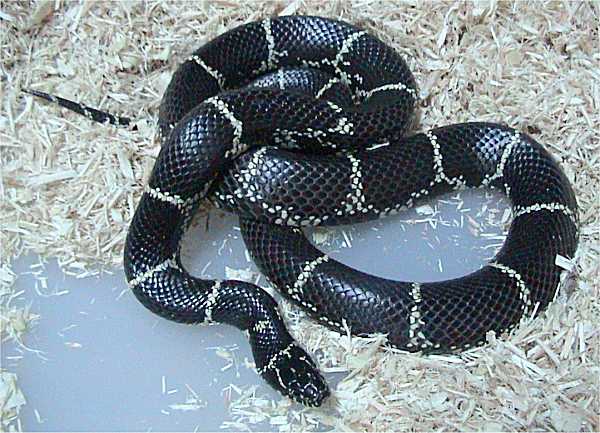
Common Kingsnake

Common Kingsnake

Lampropeltis getula

en:User:Dawson, CC BY-SA 2.5, via Wikimedia Commons

Side by side

Scarlet KingsnakeCommon Kingsnake
Scientific nameLampropeltis elapsoides (Holbrook, 1838)Lampropeltis getula (Linnaeus, 1766)
English nameScarlet KingsnakeCommon Kingsnake
GroupReptilesReptiles
ClassReptilia ReptileReptilia Reptile
OrderSquamata SnakesSquamata Snakes
FamilyColubridae ColubridColubridae Colubrid
GenusLampropeltis KingsnakesLampropeltis Kingsnakes
Named in18381766
Red List categoryLeast ConcernLeast Concern
EnvironmentNot recordedterrestrial
Countries on record4 countries2 countries
GBIF occurrence records2,049 records12,589 records

Rows where the two agree are shown in grey.

Where each is found

Both recorded in 2 countries

Only Scarlet Kingsnake (2)

From Catalogue of Life checklists and GBIF occurrence records. A country missing from a list means no record is held, which is not proof of absence.

Checked facts

Scarlet KingsnakeCommon Kingsnake
Appearance
  • The species has alternating bands of red, black, and yellow or white that typically encircle its body. srelherp.uga.edu
  • The species has smooth scales and a small head. srelherp.uga.edu
  • Its snout is shorter and blunter than that of the scarlet snake. srelherp.uga.edu
  • Its red bands are generally narrower than those of the scarlet snake. srelherp.uga.edu
  • Hatchlings have white, black, and red bands. English Wikipedia
  • Yellow pigmentation in the bands can range from lemon yellow to apricot. English Wikipedia
  • Yellow coloration begins appearing as early as three months of age and continues developing through the first three years. English Wikipedia
No checked fact yet
Size
Habitat
  • The species inhabits pine flatwoods, hydric hammocks, and pine savannas. English Wikipedia
  • The species also occupies mesic pine-oak forests, prairies, cultivated fields, and suburban habitats. English Wikipedia
  • The species is commonly associated with sandy soils and pine or mixed hardwood forests in the Atlantic and Gulf Coastal Plains. srelherp.uga.edu
  • Individuals are frequently found beneath logs, bark, and debris in well-drained sandy woodlands. srelherp.uga.edu
  • The species frequently uses rotting pine stumps and loose bark on trees as refuges. srelherp.uga.edu
  • The species can inhabit barns and other human structures. srelherp.uga.edu
  • Eastern kingsnakes most frequently inhabit sandy uplands in Georgia and South Carolina. srelherp.uga.edu
  • Eastern kingsnakes also occupy pine flatwoods, mixed hardwood forests, river floodplains, and wetland-adjacent habitats. srelherp.uga.edu
  • Common kingsnakes occupy forests, grasslands, deserts, and urban areas. animaldiversity.org
  • Eastern kingsnakes can use thick leaf litter and dense shrubbery as microhabitats. English Wikipedia
  • Eastern kingsnakes frequently use logs, stumps, and other objects for cover. srelherp.uga.edu
  • Eastern kingsnakes in southern Florida used rodent burrows on canal banks as nocturnal retreats. pubs.usgs.gov
Diet
  • The species primarily consumes small reptiles, particularly lizards and other snakes. srelherp.uga.edu
  • Young individuals particularly favor skinks as prey. srelherp.uga.edu
  • Adults may consume small colubrid snakes, including ringneck and pinewoods snakes. srelherp.uga.edu
  • The species can also consume mice. ncwildlife.gov
  • Their diet includes amphibians, turtle eggs, and bird eggs, including those of northern bobwhites. English Wikipedia
  • Eastern kingsnakes consume lizards, including five-lined skinks. English Wikipedia
  • Eastern kingsnakes prey on small mammals such as white-footed mice. English Wikipedia
  • At Rainey Slough, snakes were the only prey detected in the eastern kingsnake diet. pubs.usgs.gov
  • Snakes, reptile eggs, and lizards account for 94.8% of the eastern kingsnake diet in Florida. pubs.usgs.gov
Behaviour
  • Eastern kingsnakes may vibrate their tails, release foul-smelling musk, or bite when cornered. srelherp.uga.edu
  • When possible, eastern kingsnakes respond defensively by seeking refuge. srelherp.uga.edu
  • Eastern kingsnakes use constriction as their primary feeding strategy. srelherp.uga.edu
  • Eastern kingsnakes are resistant to the venom of venomous pit vipers. srelherp.uga.edu
  • At the Rainey Slough study site, eastern kingsnakes were susceptible to capture mostly during winter and spring. pubs.usgs.gov
  • Adult male eastern kingsnakes lost an average of 39.3% of their body mass during the spring reproductive season. pubs.usgs.gov
Reproduction
DistributionNo checked fact yet
  • Eastern kingsnakes occur from southern New Jersey south through peninsular Florida and westward into Alabama. srelherp.uga.edu
Conservation
  • The species remains widespread and locally common. srelherp.uga.edu
  • Urbanization and fire suppression have reduced suitable pine and scrub habitats in parts of its range. srelherp.uga.edu
  • Road mortality and persecution resulting from misidentification as a coral snake may reduce populations. srelherp.uga.edu
  • The species has a globally secure conservation status. srelherp.uga.edu
  • Some eastern kingsnake populations in the southeastern United States have declined substantially in recent decades. pubs.usgs.gov
  • Eastern kingsnake populations at the protected Savannah River Site in South Carolina declined in abundance and body condition over three decades. srelherp.uga.edu
  • Road mortality, human persecution, feral cats, and habitat degradation and fragmentation are major causes of declines at unprotected sites. srelherp.uga.edu
  • Eastern kingsnakes are legally protected in Georgia and South Carolina. srelherp.uga.edu
  • No eastern kingsnakes were detected at Rainey Slough during follow-up surveys conducted between 2006 and 2010. pubs.usgs.gov
  • Road reconstruction, paving, and subsequent roadkill were identified as the likely primary cause of the Rainey Slough population's disappearance. pubs.usgs.gov
Similar species
  • The species is frequently mistaken for the scarlet snake because of their similar tricolored patterns. srelherp.uga.edu
No checked fact yet
Name origin
  • The genus name Lampropeltis derives from Ancient Greek words meaning shiny and shield. English Wikipedia
No checked fact yet
OtherNo checked fact yet

In brief

Scarlet Kingsnake

Lampropeltis elapsoides inhabits pine flatwoods, hydric hammocks, pine savannas, mesic pine-oak forests, prairies, cultivated fields, and suburban habitats. It is marked by alternating bands of red, black, and yellow or white that typically encircle its body. Full profile

Common Kingsnake

Eastern kingsnakes occur from southern New Jersey south through peninsular Florida and westward into Alabama. Full profile

Compare something else

Page built on 29 November 2026 from the data on the two species pages, where every source is listed.

Cite this page

ScientificNames.org. (2026). Scarlet Kingsnake vs Common Kingsnake. Retrieved November 29, 2026, from https://scientificnames.org/compare/scarlet-kingsnake-vs-common-kingsnake