Comparison

Desert Kingsnake vs Common Kingsnake

Desert Kingsnake (Lampropeltis splendida) and Common Kingsnake (Lampropeltis getula) both belong to the genus Lampropeltis (kingsnakes) and part ways below it. Both are recorded in 2 countries.
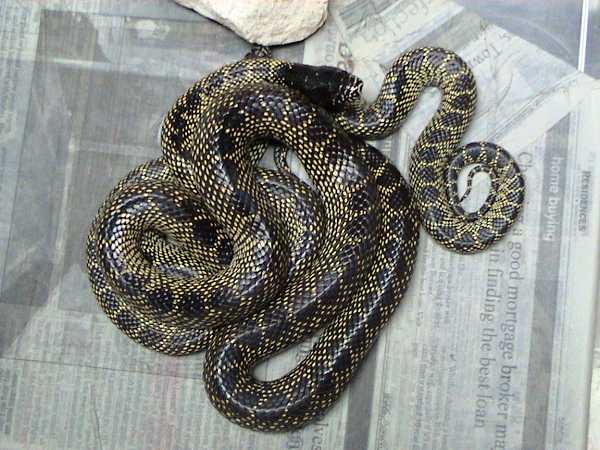
Desert Kingsnake

Desert Kingsnake

Lampropeltis splendida

The original uploader was Dawson at English Wikipedia., CC BY-SA 2.5, via Wikimedia Commons
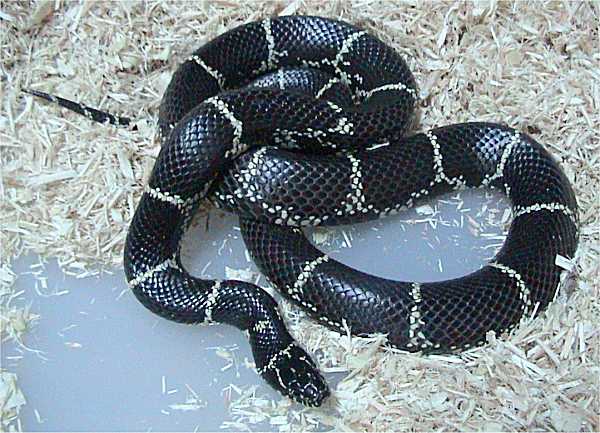
Common Kingsnake

Common Kingsnake

Lampropeltis getula

en:User:Dawson, CC BY-SA 2.5, via Wikimedia Commons

Side by side

Desert KingsnakeCommon Kingsnake
Scientific nameLampropeltis splendida (Baird & Girard, 1853)Lampropeltis getula (Linnaeus, 1766)
English nameDesert KingsnakeCommon Kingsnake
GroupReptilesReptiles
ClassReptilia ReptileReptilia Reptile
OrderSquamata SnakesSquamata Snakes
FamilyColubridae ColubridColubridae Colubrid
GenusLampropeltis KingsnakesLampropeltis Kingsnakes
Named in18531766
Red List categoryLeast ConcernLeast Concern
EnvironmentNot recordedterrestrial
Countries on record2 countries2 countries
GBIF occurrence records1,996 records12,589 records

Rows where the two agree are shown in grey.

Where each is found

Both recorded in 2 countries

From Catalogue of Life checklists and GBIF occurrence records. A country missing from a list means no record is held, which is not proof of absence.

Checked facts

Desert KingsnakeCommon Kingsnake
Appearance
  • The dorsal surface is black or very dark brown with fine off-white or yellow speckling. English Wikipedia
  • The pale dorsal flecks form narrow, poorly defined crossbands along the vertebral region. English Wikipedia
  • The rectangular areas between the pale dorsal crossbands are black. English Wikipedia
  • Pale yellow scales may be concentrated along the lower sides of the body. English Wikipedia
  • The abdomen is mostly black in both adult and juvenile individuals, with white or pale yellow markings at the outer ends of the ventral plates. English Wikipedia
  • The dorsal scales are smooth. English Wikipedia
  • The anal plate is undivided. English Wikipedia
No checked fact yet
Size
Habitat
  • The species may occur in any rural habitat within its geographic range. English Wikipedia
  • Despite its common name, the species is most likely to occur in mesic habitats. English Wikipedia
  • The species is particularly likely to occur near water tanks and in riparian corridors. English Wikipedia
  • Eastern kingsnakes most frequently inhabit sandy uplands in Georgia and South Carolina. srelherp.uga.edu
  • Eastern kingsnakes also occupy pine flatwoods, mixed hardwood forests, river floodplains, and wetland-adjacent habitats. srelherp.uga.edu
  • Common kingsnakes occupy forests, grasslands, deserts, and urban areas. animaldiversity.org
  • Eastern kingsnakes can use thick leaf litter and dense shrubbery as microhabitats. English Wikipedia
  • Eastern kingsnakes frequently use logs, stumps, and other objects for cover. srelherp.uga.edu
  • Eastern kingsnakes in southern Florida used rodent burrows on canal banks as nocturnal retreats. pubs.usgs.gov
Diet
  • The species consumes rodents, lizards, and smaller snakes, including rattlesnakes. English Wikipedia
  • Captive or domestic individuals primarily eat mice. English Wikipedia
  • Wild individuals primarily consume other rodents. English Wikipedia
  • The species can consume reptile eggs that it detects beneath the surface using its sense of smell. English Wikipedia
  • The species can consume young diamondback rattlesnakes. English Wikipedia
  • Their diet includes amphibians, turtle eggs, and bird eggs, including those of northern bobwhites. English Wikipedia
  • Eastern kingsnakes consume lizards, including five-lined skinks. English Wikipedia
  • Eastern kingsnakes prey on small mammals such as white-footed mice. English Wikipedia
  • At Rainey Slough, snakes were the only prey detected in the eastern kingsnake diet. pubs.usgs.gov
  • Snakes, reptile eggs, and lizards account for 94.8% of the eastern kingsnake diet in Florida. pubs.usgs.gov
Behaviour
  • The species is a powerful constrictor. English Wikipedia
  • Individuals are docile when confronted by humans. English Wikipedia
  • Individuals that do not attempt to escape may respond to confrontation by turning onto their backs and remaining motionless. English Wikipedia
  • Eastern kingsnakes may vibrate their tails, release foul-smelling musk, or bite when cornered. srelherp.uga.edu
  • When possible, eastern kingsnakes respond defensively by seeking refuge. srelherp.uga.edu
  • Eastern kingsnakes use constriction as their primary feeding strategy. srelherp.uga.edu
  • Eastern kingsnakes are resistant to the venom of venomous pit vipers. srelherp.uga.edu
  • At the Rainey Slough study site, eastern kingsnakes were susceptible to capture mostly during winter and spring. pubs.usgs.gov
  • Adult male eastern kingsnakes lost an average of 39.3% of their body mass during the spring reproductive season. pubs.usgs.gov
Reproduction
Distribution
  • The species is native to Texas, Arizona, and New Mexico in the United States. English Wikipedia
  • Eastern kingsnakes occur from southern New Jersey south through peninsular Florida and westward into Alabama. srelherp.uga.edu
ConservationNo checked fact yet
  • Some eastern kingsnake populations in the southeastern United States have declined substantially in recent decades. pubs.usgs.gov
  • Eastern kingsnake populations at the protected Savannah River Site in South Carolina declined in abundance and body condition over three decades. srelherp.uga.edu
  • Road mortality, human persecution, feral cats, and habitat degradation and fragmentation are major causes of declines at unprotected sites. srelherp.uga.edu
  • Eastern kingsnakes are legally protected in Georgia and South Carolina. srelherp.uga.edu
  • No eastern kingsnakes were detected at Rainey Slough during follow-up surveys conducted between 2006 and 2010. pubs.usgs.gov
  • Road reconstruction, paving, and subsequent roadkill were identified as the likely primary cause of the Rainey Slough population's disappearance. pubs.usgs.gov
Uses
  • Some ranchers domesticate kingsnakes in the hope that they will prey on other snakes that may pose a greater threat. English Wikipedia
No checked fact yet
Similar species
  • The desert kingsnake was previously classified as a subspecies of the common kingsnake. English Wikipedia
No checked fact yet
OtherNo checked fact yet

In brief

Desert Kingsnake

Lampropeltis splendida is native to Texas, Arizona, and New Mexico in the United States. It is marked by a black or very dark brown dorsal surface with fine pale speckling that forms narrow, poorly defined crossbands. Full profile

Common Kingsnake

Eastern kingsnakes occur from southern New Jersey south through peninsular Florida and westward into Alabama. Full profile

Compare something else

Page built on 27 November 2026 from the data on the two species pages, where every source is listed.

Cite this page

ScientificNames.org. (2026). Desert Kingsnake vs Common Kingsnake. Retrieved November 27, 2026, from https://scientificnames.org/compare/desert-kingsnake-vs-common-kingsnake