Comparison
Melanocetus polyactis vs Humpback Anglerfish
Melanocetus polyactis (Melanocetus polyactis) and Humpback Anglerfish (Melanocetus johnsonii) both belong to the genus Melanocetus (black seadevil) and part ways below it. Both are recorded in 2 countries.
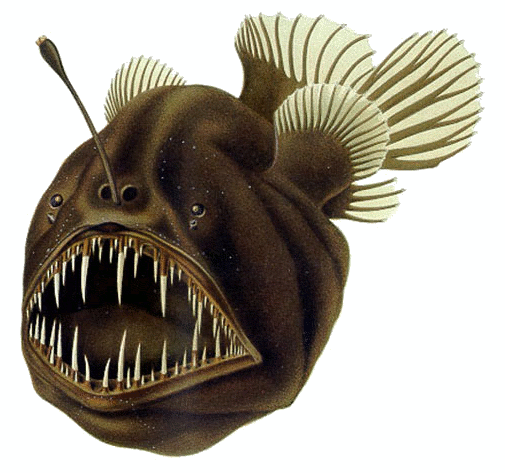

Side by side
| Melanocetus polyactis | Humpback Anglerfish | |
|---|---|---|
| Scientific name | Melanocetus polyactis Regan, 1925 | Melanocetus johnsonii Günther, 1864 |
| English name | Not recorded | Humpback Anglerfish |
| Group | Fishes | Fishes |
| Class | Teleostei Teleost | Teleostei Teleost |
| Order | Lophiiformes Anglerfish | Lophiiformes Anglerfish |
| Family | Melanocetidae Blackdevils | Melanocetidae Blackdevils |
| Genus | Melanocetus Black Seadevil | Melanocetus Black Seadevil |
| Named in | 1925 | 1864 |
| Red List category | Least Concern | Least Concern |
| Environment | marine | marine |
| Countries on record | 2 countries | 43 countries |
| GBIF occurrence records | 11 records | 943 records |
Rows where the two agree are shown in grey.
Where each is found
Both recorded in 2 countries
Only Humpback Anglerfish (41)
- Angola
- Australia
- Bermuda
- Brazil
- Cabo Verde
- Canada
- Cocos Islands
- Colombia
- French Polynesia
- Gambia
- Greenland
- Guatemala
- India
- Indonesia
- Japan
- Kiribati
- Madagascar
- Maldives
- Mauritania
- Morocco
- Namibia
- New Caledonia
- New Zealand
- Nicaragua
- Norfolk Island
- Panama
- Papua New Guinea
- Peru
- Philippines
- Portugal
- Saint Helena
- Senegal
- Seychelles
- Somalia
- South Africa
- Spain
- Sri Lanka
- Taiwan
- United States
- United States Minor Outlying Islands
- Western Sahara
From Catalogue of Life checklists and GBIF occurrence records. A country missing from a list means no record is held, which is not proof of absence.
Checked facts
| Melanocetus polyactis | Humpback Anglerfish | |
|---|---|---|
| Appearance |
|
|
| Habitat |
|
|
| Diet | No checked fact yet |
|
| Behaviour | No checked fact yet |
|
| Reproduction | No checked fact yet |
|
| Distribution |
|
|
| Conservation | No checked fact yet |
|
| Similar species | No checked fact yet |
|
In brief
Melanocetus polyactis
Melanocetus polyactis is a species of black seadevil anglerfish. It inhabits bathypelagic waters. It is endemic to the Gulf of Panama. Full profile
Humpback Anglerfish
Melanocetus johnsonii inhabits mesopelagic and bathypelagic ocean zones and is most commonly found at depths between 200 and 1,500 metres. Females have a bulb-shaped lure on the snout, while males are slender and lack a lure. Full profile
Compare something else
Page built on 28 November 2026 from the data on the two species pages, where every source is listed.
Cite this page
ScientificNames.org. (2026). Melanocetus polyactis vs Humpback Anglerfish. Retrieved November 28, 2026, from https://scientificnames.org/compare/melanocetus-polyactis-vs-humpback-anglerfish
“Melanocetus polyactis vs Humpback Anglerfish.” ScientificNames.org, 2026, scientificnames.org/compare/melanocetus-polyactis-vs-humpback-anglerfish. Accessed 28 Nov. 2026.
ScientificNames.org. “Melanocetus polyactis vs Humpback Anglerfish.” Accessed November 28, 2026. https://scientificnames.org/compare/melanocetus-polyactis-vs-humpback-anglerfish.
@misc{scientificnames_melanocetus_polyactis_vs_humpback_anglerfish,
  author = {{ScientificNames.org}},
  title = {Melanocetus polyactis vs Humpback Anglerfish},
  year = {2026},
  url = {https://scientificnames.org/compare/melanocetus-polyactis-vs-humpback-anglerfish},
  note = {Accessed 2026-11-28}
}