Comparison
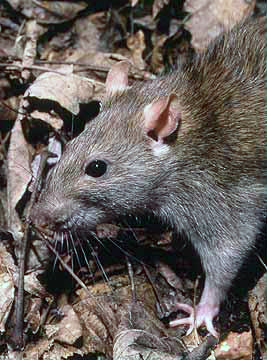
Golden-backed Tree-rat vs Brown Rat
Golden-backed Tree-rat (Mesembriomys macrurus) and Brown Rat (Rattus norvegicus) both belong to the subfamily Murinae (old world mice) and part ways below it. Both are recorded in 1 country.

Golden-backed Tree-rat
Mesembriomys macrurus
Unknown authorUnknown author, Public domain, via Wikimedia Commons


Side by side
| Golden-backed Tree-rat | Brown Rat | |
|---|---|---|
| Scientific name | Mesembriomys macrurus (Peters, 1876) | Rattus norvegicus (Berkenhout, 1769) |
| English name | Golden-backed Tree-rat | Brown Rat |
| Group | Mammals | Mammals |
| Class | Mammalia Mammal | Mammalia Mammal |
| Order | Rodentia Rodent | Rodentia Rodent |
| Family | Muridae Mice | Muridae Mice |
| Genus | Mesembriomys Tree Rats | Rattus Old World Rats |
| Named in | 1876 | 1769 |
| Red List category | Near Threatened | Least Concern |
| Environment | Not recorded | terrestrial |
| Countries on record | 1 country | 117 countries |
| GBIF occurrence records | 603 records | 272,245 records |
Rows where the two agree are shown in grey.
Where each is found
Both recorded in 1 country
Only Brown Rat (116)
- Aland Islands
- Albania
- American Samoa
- Andorra
- Armenia
- Austria
- Azerbaijan
- Bahamas
- Barbados
- Belarus
- Belgium
- Belize
- Bermuda
- Bonaire, Saint Eustatius and Saba
- Bosnia and Herzegovina
- Brazil
- Bulgaria
- Cambodia
- Canada
- China
- Costa Rica
- Croatia
- Cuba
- Curacao
- Cyprus
- Czechia
- Denmark
- Dominica
- Dominican Republic
- Estonia
- Fiji
- Finland
- France
- French Polynesia
- Georgia
- Germany
- Greece
- Guadeloupe
- Guam
- Guatemala
- Guernsey
- Haiti
- Hong Kong
- Hungary
- Iceland
- India
- Indonesia
- Iran
- Iraq
- Ireland
- Isle of Man
- Israel
- Italy
- Jamaica
- Japan
- Jersey
- Kazakhstan
- Kuwait
- Kyrgyzstan
- Latvia
- Lebanon
- Liechtenstein
- Lithuania
- Luxembourg
- Macao
- Malaysia
- Martinique
- Mexico
- Moldova
- Mongolia
- Montenegro
- Nepal
- New Caledonia
- New Zealand
- North Korea
- North Macedonia
- Northern Mariana Islands
- Norway
- Pakistan
- Palau
- Panama
- Philippines
- Poland
- Portugal
- Puerto Rico
- Romania
- Russia
- Saint Barthelemy
- Saint Kitts and Nevis
- Saint Lucia
- Saint Pierre and Miquelon
- Serbia
- Singapore
- Slovakia
- Slovenia
- South Korea
- Spain
- Sri Lanka
- Sweden
- Switzerland
- Syria
- Taiwan
- Thailand
- The Netherlands
- Tonga
- Trinidad and Tobago
- Turkey
- Turkmenistan
- U.S. Virgin Islands
- Ukraine
- United Kingdom
- United States
- Uzbekistan
- Vanuatu
- Vietnam
- Wallis and Futuna
From Catalogue of Life checklists and GBIF occurrence records. A country missing from a list means no record is held, which is not proof of absence.
Checked facts
| Golden-backed Tree-rat | Brown Rat | |
|---|---|---|
| Appearance |
|
|
| Size | No checked fact yet |
|
| Habitat |
|
|
| Diet |
|
|
| Behaviour |
|
|
| Reproduction |
|
|
| Distribution |
|
|
| Conservation |
|
|
| Uses |
|
|
| Similar species | No checked fact yet |
|
| Other |
| No checked fact yet |
In brief
Golden-backed Tree-rat
The Golden-backed Tree-rat is the common name of Mesembriomys macrurus, an accepted scientific name described by Peters in 1876. The species inhabits remote near-coastal areas of the Kimberley in Western Australia, with its present distribution concentrated in north-western Kimberley, approximately between Kalumburu and Yampi Sound. It is distinguished by a broad stripe of golden-coloured fur extending from the top of its head to the base of its tail and a white brush tip on its tail. Full profile
Brown Rat
Rattus norvegicus occupies garbage dumps, sewers, open fields, woodlands, and basements, commonly near human settlements and water. It typically has brown or dark grey fur, bald ears and a bald tail that is shorter than its body. Full profile
Compare something else
Page built on 29 November 2026 from the data on the two species pages, where every source is listed.
Cite this page
ScientificNames.org. (2026). Golden-backed Tree-rat vs Brown Rat. Retrieved November 29, 2026, from https://scientificnames.org/compare/golden-backed-tree-rat-vs-brown-rat
“Golden-backed Tree-rat vs Brown Rat.” ScientificNames.org, 2026, scientificnames.org/compare/golden-backed-tree-rat-vs-brown-rat. Accessed 29 Nov. 2026.
ScientificNames.org. “Golden-backed Tree-rat vs Brown Rat.” Accessed November 29, 2026. https://scientificnames.org/compare/golden-backed-tree-rat-vs-brown-rat.
@misc{scientificnames_golden_backed_tree_rat_vs_brown_rat,
  author = {{ScientificNames.org}},
  title = {Golden-backed Tree-rat vs Brown Rat},
  year = {2026},
  url = {https://scientificnames.org/compare/golden-backed-tree-rat-vs-brown-rat},
  note = {Accessed 2026-11-29}
}