Comparison
Monodontus semicircularis vs New World Hookworm
Monodontus semicircularis (Monodontus semicircularis) and New World Hookworm (Necator americanus) both belong to the family Ancylostomatidae (hookworms) and part ways below it.
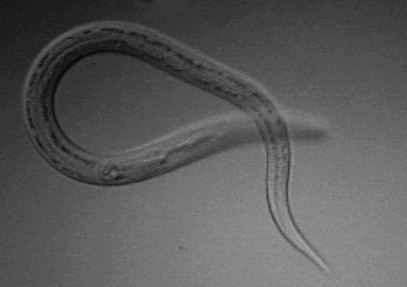

Side by side
| Monodontus semicircularis | New World Hookworm | |
|---|---|---|
| Scientific name | Monodontus semicircularis Molin, 1861 | Necator americanus Stiles, 1902 |
| English name | Not recorded | New World Hookworm |
| Group | Other invertebrates | Other invertebrates |
| Class | Chromadorea | Chromadorea |
| Order | Rhabditida | Rhabditida |
| Family | Ancylostomatidae Hookworms | Ancylostomatidae Hookworms |
| Genus | Monodontus | Necator |
| Named in | 1861 | 1902 |
| Environment | terrestrial | terrestrial |
| Countries on record | Not recorded | 17 countries |
| GBIF occurrence records | Not recorded | 278 records |
Rows where the two agree are shown in grey.
Where each is found
Only New World Hookworm (17)
- Australia
- Bangladesh
- Brazil
- Cambodia
- China
- Colombia
- Gabon
- India
- Malaysia
- Mexico
- Nigeria
- Papua New Guinea
- Philippines
- Puerto Rico
- Taiwan
- Thailand
- United States
From Catalogue of Life checklists and GBIF occurrence records. A country missing from a list means no record is held, which is not proof of absence.
Checked facts
| Monodontus semicircularis | New World Hookworm | |
|---|---|---|
| Appearance | No checked fact yet |
|
| Size | No checked fact yet |
|
| Habitat | No checked fact yet |
|
| Diet | No checked fact yet |
|
| Behaviour | No checked fact yet |
|
| Reproduction | No checked fact yet |
|
| Uses | No checked fact yet |
|
| Similar species | No checked fact yet |
|
| Other | No checked fact yet |
|
In brief
New World Hookworm
New World Hookworm is an obligate internal parasite of humans in the family Ancylostomatidae, order Rhabditida and class Chromadorea. Adult worms inhabit the small intestine of human hosts and occur exclusively in tropical and temperate regions. The species has two pairs of cutting plates in its adult mouth and infective larvae that penetrate human skin. Full profile
Compare something else
Page built on 29 November 2026 from the data on the two species pages, where every source is listed.
Cite this page
ScientificNames.org. (2026). Monodontus semicircularis vs New World Hookworm. Retrieved November 29, 2026, from https://scientificnames.org/compare/monodontus-semicircularis-vs-new-world-hookworm
“Monodontus semicircularis vs New World Hookworm.” ScientificNames.org, 2026, scientificnames.org/compare/monodontus-semicircularis-vs-new-world-hookworm. Accessed 29 Nov. 2026.
ScientificNames.org. “Monodontus semicircularis vs New World Hookworm.” Accessed November 29, 2026. https://scientificnames.org/compare/monodontus-semicircularis-vs-new-world-hookworm.
@misc{scientificnames_monodontus_semicircularis_vs_new_world_hookworm,
  author = {{ScientificNames.org}},
  title = {Monodontus semicircularis vs New World Hookworm},
  year = {2026},
  url = {https://scientificnames.org/compare/monodontus-semicircularis-vs-new-world-hookworm},
  note = {Accessed 2026-11-29}
}