Comparison

Red-bellied Macaw vs Grey Parrot

Red-bellied Macaw (Orthopsittaca manilatus) and Grey Parrot (Psittacus erithacus) both belong to the family Psittacidae (macaws) and part ways below it.
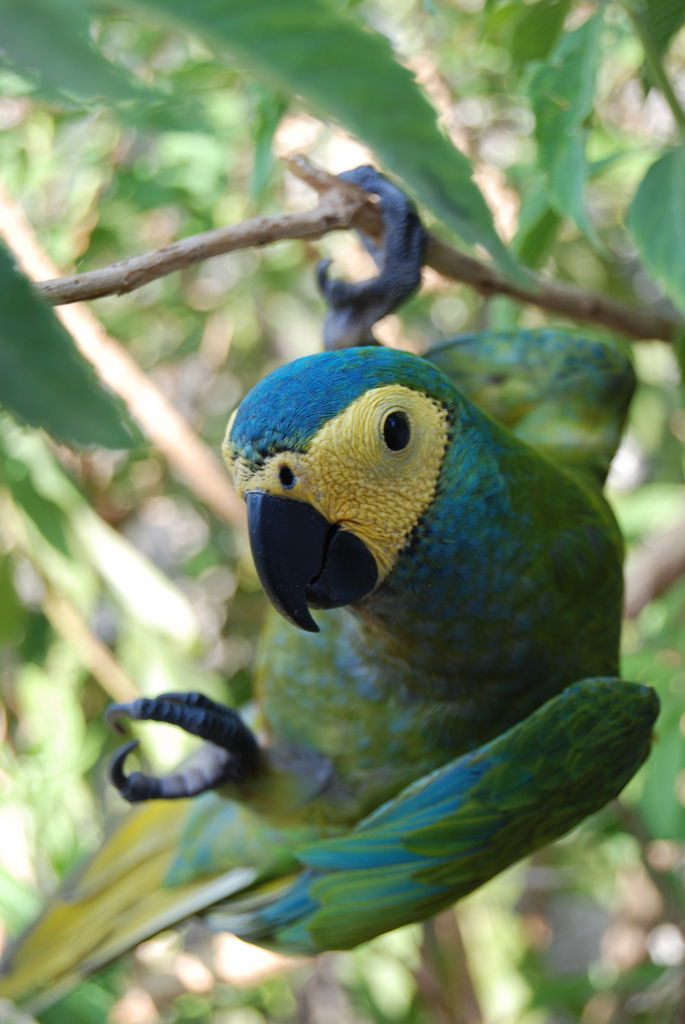
Red-bellied Macaw

Red-bellied Macaw

Orthopsittaca manilatus

A C Moraes, CC BY 2.0, via Wikimedia Commons

Grey Parrot

Grey Parrot

Psittacus erithacus

Florettesokeng, CC BY-SA 4.0, via Wikimedia Commons

Side by side

Red-bellied MacawGrey Parrot
Scientific nameOrthopsittaca manilatus (Boddaert, 1783)Psittacus erithacus Linnaeus, 1758
English nameRed-bellied MacawGrey Parrot
GroupBirdsBirds
ClassAves BirdAves Bird
OrderPsittaciformes ParrotPsittaciformes Parrot
FamilyPsittacidae MacawsPsittacidae Macaws
GenusOrthopsittacaPsittacus Grey Parrot
Named in17831758
Red List categoryLeast ConcernEndangered
Countries on record10 countries21 countries
GBIF occurrence records44,373 records12,913 records

Rows where the two agree are shown in grey.

Where each is found

Only Red-bellied Macaw (10)

Only Grey Parrot (21)

From Catalogue of Life checklists and GBIF occurrence records. A country missing from a list means no record is held, which is not proof of absence.

Checked facts

Red-bellied MacawGrey Parrot
Appearance
  • Its chin, throat, and upper chest are greyish with green scalloping. English Wikipedia
  • Adults have dark-grey beaks, legs, and feet. English Wikipedia
  • The species has zygodactyl feet, with two toes pointing forward and two backward. English Wikipedia
  • Juveniles are duller in colour than adults and have grey beaks with a conspicuous white stripe along the upper beak. English Wikipedia
SizeNo checked fact yet
Habitat
  • The species inhabits moriche palm swamp forests and sandy savannahs containing palm groves. English Wikipedia
  • The red-bellied macaw depends critically on moriche palms for roosting, feeding, and nesting. English Wikipedia
  • The species favors swampy areas within lowland rainforest habitats. ebird.org
  • The species inhabits both primary and secondary rainforests. pmc.ncbi.nlm.nih.gov
  • The species commonly occurs in moist lowland forests. animaldiversity.org
  • The species also occurs along forest edges, in clearings, gallery forests, mangroves, wooded savannahs, cultivated areas, and gardens. animaldiversity.org
  • Individuals have been recorded at elevations reaching 2,200 m in the eastern parts of their range. animaldiversity.org
  • The species uses natural forest clearings with marshy or muddy soil. pmc.ncbi.nlm.nih.gov
  • Individuals commonly roost in trees above water and may favour river islands. animaldiversity.org
Diet
  • The red-bellied macaw feeds almost exclusively on the fruits and seeds of moriche palms. English Wikipedia
  • In Trinidad, the species also feeds on the fruits and seeds of Caribbean royal palms. English Wikipedia
Behaviour
  • Red-bellied macaws produce high-pitched, reedy screams. English Wikipedia
  • The species roosts communally in moriche palms, with large numbers gathering at dawn and dusk. English Wikipedia
  • Red-bellied macaws select large stands of moriche palms containing abundant woodpecker holes as roosting sites. English Wikipedia
  • Between five and ten red-bellied macaws may sleep together in a single tree hollow. English Wikipedia
  • At dusk, individuals enter communal hollows and sleep close together. English Wikipedia
  • The species is highly social and forms large groups. animaldiversity.org
  • Wild individuals are shy and rarely allow humans to approach them. animaldiversity.org
  • Individuals gather in large, noisy flocks during morning and evening roosting periods. animaldiversity.org
  • During daytime, individuals divide into smaller flocks and travel long distances to forage. animaldiversity.org
  • The species is a partial ground feeder. English Wikipedia
  • Groups visiting forest clearings typically perch in surrounding trees and vocalize before landing to feed, drink, and interact. pmc.ncbi.nlm.nih.gov
  • An average of 40 individuals visited the studied forest clearing each day. pmc.ncbi.nlm.nih.gov
  • Visits to forest clearings become shorter when predators or humans disturb the birds. pmc.ncbi.nlm.nih.gov
  • Wild individuals can imitate sounds heard in their environment. English Wikipedia
Reproduction
Distribution
  • The red-bellied macaw is native to tropical Amazonian South America and the Caribbean island of Trinidad. English Wikipedia
  • The species is native to equatorial Africa. English Wikipedia
  • Its native range includes Angola, Cameroon, the Congo, Gabon, Ivory Coast, Ghana, Kenya, and Uganda. English Wikipedia
  • The species occurs across the forest belt of central and West Africa, including Príncipe. animaldiversity.org
Conservation
  • The red-bellied macaw is classified as Least Concern by the IUCN. English Wikipedia
  • Wild populations of the species appear to be declining, although population numbers have not been estimated. English Wikipedia
  • Clearing moriche palms for posts and cattle ranching has adversely affected some local populations. English Wikipedia
  • Capture for the pet trade is identified as another threat to the species. English Wikipedia
  • The species is classified as Endangered on the IUCN Red List. English Wikipedia
  • Capture for the pet trade and habitat loss are major threats to the species. pmc.ncbi.nlm.nih.gov
  • Grey parrot populations declined by an estimated 50–79% in recent decades. pmc.ncbi.nlm.nih.gov
  • The species received the highest level of CITES protection in October 2016 through Appendix I listing. English Wikipedia
  • Protecting forest clearings from disturbance and capture is recommended as a conservation measure. pmc.ncbi.nlm.nih.gov
Uses
  • The species is commonly kept as a companion parrot because of its ability to mimic human speech. English Wikipedia
Similar species
  • The African red-bellied parrot is a smaller parrot with a similar common name but is a different species. English Wikipedia
  • Juvenile Spix's macaws are the only other macaws described as having a similar white stripe along the upper beak. English Wikipedia
No checked fact yet

In brief

Red-bellied Macaw

Orthopsittaca manilatus is native to tropical Amazonian South America and the Caribbean island of Trinidad. Full profile

Grey Parrot

Psittacus erithacus inhabits primary and secondary rainforests and commonly occurs in moist lowland forests. Full profile

Compare something else

Page built on 26 November 2026 from the data on the two species pages, where every source is listed.

Cite this page

ScientificNames.org. (2026). Red-bellied Macaw vs Grey Parrot. Retrieved November 26, 2026, from https://scientificnames.org/compare/red-bellied-macaw-vs-grey-parrot