Comparison
Paramyrmococcus chiengraiensis vs Pink Hibiscus Mealybug
Paramyrmococcus chiengraiensis (Paramyrmococcus chiengraiensis) and Pink Hibiscus Mealybug (Maconellicoccus hirsutus) both belong to the family Pseudococcidae (mealybug) and part ways below it. Both are recorded in 1 country.
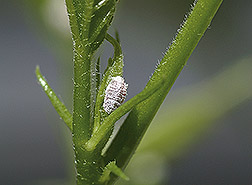

Side by side
| Paramyrmococcus chiengraiensis | Pink Hibiscus Mealybug | |
|---|---|---|
| Scientific name | Paramyrmococcus chiengraiensis Takahashi, 1941 | Maconellicoccus hirsutus (Green, 1908) |
| English name | Not recorded | Pink Hibiscus Mealybug |
| Group | Insects | Insects |
| Class | Insecta Insect | Insecta Insect |
| Order | Hemiptera | Hemiptera |
| Family | Pseudococcidae Mealybug | Pseudococcidae Mealybug |
| Genus | Paramyrmococcus | Maconellicoccus |
| Named in | 1941 | 1908 |
| Countries on record | 1 country | 106 countries |
| GBIF occurrence records | 45 records | 900 records |
Rows where the two agree are shown in grey.
Where each is found
Both recorded in 1 country
Only Pink Hibiscus Mealybug (105)
- Algeria
- Anguilla
- Antigua and Barbuda
- Aruba
- Australia
- Bahamas
- Bangladesh
- Barbados
- Belize
- Benin
- Brazil
- British Virgin Islands
- Brunei
- Burkina Faso
- Cabo Verde
- Cambodia
- Cameroon
- Cayman Islands
- Central African Republic
- Chad
- China
- Colombia
- Costa Rica
- Cuba
- Curacao
- Cyprus
- Democratic Republic of the Congo
- Dominica
- Ecuador
- Egypt
- Fiji
- French Guiana
- Gabon
- Gambia
- Georgia
- Greece
- Grenada
- Guadeloupe
- Guam
- Guyana
- Haiti
- Hong Kong
- India
- Indonesia
- Iran
- Israel
- Ivory Coast
- Jamaica
- Japan
- Jordan
- Kenya
- Laos
- Lebanon
- Liberia
- Malaysia
- Maldives
- Martinique
- Mexico
- Micronesia
- Montserrat
- Myanmar
- Nepal
- New Caledonia
- Nicaragua
- Niger
- Nigeria
- Northern Mariana Islands
- Oman
- Pakistan
- Palau
- Papua New Guinea
- Philippines
- Puerto Rico
- Republic of the Congo
- Reunion
- Saint Barthelemy
- Saint Kitts and Nevis
- Saint Lucia
- Saint Martin
- Saint Vincent and the Grenadines
- Samoa
- Saudi Arabia
- Senegal
- Seychelles
- Singapore
- Solomon Islands
- Somalia
- Sri Lanka
- Sudan
- Suriname
- Taiwan
- Tanzania
- Tonga
- Trinidad and Tobago
- Tunisia
- Turkey
- Tuvalu
- U.S. Virgin Islands
- United Arab Emirates
- United States
- Vanuatu
- Venezuela
- Vietnam
- Yemen
- Zambia
From Catalogue of Life checklists and GBIF occurrence records. A country missing from a list means no record is held, which is not proof of absence.
Checked facts
| Paramyrmococcus chiengraiensis | Pink Hibiscus Mealybug | |
|---|---|---|
| Appearance | No checked fact yet |
|
| Size | No checked fact yet |
|
| Habitat | No checked fact yet |
|
| Diet | No checked fact yet |
|
| Behaviour | No checked fact yet |
|
| Reproduction | No checked fact yet |
|
| Lifespan | No checked fact yet |
|
| Other | No checked fact yet |
|
In brief
Pink Hibiscus Mealybug
Maconellicoccus hirsutus inhabits tropical, subtropical, and temperate regions and occurs on various parts of host plants. Adult females have pink bodies covered by white wax, while adult males have two wings and two long waxy tails. Full profile
Compare something else
Page built on 26 November 2026 from the data on the two species pages, where every source is listed.
Cite this page
ScientificNames.org. (2026). Paramyrmococcus chiengraiensis vs Pink Hibiscus Mealybug. Retrieved November 26, 2026, from https://scientificnames.org/compare/paramyrmococcus-chiengraiensis-vs-pink-hibiscus-mealybug
“Paramyrmococcus chiengraiensis vs Pink Hibiscus Mealybug.” ScientificNames.org, 2026, scientificnames.org/compare/paramyrmococcus-chiengraiensis-vs-pink-hibiscus-mealybug. Accessed 26 Nov. 2026.
ScientificNames.org. “Paramyrmococcus chiengraiensis vs Pink Hibiscus Mealybug.” Accessed November 26, 2026. https://scientificnames.org/compare/paramyrmococcus-chiengraiensis-vs-pink-hibiscus-mealybug.
@misc{scientificnames_paramyrmococcus_chiengraiensis_vs_pink_hibiscus_mealybug,
  author = {{ScientificNames.org}},
  title = {Paramyrmococcus chiengraiensis vs Pink Hibiscus Mealybug},
  year = {2026},
  url = {https://scientificnames.org/compare/paramyrmococcus-chiengraiensis-vs-pink-hibiscus-mealybug},
  note = {Accessed 2026-11-26}
}