Comparison

Oldfield Mouse vs White-footed Mouse

Oldfield Mouse (Peromyscus polionotus) and White-footed Mouse (Peromyscus leucopus) both belong to the genus Peromyscus (deer mice) and part ways below it. Both are recorded in 2 countries.

Oldfield Mouse

Oldfield Mouse

Peromyscus polionotus

United States National Park Service, Public domain, via Wikimedia Commons

White-footed Mouse

White-footed Mouse

Peromyscus leucopus

Edited by Chandler B. Beach, A.M., Public domain, via Wikimedia Commons
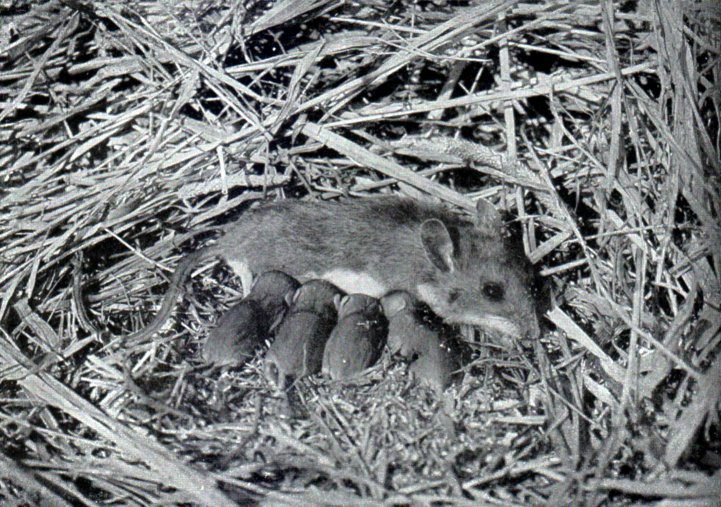
Side by side

Oldfield MouseWhite-footed Mouse
Scientific namePeromyscus polionotus (Wagner, 1843)Peromyscus leucopus (Rafinesque, 1818)
English nameOldfield MouseWhite-footed Mouse
GroupMammalsMammals
ClassMammalia MammalMammalia Mammal
OrderRodentia RodentRodentia Rodent
FamilyCricetidae New World Mice and RatsCricetidae New World Mice and Rats
GenusPeromyscus Deer MicePeromyscus Deer Mice
Named in18431818
Red List categoryLeast ConcernLeast Concern
EnvironmentNot recordedterrestrial
Countries on record2 countries3 countries
GBIF occurrence records9,487 records137,357 records

Rows where the two agree are shown in grey.

Where each is found

Both recorded in 2 countries

Only White-footed Mouse (1)

From Catalogue of Life checklists and GBIF occurrence records. A country missing from a list means no record is held, which is not proof of absence.

Checked facts

Oldfield MouseWhite-footed Mouse
Appearance
  • The species generally has fawn-colored upperparts and grey to white underparts. English Wikipedia
  • Individuals living on white sandy beaches can have light or nearly white coats that help camouflage them from predators. English Wikipedia
  • Inland populations have darker coloration, smaller bodies, and shorter tails than beach populations. English Wikipedia
  • The tail is brown and white, with a white underside. animaldiversity.org
  • The upperparts of this species range from pale to rich reddish brown, while its underside and feet are white. animaldiversity.org
  • Its tail is darker on the upper surface and lighter underneath. biokids.umich.edu
Size
Habitat
  • The species inhabits beaches and sandy fields. English Wikipedia
  • The species occupies abandoned fields, beach dunes, and scrub habitats, particularly during early ecological succession. animaldiversity.org
  • The species is probably restricted to sandy and loamy soils because it depends on tunneling. animaldiversity.org
  • This species is most frequently encountered in warm, dry forests and brushlands at low and intermediate elevations. animaldiversity.org
  • It can inhabit environments ranging from high-elevation forests to semi-desert landscapes. animaldiversity.org
  • It also occupies suburban and agricultural environments. biokids.umich.edu
  • In the southern and western portions of its range, this species mainly inhabits wooded areas and semi-desert scrub near waterways. animaldiversity.org
  • In southern Mexico, this species is primarily associated with agricultural environments. biokids.umich.edu
  • It constructs nests in warm, dry locations such as hollow trees and abandoned bird nests. animaldiversity.org
Diet
  • This species is omnivorous and consumes seeds, berries, nuts, insects, grains, fruits, and fungi. biokids.umich.edu
  • Its diet includes seeds, nuts, fruits, berries, and insects. tn.gov
  • It consumes the pupal stage of invasive gypsy moths. English Wikipedia
  • It gathers and stores seeds and nuts during autumn for consumption during winter. biokids.umich.edu
Behaviour
  • The species is primarily nocturnal. English Wikipedia
  • Oldfield mice construct elaborate burrow systems containing entrance tunnels, nest chambers, and escape routes. English Wikipedia
  • The species is most active on moonless or cloudy evenings. animaldiversity.org
  • Individuals hoard seeds underground in their burrows. animaldiversity.org
  • Individuals probably occupy the same general area throughout their lives and may defend small territories. animaldiversity.org
  • The species uses chemical cues extensively for communication. animaldiversity.org
  • Individuals escape predators by retreating into their burrows and being active primarily at night. animaldiversity.org
  • This species is primarily active during nighttime. animaldiversity.org
  • Individuals are generally solitary and territorial, although neighboring home ranges can overlap. animaldiversity.org
  • Its home ranges generally cover between 0.5 and 1.5 acres. biokids.umich.edu
  • Its population density can range from 4 to 12 individuals per acre. animaldiversity.org
  • Individuals are capable of climbing and swimming effectively. animaldiversity.org
  • Captured individuals have demonstrated the ability to return to their original capture location after being released two miles away. animaldiversity.org
  • Individuals produce a prolonged buzzing sound by striking hollow reeds or dry leaves with their forepaws. biokids.umich.edu
  • Females transport threatened offspring individually by holding them around the neck with their teeth. biokids.umich.edu
Reproduction
LifespanNo checked fact yet
DistributionNo checked fact yet
  • This species occurs across much of eastern North America, extending from Nova Scotia westward to Saskatchewan and Montana. animaldiversity.org
  • Its geographical range extends southward into eastern and southern Mexico and the Yucatan Peninsula. biokids.umich.edu
Conservation
  • The species was classified as Least Concern on the IUCN Red List in 2016. English Wikipedia
  • Several subspecies have elevated conservation concerns, including extinct, critically endangered, endangered, and near-threatened classifications. English Wikipedia
  • Beach development and water recreation are identified as threats to some populations of the species. animaldiversity.org
  • Hurricane Opal was followed by severe reductions in recorded populations along the Alabama coast. animaldiversity.org
Uses
  • The species has been used extensively as a model for genetic research on pigmentation-controlling genes. animaldiversity.org
  • This species contributes to controlling populations of insect pests such as gypsy moths. animaldiversity.org
  • It serves as an important prey species for numerous small predators. maine.gov
  • It is commonly used as a laboratory animal, ranking among the most frequently used mouse species after the house mouse. English Wikipedia
  • Domesticated individuals are also maintained as pets and have been selectively bred for different coat colors. English Wikipedia
Similar speciesNo checked fact yet
  • The eastern deer mouse (Peromyscus maniculatus) is a similar species. English Wikipedia
  • Other closely related species that can be difficult to distinguish from it include Peromyscus maniculatus, P. eremicus, P. polionotus, and P. gossypinus. animaldiversity.org

In brief

Oldfield Mouse

Peromyscus polionotus inhabits beaches, sandy fields, abandoned fields, beach dunes, and scrub habitats. Beach populations can have light or nearly white coats, while inland populations have darker coloration, smaller bodies, and shorter tails. Full profile

White-footed Mouse

Peromyscus leucopus occurs across much of eastern North America, extending from Nova Scotia westward to Saskatchewan and Montana, and southward into eastern and southern Mexico and the Yucatan Peninsula. Its upperparts range from pale to rich reddish brown, while its underside and feet are white. Full profile

Compare something else

Page built on 27 November 2026 from the data on the two species pages, where every source is listed.

Cite this page

ScientificNames.org. (2026). Oldfield Mouse vs White-footed Mouse. Retrieved November 27, 2026, from https://scientificnames.org/compare/oldfield-mouse-vs-white-footed-mouse