Species · Mammals
Oldfield Mouse Peromyscus polionotus
The scientific name of the Oldfield Mouse is Peromyscus polionotus. It is a species of mammal in the family Cricetidae (new world mice and rats), order Rodentia. The name dates from 1843.
- Scientific name
- Peromyscus polionotus (Wagner, 1843)
- Common name
- Oldfield Mouse
- Genus
- Peromyscus
- Family
- Cricetidae (New World Mice and Rats)
- Order
- Rodentia
- Class
- Mammalia
- Red List category
- LC Least Concern
- Recorded in
- 2 countries
- Name status
- accepted in the Catalogue of Life

Overview
Peromyscus polionotus inhabits beaches, sandy fields, abandoned fields, beach dunes, and scrub habitats. Beach populations can have light or nearly white coats, while inland populations have darker coloration, smaller bodies, and shorter tails.
Written 26 November 2026 from the sources listed below. Each statement was checked against the passage it cites; statements that could not be supported were removed.
Appearance
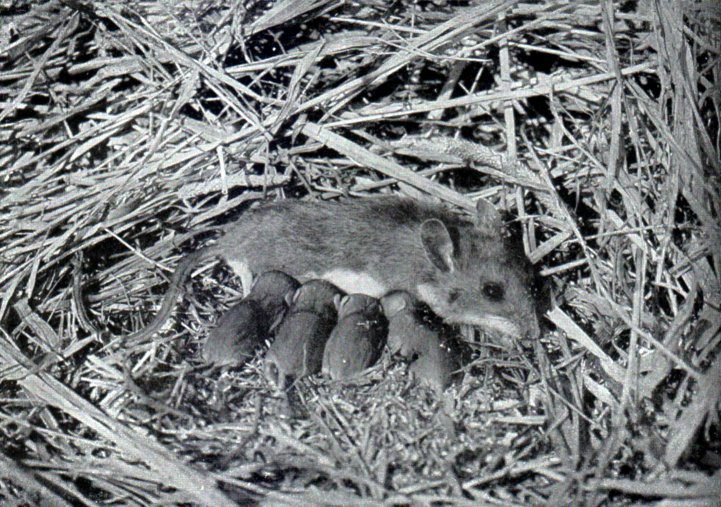
The species generally has fawn-colored upperparts and grey to white underparts. Its tail is brown and white, with a white underside.[1][2]
Individuals living on white sandy beaches can have light or nearly white coats that help camouflage them from predators. Inland populations have darker coloration, smaller bodies, and shorter tails than beach populations.[3][4]
Total body length ranges from 110 to 150 millimeters, and average tail length ranges from 40 to 60 millimeters. Body weight ranges from 10 to 15 grams, and adult females are slightly larger than adult males.[5][6][7][8]
Habitat
The Oldfield Mouse inhabits beaches and sandy fields. It also occupies abandoned fields, beach dunes, and scrub habitats, particularly during early ecological succession.[9][10]
The species is probably restricted to sandy and loamy soils because it depends on tunneling.[11]
Diet
The species primarily consumes seasonal seeds of wild grasses and forbs. Its diet can also include blackberries, acorns, wild peas, and arthropods.[12][13]
The species consumes seeds of grasses and herbs and stores seeds in underground caches. Arthropods and insect parts are also consumed.[14][15][16]
Behaviour
The Oldfield Mouse is primarily nocturnal and is most active on moonless or cloudy evenings. It escapes predators by retreating into its burrows and being active primarily at night.[17][18][19]
Individuals construct elaborate burrow systems containing entrance tunnels, nest chambers, and escape routes. They hoard seeds underground in their burrows.[20][21]
Individuals probably occupy the same general area throughout their lives and may defend small territories. The species uses chemical cues extensively for communication.[22][23]
Reproduction and life cycle
The species is monogamous and breeds throughout the year, although breeding activity declines during summer. Gestation lasts approximately 24 days, and litters typically contain three to four offspring.[24][25][26][27]
Young are weaned approximately 20 to 25 days after birth.[28]
Conservation
The species was classified as Least Concern on the IUCN Red List in 2016. Several subspecies have elevated conservation concerns, including extinct, critically endangered, endangered, and near-threatened classifications.[29][30]
Beach development and water recreation are identified as threats to some populations. Hurricane Opal was followed by severe reductions in recorded populations along the Alabama coast.[31][32]
Uses
The species has been used extensively as a model for genetic research on pigmentation-controlling genes.[33]
Classification of the Oldfield Mouse
| Kingdom | Animalia |
|---|---|
| Phylum | Chordata |
| Subphylum | Vertebrata |
| Infraphylum | Gnathostomata |
| Parvphylum | Osteichthyes |
| Megaclass | Tetrapoda |
| Class | Mammalia (Mammal) |
| Subclass | Theria |
| Infraclass | Eutheria |
| Order | Rodentia (Rodent) |
| Suborder | Myomorpha (Mice) |
| Superfamily | Muroidea |
| Family | Cricetidae (New World Mice and Rats) |
| Subfamily | Neotominae |
| Genus | Peromyscus (Deer Mice) |
| Species | Peromyscus polionotus (Wagner, 1843) |
Where the Oldfield Mouse is found
Checklists and occurrence records place Peromyscus polionotus in 2 countries across North America. GBIF holds 9,487 georeferenced records of it.
Countries
Regions and cities with the most records
- Florida, United States 2,832
- Georgia, United States 1,191
- Navarre, United States 324
- Midway, United States 239
- Crestview, United States 195
- Wright, United States 194
- Fort Walton Beach, United States 182
- East Pensacola Heights, United States 159
- Alabama, United States 154
- Sebastian, United States 142
- Brent, United States 130
- Palm Bay, United States 130
- South Carolina, United States 120
- Pensacola, United States 117
- Myrtle Grove, United States 89
- West Pensacola, United States 89
- Fort Pierce, United States 84
- Gainesville, United States 82
- Palm City, United States 82
- Port Saint Lucie, United States 82
- Stuart, United States 82
- Bellview, United States 72
- Tavares, United States 72
- Leesburg, United States 62
- Eustis, United States 49
- Prattville, United States 47
- Ensley, United States 46
- Ferry Pass, United States 46
- Santa Rosa Beach, United States 46
- Pace, United States 42
- Foley, United States 34
- Cocoa, United States 28
- Merritt Island, United States 27
- Perry, United States 27
- Rockledge, United States 27
- The Villages, United States 23
Range as the checklists state it
North America
A number beside a place is its count of GBIF occurrence records. A place without a number comes from a checklist alone. Records show where a species has been observed or collected, which can include escapes and vagrants.
Common names
English
- Oldfield Mouse
- Beach Mouse
- Choctawhatchee Beach Mouse
- Oldfield Deermouse
Names in 6 other languages
- Finnish
- kesantopeurahiiru
- French
- Souris de plage
- Japanese
- ハイイロシロアシマウス
- Polish
- myszak plażowy
- Russian
- Береговой хомячок
- Spanish
- Ratón de playa
Synonyms
24 other scientific names have been used for this species and are now treated as synonyms of Peromyscus polionotus.
- Hesperomys niveiventris Chapman, 1889
- Mus polionotus Wagner, 1843
- Peromyscus leucocephalus A. H. Howell, 1920
- Peromyscus phasma Bangs, 1898
- Peromyscus polionotus albifrons Osgood, 1909
- Peromyscus polionotus allophrys Bowen, 1968
- Peromyscus polionotus ammobates Bowen, 1968
- Peromyscus polionotus colemani Schwartz, 1954
- Peromyscus polionotus decoloratus A. H. Howell, 1939
- Peromyscus polionotus griseobracatus Bowen, 1968
- Peromyscus polionotus leucocephalus A. H. Howell, 1920
- Peromyscus polionotus lucubrans Schwartz, 1954
- Peromyscus polionotus niveiventris (Chapman, 1889)
- Peromyscus polionotus peninsularis A. H. Howell, 1939
- Peromyscus polionotus phasma Bangs, 1898
- Peromyscus polionotus polionotus (Wagner, 1843)
- Peromyscus polionotus rhoadsi Bangs, 1898
- Peromyscus polionotus subgriseus (Chapman, 1893)
- Peromyscus polionotus sumneri Bowen, 1968
- Peromyscus polionotus trissyllepsis Bowen, 1968
- Peromyscus subgriseus baliolus Bangs, 1898
- Peromyscus subgriseus rhoadsi Bangs, 1898
- Sitomys niveiventris subgriseus Chapman, 1893
- Sitomys viveiventris subgriseus Chapman, 1893
Related species
-
 White-footed MousePeromyscus leucopus
-
 Eastern Deer MousePeromyscus maniculatus
-
 Cactus MousePeromyscus eremicus
-
 California DeermousePeromyscus californicus
-
 Brush MousePeromyscus boylii
- Angel Island MousePeromyscus guardia
-
 Cotton MousePeromyscus gossypinus
-
 Pinyon MousePeromyscus truei
Compare
Questions and answers
What is the scientific name of the Oldfield Mouse?
The scientific name of the Oldfield Mouse is Peromyscus polionotus. Written with its author, the full name is Peromyscus polionotus (Wagner, 1843).
Which family does the Oldfield Mouse belong to?
Peromyscus polionotus belongs to the family Cricetidae, in the order Rodentia and the class Mammalia.
Where is the Oldfield Mouse found?
Checklists and occurrence records place Peromyscus polionotus in 2 countries: United States and Canada.
What is the conservation status of the Oldfield Mouse?
The IUCN Red List category recorded for Peromyscus polionotus is Least Concern (LC).
What other names does the Oldfield Mouse have?
Peromyscus polionotus is also known in English as Beach Mouse, Choctawhatchee Beach Mouse and Oldfield Deermouse.
What is the oldest mouse ever alive?
One Oldfield Mouse survived for 5.5 years in captivity.[34]
What does the Alabama Beach mouse eat?
The Oldfield Mouse primarily consumes seasonal seeds of wild grasses and forbs. Its diet can also include blackberries, acorns, wild peas, and arthropods.[12][13]
Sources
Passages the profile rests on
- The species generally has fawn-colored upperparts and grey to white underparts. Source passage: “The mouse has fawn-colored upperparts and grey to white underparts through most of its range” — English Wikipedia
- The tail is brown and white, with a white underside. Source passage: “The white and brown colored tail, with a white underside, are two identifiable characteristics” — animaldiversity.org
- Individuals living on white sandy beaches can have light or nearly white coats that help camouflage them from predators. Source passage: “on white sandy beaches, the mouse is light or even white to help them stay hidden from predators.” — English Wikipedia
- Inland populations have darker coloration, smaller bodies, and shorter tails than beach populations. Source passage: “Inland populations are darker and smaller with shorter tails” — English Wikipedia
- Total body length ranges from 110 to 150 millimeters. Source passage: “Total length ranges from 110 to 150 millimeters” — animaldiversity.org
- Average tail length ranges from 40 to 60 millimeters. Source passage: “the average tail length ranging from 40 to 60 millimeters.” — animaldiversity.org
- Body weight ranges from 10 to 15 grams. Source passage: “Weight varies between 10 and 15 grams” — animaldiversity.org
- Adult females are slightly larger than adult males. Source passage: “Adult females are slightly larger than adult males” — animaldiversity.org
- The species inhabits beaches and sandy fields. Source passage: “They primarily live in beaches and sandy fields.” — English Wikipedia
- The species occupies abandoned fields, beach dunes, and scrub habitats, particularly during early ecological succession. Source passage: “These mice typically occupy early successional habitats such as abandoned fields, beach dunes, and scrub habitats” — animaldiversity.org
- The species is probably restricted to sandy and loamy soils because it depends on tunneling. Source passage: “They are most likely restricted to sandy and loamy soils throughout their range because of their reliance on tunneling.” — animaldiversity.org
- The species primarily consumes seasonal seeds of wild grasses and forbs. Source passage: “the principal diet is seasonal seeds of wild grasses and forbs” — English Wikipedia
- Its diet can also include blackberries, acorns, wild peas, and arthropods. Source passage: “blackberries, acorns, wild peas, and arthropods may be consumed.” — English Wikipedia
- The species consumes seeds of grasses and herbs. Source passage: “Oldfield mice are granivorous, feeding on the seeds of grasses and herbs.” — animaldiversity.org
- Individuals store seeds in underground caches. Source passage: “They store food in underground caches” — animaldiversity.org
- Arthropods and insect parts are also consumed. Source passage: “They will also consume arthropods, insect parts have been found in nests” — animaldiversity.org
- The species is primarily nocturnal. Source passage: “The mouse is primarily nocturnal.” — English Wikipedia
- The species is most active on moonless or cloudy evenings. Source passage: “Highest levels of activity have been recorded on moonless or cloudy evenings.” — animaldiversity.org
- Individuals escape predators by retreating into their burrows and being active primarily at night. Source passage: “They escape predation by seeking refuge in their burrows and by being active primarily at night.” — animaldiversity.org
- Oldfield mice construct elaborate burrow systems containing entrance tunnels, nest chambers, and escape routes. Source passage: “Oldfield mice construct elaborate burrow systems with entrance tunnels, nest chambers, and escape routes.” — English Wikipedia
- Individuals hoard seeds underground in their burrows. Source passage: “Stashes of seeds have been found underground in their burrowed nests.” — animaldiversity.org
- Individuals probably occupy the same general area throughout their lives and may defend small territories. Source passage: “Oldfield mice probably occupy the same general area throughout their lives and may defend small territories.” — animaldiversity.org
- The species uses chemical cues extensively for communication. Source passage: “They use chemical cues extensively in communication.” — animaldiversity.org
- The species is monogamous. Source passage: “The mice are monogamous.” — English Wikipedia
- Breeding occurs throughout the year, although activity declines during summer. Source passage: “Breeding of Peromyscus polionotus occurs throughout the year. There is a decline in breeding activity during the summer” — animaldiversity.org
- Gestation lasts approximately 24 days. Source passage: “Gestation is 24 days in length” — animaldiversity.org
- Litters typically contain three to four offspring. Source passage: “Litter size ranges between three and four individuals.” — animaldiversity.org
- Young are weaned approximately 20 to 25 days after birth. Source passage: “The litter is weaned around 20-25 days after birth.” — animaldiversity.org
- The species was classified as Least Concern on the IUCN Red List in 2016. Source passage: “In 2016, these mice were in the least concern category on the IUCN Red List” — English Wikipedia
- Several subspecies have elevated conservation concerns, including extinct, critically endangered, endangered, and near-threatened classifications. Source passage: “one is extinct, one was listed critically endangered, four endangered and two near threatened.” — English Wikipedia
- Beach development and water recreation are identified as threats to some populations of the species. Source passage: “Beach development and water recreation are just two causes for this mouse being in danger of extinction” — animaldiversity.org
- Hurricane Opal was followed by severe reductions in recorded populations along the Alabama coast. Source passage: “have recorded populations of Peromyscus polionotus to be severely reduced several months after Hurricane Opal hit the Alabama coast.” — animaldiversity.org
- The species has been used extensively as a model for genetic research on pigmentation-controlling genes. Source passage: “Oldfield mice are excellent models for genetic research and have been used extensively to study variation in pigment controlling genes.” — animaldiversity.org
- One individual survived for 5.5 years in captivity. Source passage: “one mouse survived in captivity for 5.5 years.” — English Wikipedia
Data
- Catalogue of Life, 2026-10-16 XR cc by
- Global Biodiversity Information Facility CC BY 4.0
- Wikidata CC0
- GeoNames CC BY 4.0
- Wikimedia Commons per image; credit shown with each image
- Within the Catalogue of Life, this name comes from The Integrated Taxonomic Information System cc0
References
- Arch. Naturgesch. vol.9 2 p.52 where the name was published
- Hall, & Raymond, E. (1981). The Mammals of North America, 2nd Ed., Vol. 2.
- Banks, R. C., R. W. McDiarmid, and A. L. Gardner. (1987). Checklist of Vertebrates of the United States, the U.S. Territories, and Canada. Resource Publication, No. 166.
- Wilson, Don E., and DeeAnn M. Reeder, eds. (1993). Mammal Species of the World: A Taxonomic and Geographic Reference, 2nd Ed., 3rd Printing.
- Wilson, Don E., and F. Russell Cole. (2000). Common Names of Mammals of the World.
- Musser, Guy G., and Michael D. Carleton / Wilson, Don E., and DeeAnn M. Reeder, eds. (2005). Superfamily Muroidea. Mammal Species of the World: A Taxonomic and Geographic Reference, 3rd Ed., Vol. 2.
This species in other databases
Page built on 26 November 2026. See how the catalog is made and all sources and licences.
Cite this page
ScientificNames.org. (2026). Peromyscus polionotus (Oldfield Mouse). Retrieved November 26, 2026, from https://scientificnames.org/species/peromyscus-polionotus
“Peromyscus polionotus (Oldfield Mouse).” ScientificNames.org, 2026, scientificnames.org/species/peromyscus-polionotus. Accessed 26 Nov. 2026.
ScientificNames.org. “Peromyscus polionotus (Oldfield Mouse).” Accessed November 26, 2026. https://scientificnames.org/species/peromyscus-polionotus.
@misc{scientificnames_peromyscus_polionotus_oldfield_mouse,
  author = {{ScientificNames.org}},
  title = {Peromyscus polionotus (Oldfield Mouse)},
  year = {2026},
  url = {https://scientificnames.org/species/peromyscus-polionotus},
  note = {Accessed 2026-11-26}
}