Comparison

Mat Rock Spiraea vs Quince

Mat Rock Spiraea (Petrophytum caespitosum) and Quince (Cydonia oblonga) both belong to the subfamily Amygdaloideae and part ways below it. Both are recorded in 2 countries.

Mat Rock Spiraea

Mat Rock Spiraea

Petrophytum caespitosum

Stan Shebs, CC BY-SA 3.0, via Wikimedia Commons

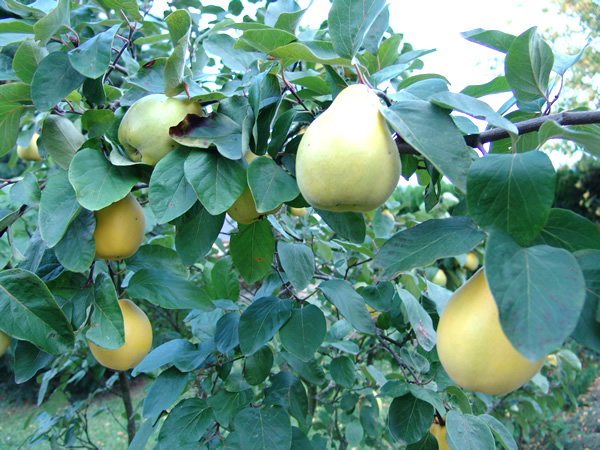
Quince

Quince

Cydonia oblonga

Unknown author, CC BY-SA 3.0, via Wikimedia Commons

Side by side

Mat Rock SpiraeaQuince
Scientific namePetrophytum caespitosum (Nutt.) Rydb.Cydonia oblonga Mill.
English nameMat Rock SpiraeaQuince
GroupFlowering plantsFlowering plants
ClassMagnoliopsidaMagnoliopsida
OrderRosalesRosales
FamilyRosaceae Rose FamilyRosaceae Rose Family
GenusPetrophytumCydonia Quince
Red List categoryNot recordedLeast Concern
Countries on record2 countries88 countries
GBIF occurrence records4,771 records52,611 records

Rows where the two agree are shown in grey.

Where each is found

Both recorded in 2 countries

Only Quince (86)

From Catalogue of Life checklists and GBIF occurrence records. A country missing from a list means no record is held, which is not proof of absence.

Checked facts

Mat Rock SpiraeaQuince
Appearance
  • Petrophytum caespitosum is a woody perennial flowering plant in the rose family. English Wikipedia
  • The plant forms very low, dense mats that creep over rock surfaces. English Wikipedia
  • Its thick stems are very short and densely covered with rosettes of oval leaves. English Wikipedia
  • Both surfaces of its leaves bear a sparse covering of short, fine hairs. English Wikipedia
  • Its flowers have five small white petals, numerous whiskery stamens, and usually five hairy pistils. English Wikipedia
  • Its flowers are arranged in dense, spike-like clusters on upright flower stalks. English Wikipedia
  • Its dense mats of short leaves can cover rock surfaces like a continuous layer. fs.usda.gov
  • The plant's mats can remain intact even when the underlying rock gives way. fs.usda.gov
  • Its leaves are narrowly spoon-shaped and covered with silky hairs. fs.usda.gov
  • Its leaves lack marginal teeth. fs.usda.gov
  • Its dense flower spikes contain white, bowl-shaped flowers with elongated stamens. fs.usda.gov
  • Its leaves can have a silvery-gray appearance. fs.usda.gov
  • The quince is a deciduous shrub or small tree with crowded branches. rhs.org.uk
  • Its leaves are broadly oval, mid-green, and have grey, downy undersides. rhs.org.uk
  • Its solitary flowers are pale pink to white and appear in late spring. rhs.org.uk
  • Its aromatic fruits are golden-yellow and pear-shaped. rhs.org.uk
  • The fruit is a pome with an appearance resembling a pear or golden apple. extension.psu.edu
  • The fruit remains tough and hard even when fully ripe. extension.psu.edu
  • Ripening fruit changes from green through pale green to golden in late fall. extension.psu.edu
  • The fruit flesh contains dispersed gritty stone cells. English Wikipedia
Size
Habitat
  • The species grows among limestone rocks in forests and woodlands. English Wikipedia
  • The species also inhabits open limestone bluffs and cliffs. English Wikipedia
  • The species commonly grows on limestone, dolomite, and lime-rich sandstone. fs.usda.gov
  • In southern Utah, the species grows on sandstone bedrock and rock walls associated with hanging gardens. fs.usda.gov
  • The species occasionally grows on granitic cliff faces in Montana and other locations. fs.usda.gov
  • The species grows in warm-temperate and temperate climates. English Wikipedia
  • The species can grow in most soil types. extension.psu.edu
  • The species tolerates both shaded and sunny growing conditions. English Wikipedia
  • The species can grow in deep, fertile, moist but well-drained soil in a warm, sheltered, sunny location. rhs.org.uk
  • The species requires a cool period with temperatures below 7 °C to flower properly. English Wikipedia
DietNo checked fact yet
  • The fruit is used as food in cooked preparations including jams, jellies, marmalade, and cakes. pmc.ncbi.nlm.nih.gov
  • The fruit can be eaten raw after sufficient ripening in warmer climates. pmc.ncbi.nlm.nih.gov
  • The fruit can be incorporated into applesauce and apple pie. extension.psu.edu
Behaviour
  • The plant can grow on vertical rock surfaces, with its roots clinging to cracks. English Wikipedia
  • Individual plants can dangle upside down from cliff faces while attached by their taproots. fs.usda.gov
No checked fact yet
Reproduction
  • The dried flower spikes can remain on the plant for many months after flowering. fs.usda.gov
  • Flowering takes place in late summer or early fall. fs.usda.gov
  • Its fruits are dry follicles containing many seeds. fs.usda.gov
  • The species has relatively little time for its fruits to ripen before winter begins. fs.usda.gov
  • The species produces flowers with five petals, five styles, and at least 20 stamens. pmc.ncbi.nlm.nih.gov
  • The species has flowers with a lower ovary containing numerous ovules. pmc.ncbi.nlm.nih.gov
  • The species can be propagated using cuttings or layering. English Wikipedia
  • The species can also be propagated by seed sown in autumn. rhs.org.uk
DistributionNo checked fact yet
  • The species is native to the northern forests of Asia Minor and the Caucasus Mountains between Persia and Turkmenistan. pmc.ncbi.nlm.nih.gov
  • Wild populations are reported in Dagestan, Azerbaijan, Turkmenia, and Iran. pmc.ncbi.nlm.nih.gov
UsesNo checked fact yet
  • The species is grown as an ornamental plant for its attractive pink blossoms. extension.psu.edu
  • The species is used as a rootstock for certain pear cultivars. English Wikipedia
  • The fruit is used to produce alcoholic beverages. English Wikipedia
  • The fruit is used in the Balkans to produce quince eau-de-vie known as rakija. English Wikipedia
  • The fruit is traditionally added to chicken or kibbeh in Levantine cooking. English Wikipedia
  • The leaves have been investigated for their potential use in therapeutic supplements. pmc.ncbi.nlm.nih.gov
  • The leaves contain calcium, magnesium, and iron as their most abundant minerals. pmc.ncbi.nlm.nih.gov
Similar species
  • Its flower spikes superficially resemble those of shrubs in the genus Spiraea. fs.usda.gov
  • Petrophytum differs from Spiraea through its matted growth form and narrowly spoon-shaped, silky-haired leaves without marginal teeth. fs.usda.gov
Name originNo checked fact yet
  • The English name quince originated in the fourteenth century from the plural form of the Middle English word quoyn. English Wikipedia
  • The name ultimately derives from the Greek expression kydonion mēlon, meaning Kydonian apple. English Wikipedia
OtherNo checked fact yet

In brief

Mat Rock Spiraea

Mat rock spiraea is a woody perennial flowering plant in the rose family. It grows among rocks in forests, woodlands, limestone bluffs and cliffs. It forms dense, low mats that creep over rock surfaces and can grow on vertical cliffs. Full profile

Quince

Quince (Cydonia oblonga Mill.) is a deciduous flowering plant in the Rosaceae family, order Rosales, class Magnoliopsida. It is native to the northern forests of Asia Minor and the Caucasus Mountains between Persia and Turkmenistan. It produces aromatic, golden-yellow, pear-shaped fruits that remain tough and hard even when fully ripe. Full profile

Compare something else

Page built on 30 November 2026 from the data on the two species pages, where every source is listed.

Cite this page

ScientificNames.org. (2026). Mat Rock Spiraea vs Quince. Retrieved November 30, 2026, from https://scientificnames.org/compare/mat-rock-spiraea-vs-quince