Comparison
Mallow-leaved Ninebark vs Quince
Mallow-leaved Ninebark (Physocarpus malvaceus) and Quince (Cydonia oblonga) both belong to the subfamily Amygdaloideae and part ways below it. Both are recorded in 2 countries.

Mallow-leaved Ninebark
Physocarpus malvaceus
Sten at Danish Wikipedia, CC BY-SA 3.0, via Wikimedia Commons


Side by side
| Mallow-leaved Ninebark | Quince | |
|---|---|---|
| Scientific name | Physocarpus malvaceus (Greene) Kuntze | Cydonia oblonga Mill. |
| English name | Mallow-leaved Ninebark | Quince |
| Group | Flowering plants | Flowering plants |
| Class | Magnoliopsida | Magnoliopsida |
| Order | Rosales | Rosales |
| Family | Rosaceae Rose Family | Rosaceae Rose Family |
| Genus | Physocarpus Ninebark | Cydonia Quince |
| Red List category | Not recorded | Least Concern |
| Countries on record | 2 countries | 88 countries |
| GBIF occurrence records | 3,536 records | 52,611 records |
Rows where the two agree are shown in grey.
Where each is found
Both recorded in 2 countries
Only Quince (86)
- Afghanistan
- Albania
- Algeria
- Argentina
- Armenia
- Australia
- Austria
- Azerbaijan
- Belarus
- Belgium
- Bolivia
- Bosnia and Herzegovina
- Brazil
- Bulgaria
- Cabo Verde
- Chile
- China
- Colombia
- Croatia
- Cyprus
- Czechia
- Denmark
- Ecuador
- El Salvador
- Estonia
- Ethiopia
- France
- Georgia
- Germany
- Greece
- Guatemala
- Honduras
- Hungary
- India
- Iran
- Iraq
- Ireland
- Israel
- Italy
- Japan
- Jersey
- Kazakhstan
- Kosovo
- Kyrgyzstan
- Latvia
- Lebanon
- Libya
- Liechtenstein
- Luxembourg
- Mexico
- Moldova
- Monaco
- Montenegro
- Morocco
- Nepal
- New Caledonia
- New Zealand
- North Macedonia
- Pakistan
- Peru
- Poland
- Portugal
- Reunion
- Romania
- Russia
- San Marino
- Serbia
- Slovakia
- Slovenia
- South Africa
- Spain
- Sweden
- Switzerland
- Syria
- Taiwan
- Tajikistan
- The Netherlands
- Tunisia
- Turkey
- Turkmenistan
- Ukraine
- United Kingdom
- Uruguay
- Uzbekistan
- Vietnam
- Yemen
From Catalogue of Life checklists and GBIF occurrence records. A country missing from a list means no record is held, which is not proof of absence.
Checked facts
| Mallow-leaved Ninebark | Quince | |
|---|---|---|
| Appearance |
|
|
| Size |
|
|
| Habitat |
|
|
| Diet |
|
|
| Behaviour |
| No checked fact yet |
| Reproduction |
|
|
| Distribution |
|
|
| Uses |
|
|
| Similar species | No checked fact yet |
|
| Name origin | No checked fact yet |
|
| Other | No checked fact yet |
|
In brief
Mallow-leaved Ninebark
Physocarpus malvaceus is native to western North America, with a range extending from British Columbia to Nevada and Wyoming. It has three- to five-lobed leaves, white flowers, and follicles approximately one centimetre long, and it regenerates after fire by resprouting. Full profile
Quince
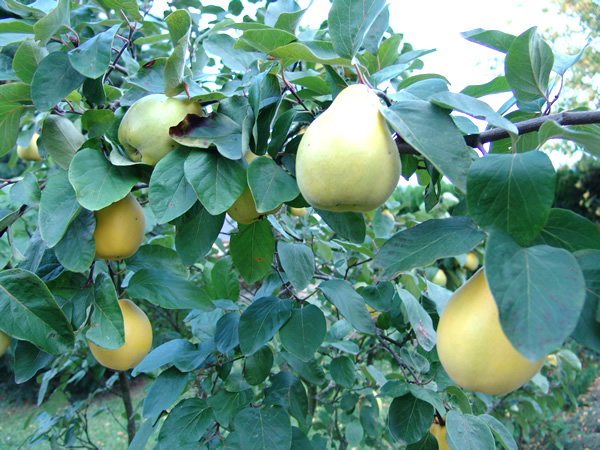
Quince (Cydonia oblonga Mill.) is a deciduous flowering plant in the Rosaceae family, order Rosales, class Magnoliopsida. It is native to the northern forests of Asia Minor and the Caucasus Mountains between Persia and Turkmenistan. It produces aromatic, golden-yellow, pear-shaped fruits that remain tough and hard even when fully ripe. Full profile
Compare something else
Page built on 28 November 2026 from the data on the two species pages, where every source is listed.
Cite this page
ScientificNames.org. (2026). Mallow-leaved Ninebark vs Quince. Retrieved November 28, 2026, from https://scientificnames.org/compare/mallow-leaved-ninebark-vs-quince
“Mallow-leaved Ninebark vs Quince.” ScientificNames.org, 2026, scientificnames.org/compare/mallow-leaved-ninebark-vs-quince. Accessed 28 Nov. 2026.
ScientificNames.org. “Mallow-leaved Ninebark vs Quince.” Accessed November 28, 2026. https://scientificnames.org/compare/mallow-leaved-ninebark-vs-quince.
@misc{scientificnames_mallow_leaved_ninebark_vs_quince,
  author = {{ScientificNames.org}},
  title = {Mallow-leaved Ninebark vs Quince},
  year = {2026},
  url = {https://scientificnames.org/compare/mallow-leaved-ninebark-vs-quince},
  note = {Accessed 2026-11-28}
}