Comparison
Bornean Pithecheirops vs Brown Rat
Bornean Pithecheirops (Pithecheirops otion) and Brown Rat (Rattus norvegicus) both belong to the subfamily Murinae (old world mice) and part ways below it. Both are recorded in 1 country.
Bornean Pithecheirops
Pithecheirops otion
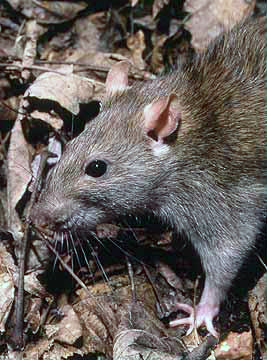

Side by side
| Bornean Pithecheirops | Brown Rat | |
|---|---|---|
| Scientific name | Pithecheirops otion Emmons, 1993 | Rattus norvegicus (Berkenhout, 1769) |
| English name | Bornean Pithecheirops | Brown Rat |
| Group | Mammals | Mammals |
| Class | Mammalia Mammal | Mammalia Mammal |
| Order | Rodentia Rodent | Rodentia Rodent |
| Family | Muridae Mice | Muridae Mice |
| Genus | Pithecheirops | Rattus Old World Rats |
| Named in | 1993 | 1769 |
| Red List category | Data Deficient | Least Concern |
| Environment | Not recorded | terrestrial |
| Countries on record | 1 country | 117 countries |
| GBIF occurrence records | 5 records | 272,245 records |
Rows where the two agree are shown in grey.
Where each is found
Both recorded in 1 country
Only Brown Rat (116)
- Aland Islands
- Albania
- American Samoa
- Andorra
- Armenia
- Australia
- Austria
- Azerbaijan
- Bahamas
- Barbados
- Belarus
- Belgium
- Belize
- Bermuda
- Bonaire, Saint Eustatius and Saba
- Bosnia and Herzegovina
- Brazil
- Bulgaria
- Cambodia
- Canada
- China
- Costa Rica
- Croatia
- Cuba
- Curacao
- Cyprus
- Czechia
- Denmark
- Dominica
- Dominican Republic
- Estonia
- Fiji
- Finland
- France
- French Polynesia
- Georgia
- Germany
- Greece
- Guadeloupe
- Guam
- Guatemala
- Guernsey
- Haiti
- Hong Kong
- Hungary
- Iceland
- India
- Indonesia
- Iran
- Iraq
- Ireland
- Isle of Man
- Israel
- Italy
- Jamaica
- Japan
- Jersey
- Kazakhstan
- Kuwait
- Kyrgyzstan
- Latvia
- Lebanon
- Liechtenstein
- Lithuania
- Luxembourg
- Macao
- Martinique
- Mexico
- Moldova
- Mongolia
- Montenegro
- Nepal
- New Caledonia
- New Zealand
- North Korea
- North Macedonia
- Northern Mariana Islands
- Norway
- Pakistan
- Palau
- Panama
- Philippines
- Poland
- Portugal
- Puerto Rico
- Romania
- Russia
- Saint Barthelemy
- Saint Kitts and Nevis
- Saint Lucia
- Saint Pierre and Miquelon
- Serbia
- Singapore
- Slovakia
- Slovenia
- South Korea
- Spain
- Sri Lanka
- Sweden
- Switzerland
- Syria
- Taiwan
- Thailand
- The Netherlands
- Tonga
- Trinidad and Tobago
- Turkey
- Turkmenistan
- U.S. Virgin Islands
- Ukraine
- United Kingdom
- United States
- Uzbekistan
- Vanuatu
- Vietnam
- Wallis and Futuna
From Catalogue of Life checklists and GBIF occurrence records. A country missing from a list means no record is held, which is not proof of absence.
Checked facts
| Bornean Pithecheirops | Brown Rat | |
|---|---|---|
| Appearance |
|
|
| Size |
|
|
| Habitat |
|
|
| Diet | No checked fact yet |
|
| Behaviour | No checked fact yet |
|
| Reproduction | No checked fact yet |
|
| Distribution |
|
|
| Conservation |
|
|
| Uses | No checked fact yet |
|
| Similar species | No checked fact yet |
|
| Name origin |
| No checked fact yet |
| Other |
| No checked fact yet |
In brief
Bornean Pithecheirops
The Bornean Pithecheirops is a mammal in the family Muridae, order Rodentia, and class Mammalia, and the sole known member of the genus Pithecheirops. The species has been recorded in Borneo, with its only documented specimen captured at the Danum Valley Field Centre in Sabah, northern Borneo. It has long, dense and soft fur, broad feet, and inner ear bones and an auditory bulla that distinguish it from Pithecheir. Full profile
Brown Rat
Rattus norvegicus occupies garbage dumps, sewers, open fields, woodlands, and basements, commonly near human settlements and water. It typically has brown or dark grey fur, bald ears and a bald tail that is shorter than its body. Full profile
Compare something else
Page built on 29 November 2026 from the data on the two species pages, where every source is listed.
Cite this page
ScientificNames.org. (2026). Bornean Pithecheirops vs Brown Rat. Retrieved November 29, 2026, from https://scientificnames.org/compare/bornean-pithecheirops-vs-brown-rat
“Bornean Pithecheirops vs Brown Rat.” ScientificNames.org, 2026, scientificnames.org/compare/bornean-pithecheirops-vs-brown-rat. Accessed 29 Nov. 2026.
ScientificNames.org. “Bornean Pithecheirops vs Brown Rat.” Accessed November 29, 2026. https://scientificnames.org/compare/bornean-pithecheirops-vs-brown-rat.
@misc{scientificnames_bornean_pithecheirops_vs_brown_rat,
  author = {{ScientificNames.org}},
  title = {Bornean Pithecheirops vs Brown Rat},
  year = {2026},
  url = {https://scientificnames.org/compare/bornean-pithecheirops-vs-brown-rat},
  note = {Accessed 2026-11-29}
}