Comparison
Poa araratica vs Annual Bluegrass
Poa araratica (Poa araratica) and Annual Bluegrass (Poa annua) both belong to the genus Poa (bluegrass) and part ways below it. Both are recorded in 17 countries.
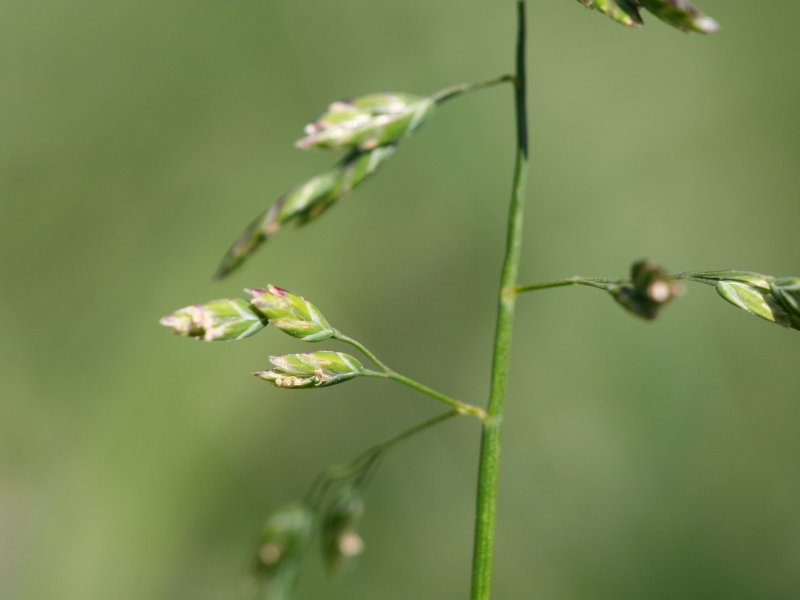
Annual Bluegrass
Poa annua
Kristian Peters -- Fabelfroh 10:06, 7 May 2007 (UTC), CC BY-SA 3.0, via Wikimedia Commons

Side by side
| Poa araratica | Annual Bluegrass | |
|---|---|---|
| Scientific name | Poa araratica Trautv. | Poa annua L. |
| English name | Not recorded | Annual Bluegrass |
| Group | Flowering plants | Flowering plants |
| Class | Liliopsida | Liliopsida |
| Order | Poales | Poales |
| Family | Poaceae Turf | Poaceae Turf |
| Genus | Poa Bluegrass | Poa Bluegrass |
| Red List category | Not recorded | Least Concern |
| Countries on record | 17 countries | 145 countries |
| GBIF occurrence records | 656 records | 973,382 records |
Rows where the two agree are shown in grey.
Where each is found
Both recorded in 17 countries
- Afghanistan
- Armenia
- China
- Georgia
- India
- Iran
- Iraq
- Kazakhstan
- Kyrgyzstan
- Mongolia
- Nepal
- Pakistan
- Russia
- Tajikistan
- Turkey
- Turkmenistan
- Uzbekistan
Only Annual Bluegrass (128)
- Aland Islands
- Albania
- Algeria
- Andorra
- Antarctica
- Argentina
- Australia
- Austria
- Azerbaijan
- Bangladesh
- Belarus
- Belgium
- Bermuda
- Bhutan
- Bolivia
- Bosnia and Herzegovina
- Brazil
- Bulgaria
- Burundi
- Cameroon
- Canada
- Chile
- Colombia
- Costa Rica
- Croatia
- Cuba
- Cyprus
- Czechia
- Democratic Republic of the Congo
- Denmark
- Dominican Republic
- Ecuador
- Egypt
- El Salvador
- Equatorial Guinea
- Eritrea
- Estonia
- Eswatini
- Ethiopia
- Falkland Islands
- Faroe Islands
- Finland
- France
- French Southern Territories
- Germany
- Greece
- Greenland
- Guatemala
- Guernsey
- Haiti
- Heard Island and McDonald Islands
- Honduras
- Hong Kong
- Hungary
- Iceland
- Indonesia
- Ireland
- Isle of Man
- Israel
- Italy
- Jamaica
- Japan
- Jersey
- Jordan
- Kenya
- Kuwait
- Latvia
- Lebanon
- Lesotho
- Libya
- Liechtenstein
- Lithuania
- Luxembourg
- Madagascar
- Malaysia
- Malta
- Mauritius
- Mexico
- Moldova
- Montenegro
- Morocco
- Myanmar
- Namibia
- New Caledonia
- New Zealand
- Nicaragua
- Norway
- Palestinian Territory
- Panama
- Paraguay
- Peru
- Philippines
- Poland
- Portugal
- Puerto Rico
- Qatar
- Reunion
- Romania
- Rwanda
- Saint Helena
- Saudi Arabia
- Serbia
- Slovakia
- Slovenia
- South Africa
- South Georgia and the South Sandwich Islands
- South Korea
- Spain
- Sri Lanka
- Svalbard and Jan Mayen
- Sweden
- Switzerland
- Syria
- Taiwan
- Tanzania
- Thailand
- The Netherlands
- Tunisia
- Uganda
- Ukraine
- United Kingdom
- United States
- Uruguay
- Venezuela
- Vietnam
- Yemen
- Zambia
- Zimbabwe
From Catalogue of Life checklists and GBIF occurrence records. A country missing from a list means no record is held, which is not proof of absence.
Checked facts
| Poa araratica | Annual Bluegrass | |
|---|---|---|
| Appearance | No checked fact yet |
|
| Size | No checked fact yet |
|
| Habitat | No checked fact yet |
|
| Behaviour | No checked fact yet |
|
| Reproduction | No checked fact yet |
|
| Distribution | No checked fact yet |
|
In brief
Annual Bluegrass
Poa annua occurs in temperate and subarctic climates, cultivated areas, lawns and waste ground. Full profile
Compare something else
Page built on 27 November 2026 from the data on the two species pages, where every source is listed.
Cite this page
ScientificNames.org. (2026). Poa araratica vs Annual Bluegrass. Retrieved November 27, 2026, from https://scientificnames.org/compare/poa-araratica-vs-annual-bluegrass
“Poa araratica vs Annual Bluegrass.” ScientificNames.org, 2026, scientificnames.org/compare/poa-araratica-vs-annual-bluegrass. Accessed 27 Nov. 2026.
ScientificNames.org. “Poa araratica vs Annual Bluegrass.” Accessed November 27, 2026. https://scientificnames.org/compare/poa-araratica-vs-annual-bluegrass.
@misc{scientificnames_poa_araratica_vs_annual_bluegrass,
  author = {{ScientificNames.org}},
  title = {Poa araratica vs Annual Bluegrass},
  year = {2026},
  url = {https://scientificnames.org/compare/poa-araratica-vs-annual-bluegrass},
  note = {Accessed 2026-11-27}
}