Comparison

Bog Haircap Moss vs Juniper Haircap

Bog Haircap Moss (Polytrichum strictum) and Juniper Haircap (Polytrichum juniperinum) both belong to the genus Polytrichum (hair moss) and part ways below it. Both are recorded in 38 countries.
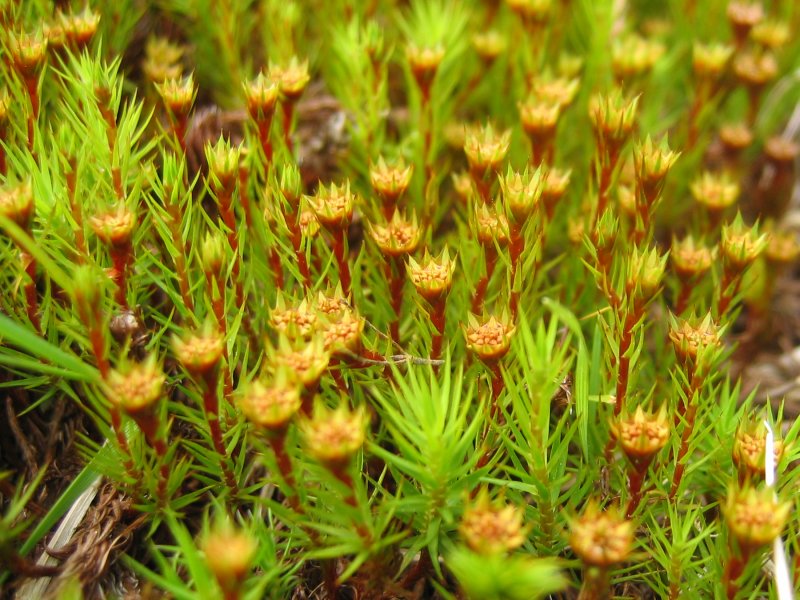
Bog Haircap Moss

Bog Haircap Moss

Polytrichum strictum

Kristian Peters -- Fabelfroh 16:07, 31 December 2006 (UTC), CC BY-SA 3.0, via Wikimedia Commons

Juniper Haircap

Juniper Haircap

Polytrichum juniperinum

Juni from Kyoto, Japan, CC BY 2.0, via Wikimedia Commons

Side by side

Bog Haircap MossJuniper Haircap
Scientific namePolytrichum strictum Menzies ex Brid.Polytrichum juniperinum Hedw.
English nameBog Haircap MossJuniper Haircap
GroupMosses and liverwortsMosses and liverworts
ClassPolytrichopsidaPolytrichopsida
OrderPolytrichalesPolytrichales
FamilyPolytrichaceae Aloe-mossesPolytrichaceae Aloe-mosses
GenusPolytrichum Hair MossPolytrichum Hair Moss
Countries on record38 countries66 countries
GBIF occurrence records38,290 records109,541 records

Rows where the two agree are shown in grey.

Where each is found

Both recorded in 38 countries

Only Juniper Haircap (28)

From Catalogue of Life checklists and GBIF occurrence records. A country missing from a list means no record is held, which is not proof of absence.

Checked facts

Bog Haircap MossJuniper Haircap
Appearance
  • The species has narrowly lanceolate leaves that lie close to the stem when dry and spread to erect positions when moist. English Wikipedia
  • The species has a reddish awn and smooth, inward-rolled leaf margins. English Wikipedia
  • The species has white, woolly rhizoids that extend upward along its stems. English Wikipedia
  • Its leaves have a single costa and vertical lamellae. English Wikipedia
  • Its leaf surfaces have a water-repelling cuticle. English Wikipedia
  • The species has reddish stems and grey-green leaves with distinctive red-brown tips. English Wikipedia
  • Its leaves are lance-shaped and spread upright when dry but become more widely spread when moist. English Wikipedia
  • The species generally forms thin, interwoven mats rather than growing as closely associated individual plants. English Wikipedia
  • The species has specialized tiny tubes that transport water from its rhizoids to its leaves. English Wikipedia
  • Its male plants have bright reddish-orange modified leaves that form small flower-like structures at the shoot tips. English Wikipedia
  • Its sporophyte has a foot, a stalk, and a spore capsule. English Wikipedia
  • The spore capsule has 64 short, blunt teeth surrounding its mouth. English Wikipedia
  • The capsule hood has long hairs extending down the entire length of the capsule. English Wikipedia
Size
Habitat
  • The species commonly inhabits peatlands dominated by Sphagnum mosses. English Wikipedia
  • The species also occurs in wet heaths, tundra, sedge meadows, and peaty forests. English Wikipedia
  • The species occupies habitats ranging from low to high elevations. English Wikipedia
  • In warmer climates, the species is largely restricted to relict bogs. English Wikipedia
  • The species typically occupies the upper surfaces of peat hummocks. English Wikipedia
  • The species is associated with organic soils rather than the mineral soils preferred by juniper haircap moss. English Wikipedia
  • The species most commonly grows in dry, acidic, exposed habitats. English Wikipedia
  • It frequently occurs in areas previously disturbed by fire and logging. English Wikipedia
  • Its documented growing substrates include mineral soil, humus, rocks, stumps, banks, and trailsides. English Wikipedia
  • The species also occurs in dry open woods. English Wikipedia
  • Although it is not usually found in wet environments, it has been recorded growing on moist woods and streambanks. English Wikipedia
  • In Britain, the species occurs in upland grassland, including U1 Festuca ovina communities. English Wikipedia
  • In Britain, it occurs in acid woodlands, particularly W16 Quercus petraea woods. English Wikipedia
  • The species is also found in various types of heathland in Britain. English Wikipedia
  • It often grows in loose clumps in relatively dry areas. sbs.wsu.edu
BehaviourNo checked fact yet
Reproduction
  • The species is dioicous, with male and female reproductive structures occurring on separate gametophytes. English Wikipedia
  • The male and female gametophytes are haploid. English Wikipedia
  • Male plants produce antheridia at their terminal ends. English Wikipedia
  • Mature antheridia swell and burst to release sperm into the air. English Wikipedia
  • The species develops splash cups that help disperse sperm using the energy of raindrops. English Wikipedia
  • Sperm swim toward the female reproductive structures using two flagella. English Wikipedia
  • The female reproductive structures are located at the terminal ends of female plants. English Wikipedia
  • Fertilization produces a diploid sporophyte consisting of a foot, seta, and capsule. English Wikipedia
  • The sporophyte capsule is covered by a dirty-white calyptra. English Wikipedia
  • Each spore-producing cell undergoes meiosis to produce four haploid spores. English Wikipedia
  • The mature capsule releases spores through a peristome consisting of 64 nematodontous teeth joined by an epiphragm. English Wikipedia
  • Under suitable conditions, its spores germinate into filamentous protonemata from which gametophytes develop. English Wikipedia
  • The species is dioecious, with male and female gametophytes occurring on separate plants. English Wikipedia
  • Male plants continue growing without losing their old male reproductive organs. English Wikipedia
  • Water is required for fertilization because sperm must swim to reach the egg through the archegonium. English Wikipedia
  • After fertilization, the sporophyte develops on the female gametophyte and emerges from the archegonia. English Wikipedia
  • The species has a gametophyte-dominant life cycle. English Wikipedia
DistributionNo checked fact yet
  • The species occurs on every continent, including Antarctica. English Wikipedia
  • Its distribution across every continent, including Antarctica, is described as unusually extensive among plant species. sbs.wsu.edu
Conservation
  • The species is considered an important pioneer in peatland ecosystems. English Wikipedia
  • The species can tolerate a wide range of environmental conditions and disturbance regimes. English Wikipedia
  • The species helps prevent frost heaving in harvested peatlands. English Wikipedia
No checked fact yet
Uses
  • The species has potential applications in restoring unstable peatland areas. English Wikipedia
No checked fact yet
Similar species
  • Juniper haircap moss (Polytrichum juniperinum) shares the reddish awn and smooth, inrolled leaf margins of this species. English Wikipedia
  • Juniper haircap moss differs from this species by lacking the woolly white rhizoids extending up the stems. English Wikipedia
  • Juniper haircap moss prefers mineral soils, whereas this species is associated with organic soils. English Wikipedia
  • The species can be mistaken for a cluster of seedling conifers when its long-stalked capsules are absent. sbs.wsu.edu
OtherNo checked fact yet
  • The specialized water-conducting cells are called hydroids and occur at the center of the stems. sbs.wsu.edu
  • The leaves of the species are technically called phyllids. sbs.wsu.edu

In brief

Bog Haircap Moss

Polytrichum strictum inhabits peatlands, wet heaths, tundra, sedge meadows, and peaty forests, and occurs from low to high elevations. It forms dense tufts of slender stems with narrowly lanceolate leaves, reddish awns, and white, woolly rhizoids extending up the stems. Full profile

Juniper Haircap

Polytrichum juniperinum occurs on every continent, including Antarctica, and most commonly grows in dry, acidic, exposed habitats. It has reddish stems and grey-green leaves with distinctive red-brown tips. Full profile

Compare something else

Page built on 26 November 2026 from the data on the two species pages, where every source is listed.

Cite this page

ScientificNames.org. (2026). Bog Haircap Moss vs Juniper Haircap. Retrieved November 26, 2026, from https://scientificnames.org/compare/bog-haircap-moss-vs-juniper-haircap