Species · Mosses and liverworts
Juniper Haircap Polytrichum juniperinum
The scientific name of the Juniper Haircap is Polytrichum juniperinum. It is a species of bryophyte in the family Polytrichaceae (aloe-mosses), order Polytrichales.
- Scientific name
- Polytrichum juniperinum Hedw.
- Common name
- Juniper Haircap
- Genus
- Polytrichum
- Family
- Polytrichaceae (Aloe-mosses)
- Order
- Polytrichales
- Class
- Polytrichopsida
- Recorded in
- 66 countries
- Name status
- accepted in the Catalogue of Life

Overview
Polytrichum juniperinum occurs on every continent, including Antarctica, and most commonly grows in dry, acidic, exposed habitats. It has reddish stems and grey-green leaves with distinctive red-brown tips.
Written 24 November 2026 from the sources listed below. Each statement was checked against the passage it cites; statements that could not be supported were removed.
Appearance
Juniper Haircap has reddish stems and grey-green, lance-shaped leaves with distinctive red-brown tips. The leaves spread upright when dry and become more widely spread when moist.[1][2]
The species generally forms thin, interwoven mats rather than growing as closely associated individual plants. It can also grow in loose clumps in relatively dry areas.[3][4]
Its male plants have bright reddish-orange modified leaves that form small flower-like structures at the shoot tips. The species can grow up to 4 inches tall.[5][6]
Its sporophyte consists of a foot, a stalk, and a spore capsule. The capsule has 64 short, blunt teeth surrounding its mouth, and its hood has long hairs extending down the entire length of the capsule.[7][8][9]
The leaves are technically called phyllids. Specialized water-conducting cells called hydroids occur at the center of the stems and transport water from the rhizoids to the leaves.[10][11][12]
Habitat
Juniper Haircap most commonly grows in dry, acidic, exposed habitats. It also occurs in dry open woods and frequently grows in areas previously disturbed by fire and logging.[13][14][15]
Its documented growing substrates include mineral soil, humus, rocks, stumps, banks, and trailsides. It often grows in loose clumps in relatively dry areas.[16][4]
Although it is not usually found in wet environments, it has been recorded growing on moist woods and streambanks.[17]
In Britain, Juniper Haircap occurs in upland grassland, including U1 Festuca ovina communities, and in acid woodlands, particularly W16 Quercus petraea woods. It is also found in various types of heathland in Britain.[18][19][20]
The species occurs on every continent, including Antarctica. Its distribution across every continent, including Antarctica, is described as unusually extensive among plant species.[21][22]
Reproduction and life cycle
Juniper Haircap is dioecious, with male and female gametophytes occurring on separate plants. Male plants continue growing without losing their old male reproductive organs.[23][24]
Water is required for fertilization because sperm must swim to reach the egg through the archegonium. After fertilization, the sporophyte develops on the female gametophyte and emerges from the archegonia.[25][26]
The species has a gametophyte-dominant life cycle.[27]
Similar species
When its long-stalked capsules are absent, Juniper Haircap can be mistaken for a cluster of seedling conifers.[28]
Classification of the Juniper Haircap
| Kingdom | Plantae |
|---|---|
| Subkingdom | Bryobiotina |
| Phylum | Bryophyta |
| Class | Polytrichopsida |
| Order | Polytrichales |
| Family | Polytrichaceae (Aloe-mosses) |
| Genus | Polytrichum (Hair Moss) |
| Species | Polytrichum juniperinum Hedw. |
Where the Juniper Haircap is found
Checklists and occurrence records place Polytrichum juniperinum in 66 countries. GBIF holds 109,541 georeferenced records of it.
Countries
- Aland Islands 24
- Andorra 25
- Antarctica 330
- Australia 4,066
- Austria 339
- Belarus 44
- Belgium 1,649
- Bolivia 703
- Bosnia and Herzegovina 18
- Brazil 1,462
- Bulgaria 8
- Canada 7,811
- Colombia 1,619
- Costa Rica 336
- Croatia 3
- Cuba 16
- Czechia 714
- Denmark 4,077
- Dominica 3
- Dominican Republic 179
- Ecuador 410
- El Salvador 48
- Estonia 642
- Faroe Islands 5
- Finland 2,773
- France 4,535
- Germany 706
- Greece 5
- Greenland 69
- Guatemala 92
- Haiti 72
- Honduras 27
- Hungary 20
- Iceland 242
- Ireland 589
- Isle of Man 57
- Italy 84
- Jamaica 152
- Japan 452
- Latvia 27
- Lithuania 38
- Luxembourg 33
- Mexico 931
- Montenegro 6
- New Caledonia 3
- New Zealand 1,982
- Nicaragua 7
- Norway 3,021
- Panama 148
- Papua New Guinea 50
- Peru 338
- Poland 4,240
- Portugal 763
- Romania 5
- Russia 3,791
- Saint Pierre and Miquelon 4
- Slovakia 10
- Slovenia 26
- Spain 902
- Svalbard and Jan Mayen 89
- Sweden 9,923
- Switzerland 1,268
- The Netherlands 14,611
- Ukraine 304
- United Kingdom 21,143
- United States 11,472
Regions and cities with the most records
- England, United Kingdom 12,564
- British Columbia, Canada 4,030
- Wales, United Kingdom 3,729
- Scotland, United Kingdom 3,376
- Gelderland, The Netherlands 1,999
- Leiden, The Netherlands 1,759
- Victoria, Australia 1,757
- Central Jutland, Denmark 1,744
- Norrbotten, Sweden 1,582
- Haarlem, The Netherlands 1,576
- Hoofddorp, The Netherlands 1,375
- Södermanland, Sweden 1,301
- Alkmaar, The Netherlands 1,278
- Rijswijk, The Netherlands 1,239
- The Hague, The Netherlands 1,225
- Delft, The Netherlands 1,181
- Zoetermeer, The Netherlands 1,118
- Komi, Russia 1,085
- Auvergne-Rhône-Alpes, France 1,026
- California, United States 1,012
- Heerhugowaard, The Netherlands 1,005
- Drenthe, The Netherlands 968
- Amersfoort, The Netherlands 960
- Soest, The Netherlands 949
- Tasmania, Australia 938
- Washington, United States 930
- Canterbury, New Zealand 900
- Zeist, The Netherlands 882
- Ede, The Netherlands 821
- Langford, Canada 810
- Veenendaal, The Netherlands 810
- Västerbotten, Sweden 810
- Ontario, Canada 803
- Utrecht, The Netherlands 799
- South Denmark, Denmark 786
- Hilversum, The Netherlands 783
19 more countries have a few records outside this range
These countries hold a few records of Polytrichum juniperinum but lie outside the range the checklists give for it. Such records are often zoo or garden specimens, museum material or vagrants, so the species is not counted as occurring there.
A number beside a place is its count of GBIF occurrence records. A place without a number comes from a checklist alone. Records show where a species has been observed or collected, which can include escapes and vagrants.
Common names
English
- Juniper Haircap
- Juniper Haircap Moss
- Juniper Polytrichum Moss
Names in 18 other languages
- Chinese
- 檜葉金髮蘚
- Czech
- ploník jalovcový
- Danish
- Ene-jomfruhår
- Dutch
- Echt zandhaarmos, Zandhaarmos
- Estonian
- palu-karusammal
- Finnish
- kangaskarhunsammal
- French
- Polytric genévrier
- German
- Wacholder-Widertonmoos
- Japanese
- スギゴケ
- Latvian
- Kadiķu dzegužlins
- Lithuanian
- Smiltyninis gegužlinis
- Norwegian Bokmål
- einerbjørnemose, einermose
- Polish
- Płonnik jałowcowaty
- Russian
- Политрихум можжевельниковый
- Slovak
- ploník borievkový
- Spanish
- Musgo junípero
- Swedish
- en-björnmossa, enbjörnmossa, enmossa
- Ukrainian
- Рунянка ялівцева
Synonyms
101 other scientific names have been used for this species and are now treated as synonyms of Polytrichum juniperinum.
- Pogonatum maoriae (Müll. Hal.) Paris
- Pogonatum maoriae var. robustum (Müll. Hal.) Paris
- Pogonatum petersianum (Müll. Hal.) A. Jaeger
- Pogonatum rubiginosum (Müll. Hal.) Paris
- Polytrichadelphus organensis Herzog
- Polytrichum aequinoctiale (Lorentz) Müll. Hal.
- Polytrichum altisetum Müll. Hal.
- Polytrichum altisetum var. humilisetum Müll. Hal.
- Polytrichum angusticaule Müll. Hal. ex E. Britton
- Polytrichum antillarum Rich.
- Polytrichum antillarum f. chimborassi (Lorentz) K.H. Walther
- Polytrichum antillarum subsp. mexicanum K.H. Walther
- Polytrichum antillarum subsp. paulense (Geh. & Hampe) K.H. Walther
- Polytrichum antillarum subsp. prionotum (Müll. Hal.) K.H. Walther
- Polytrichum antillarum subsp. secundulum (Müll. Hal.) K.H. Walther
- Polytrichum antillarum subsp. substrictum K.H. Walther
- Polytrichum apiculatum Kindb.
- Polytrichum aristiflorum Mitt.
- Polytrichum beccarii Müll. Hal.
- Polytrichum behringianum Kindb.
- Polytrichum breve Müll. Hal.
- Polytrichum caucasicum Rupr.
- Polytrichum chimborassi Lorentz
- Polytrichum conforme Mitt.
- Polytrichum cuspidigerum Schimp. ex E. Britton
- Polytrichum cypellomitrium Müll. Hal.
- Polytrichum equisetiforme Müll. Hal.
- Polytrichum ghiesbreghtii Besch.
- Polytrichum glaucicaule Müll. Hal.
- Polytrichum implicatum Voit
- Polytrichum juniperifolium Hoffm. ex Funck
- Polytrichum juniperiforme Schimp. ex Mitt.
- Polytrichum juniperinum f. dielsii Papp
- Polytrichum juniperinum f. fasciculatum (R. Ruthe) Podp.
- Polytrichum juniperinum f. longisetum Matousch.
- Polytrichum juniperinum f. longisetum Papp
- Polytrichum juniperinum f. nanum Sapégin
- Polytrichum juniperinum f. novae-zeelandiae Papp
- Polytrichum juniperinum f. nudum (Matousch.) Podp.
- Polytrichum juniperinum f. parvum Papp
Showing 40 of 101.
Related species
-
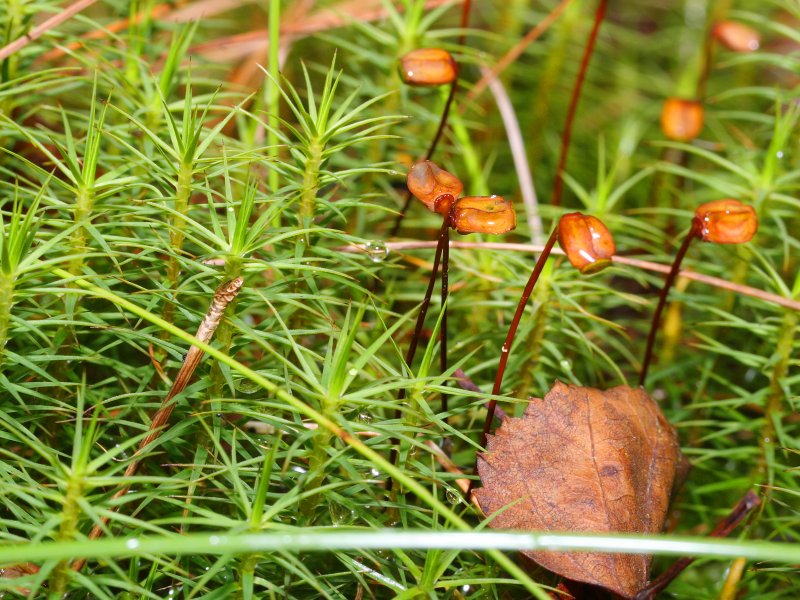 Common Haircap MossPolytrichum commune
-
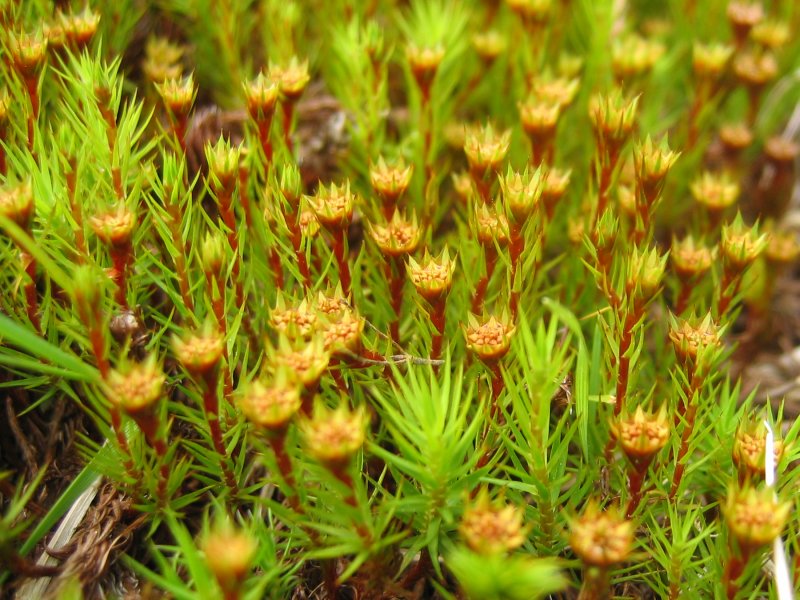 Strict HaircapPolytrichum strictum
-
 Bristly Haircap MossPolytrichum piliferum
- Slender HaircapPolytrichum longisetum
- Polytrichum MossPolytrichum hyperboreum
- Ohio Haircap MossPolytrichum ohioense
- Bank HaircapPolytrichum formosum
- Swartz's Polytrichum MossPolytrichum swartzii
Compare
Questions and answers
What is the scientific name of the Juniper Haircap?
The scientific name of the Juniper Haircap is Polytrichum juniperinum. Written with its author, the full name is Polytrichum juniperinum Hedw..
Which family does the Juniper Haircap belong to?
Polytrichum juniperinum belongs to the family Polytrichaceae, in the order Polytrichales and the class Polytrichopsida.
Where is the Juniper Haircap found?
Checklists and occurrence records place Polytrichum juniperinum in 66 countries, including United Kingdom, The Netherlands, United States, Sweden, Canada and France.
What other names does the Juniper Haircap have?
Polytrichum juniperinum is also known in English as Juniper Haircap Moss and Juniper Polytrichum Moss.
Where is haircap moss found?
Juniper Haircap occurs on every continent, including Antarctica.[21]
Where do moss Polytrichum live?
Juniper Haircap most commonly grows in dry, acidic, exposed habitats, including dry open woods. It also occurs on mineral soil, humus, rocks, stumps, banks, and trailsides.[13][16][15]
What is the habitat of moss plants?
Juniper Haircap commonly grows in dry, acidic, exposed habitats and areas previously disturbed by fire and logging. It also occurs in grassland, acid woodlands, and heathland in Britain.[13][14][18][19][20]
How does Polytrichum reproduce?
Juniper Haircap is dioecious, with male and female gametophytes occurring on separate plants. Water is required for fertilization because sperm must swim to reach the egg through the archegonium; afterward, the sporophyte develops on the female gametophyte.[23][25][26]
Sources
Passages the profile rests on
- The species has reddish stems and grey-green leaves with distinctive red-brown tips. Source passage: “The stems are reddish with grey-green leaves that have a distinctive red-brown tip.” — English Wikipedia
- Its leaves are lance-shaped and spread upright when dry but become more widely spread when moist. Source passage: “The leaves of juniper haircap moss are lanceolate and upright-spreading when dry, and wide-spreading when moist.” — English Wikipedia
- The species generally forms thin, interwoven mats rather than growing as closely associated individual plants. Source passage: “they generally form thin, interwoven mats rather than growing as closely associated individual plants.” — English Wikipedia
- It often grows in loose clumps in relatively dry areas. Source passage: “Polytrichum juniperinum often grows in loose clumps in relatively dry areas” — sbs.wsu.edu
- Its male plants have bright reddish-orange modified leaves that form small flower-like structures at the shoot tips. Source passage: “The male plants are very noticeable due to their bright reddish orange modified leaves that form small terminal 'flowers' at the shoot ends.” — English Wikipedia
- The species can grow up to 4 inches tall. Source passage: “These specialized cells help Juniper haircap moss grow up to 4 inches tall” — sbs.wsu.edu
- Its sporophyte has a foot, a stalk, and a spore capsule. Source passage: “The sporophyte consists of a foot, which anchors it to the archegonia, a stalk, and a spore capsule.” — English Wikipedia
- The spore capsule has 64 short, blunt teeth surrounding its mouth. Source passage: “There are 64 short blunt teeth at the top surrounding the capsule mouth” — English Wikipedia
- The capsule hood has long hairs extending down the entire length of the capsule. Source passage: “the hood of the capsule, the calyptra, has long hairs that extends down the entire length of the capsule” — English Wikipedia
- The species has specialized tiny tubes that transport water from its rhizoids to its leaves. Source passage: “Juniper haircap moss have a well-developed system of tiny tubes for carrying water from the rhizoids to leaves” — English Wikipedia
- The specialized water-conducting cells are called hydroids and occur at the center of the stems. Source passage: “having tiny tube-like cells (called hydroids) at the center of their stems for transporting water” — sbs.wsu.edu
- The leaves of the species are technically called phyllids. Source passage: “to their narrow leaves (technically called phyllids).” — sbs.wsu.edu
- The species most commonly grows in dry, acidic, exposed habitats. Source passage: “it is most commonly found on dry, acidic, exposed habitats.” — English Wikipedia
- It frequently occurs in areas previously disturbed by fire and logging. Source passage: “It is frequent in areas previously disturbed by fire and logging.” — English Wikipedia
- The species also occurs in dry open woods. Source passage: “Other areas they occupy are mineral soil, humus and rocks, stumps, banks, trailsides and dry open woods.” — English Wikipedia
- Its documented growing substrates include mineral soil, humus, rocks, stumps, banks, and trailsides. Source passage: “Other areas they occupy are mineral soil, humus and rocks, stumps, banks, trailsides and dry open woods.” — English Wikipedia
- Although it is not usually found in wet environments, it has been recorded growing on moist woods and streambanks. Source passage: “Although Juniper haircap moss is not usually found in moist or wet environments, it has been found growing on moist woods and other moist sites such as streambanks.” — English Wikipedia
- In Britain, the species occurs in upland grassland, including U1 Festuca ovina communities. Source passage: “In Britain, it is common in upland grassland such as U1 Festuca ovina community” — English Wikipedia
- In Britain, it occurs in acid woodlands, particularly W16 Quercus petraea woods. Source passage: “as well as in acid woodlands, especially W16 Quercus petraea woods.” — English Wikipedia
- The species is also found in various types of heathland in Britain. Source passage: “It is also found in various types of heathland.” — English Wikipedia
- The species occurs on every continent, including Antarctica. Source passage: “is widely distributed, growing on every continent including Antarctica.” — English Wikipedia
- Its distribution across every continent, including Antarctica, is described as unusually extensive among plant species. Source passage: “a feat matched by few other plant species.” — sbs.wsu.edu
- The species is dioecious, with male and female gametophytes occurring on separate plants. Source passage: “It is a dioecious plant, meaning that the male and female gametophytes are on separate plants.” — English Wikipedia
- Male plants continue growing without losing their old male reproductive organs. Source passage: “Male plants are said to be unusual because they continue growing without losing the old male organs.” — English Wikipedia
- Water is required for fertilization because sperm must swim to reach the egg through the archegonium. Source passage: “Water is required for reproduction to take place, to enable the sperm to swim down the neck of the archegonia to reach the egg.” — English Wikipedia
- After fertilization, the sporophyte develops on the female gametophyte and emerges from the archegonia. Source passage: “After fertilization, the sporophyte of the juniper haircap moss grows on the female gametophyte, emerging from the archegonia.” — English Wikipedia
- The species has a gametophyte-dominant life cycle. Source passage: “The plant has a gametophyte dominant life cycle similar to other mosses.” — English Wikipedia
- The species can be mistaken for a cluster of seedling conifers when its long-stalked capsules are absent. Source passage: “might be mistaken for a cluster of seedling conifers when the long-stalked capsules (the sporophyte generation of the plant) are not present” — sbs.wsu.edu
Data
- Catalogue of Life, 2026-10-16 XR cc by
- Global Biodiversity Information Facility CC BY 4.0
- Wikidata CC0
- GeoNames CC BY 4.0
- Wikimedia Commons per image; credit shown with each image
- Within the Catalogue of Life, this name comes from Bryophyte Nomenclator cc by
References
- Hedwig, J. (1801). In Species Muscorum Frondosorum. Joannis Ambrosii Barthii, Lipsiae. https://www.tropicos.org/reference/9010299 Link where the name was published
- Crosby, M. R., Magill, R. E., Allen, B. H., & He, S. (2000). In A Checklist of the Mosses. Missouri Botanical Garden, St. Louis. https://www.tropicos.org/reference/9021789 Link
This species in other databases
Page built on 24 November 2026. See how the catalog is made and all sources and licences.
Cite this page
ScientificNames.org. (2026). Polytrichum juniperinum (Juniper Haircap). Retrieved November 24, 2026, from https://scientificnames.org/species/polytrichum-juniperinum
“Polytrichum juniperinum (Juniper Haircap).” ScientificNames.org, 2026, scientificnames.org/species/polytrichum-juniperinum. Accessed 24 Nov. 2026.
ScientificNames.org. “Polytrichum juniperinum (Juniper Haircap).” Accessed November 24, 2026. https://scientificnames.org/species/polytrichum-juniperinum.
@misc{scientificnames_polytrichum_juniperinum_juniper_haircap,
  author = {{ScientificNames.org}},
  title = {Polytrichum juniperinum (Juniper Haircap)},
  year = {2026},
  url = {https://scientificnames.org/species/polytrichum-juniperinum},
  note = {Accessed 2026-11-24}
}