Comparison
Prairie Flameleaf Sumac vs Shining Sumac
Prairie Flameleaf Sumac (Rhus lanceolata) and Shining Sumac (Rhus copallina) both belong to the genus Rhus (sumac) and part ways below it. Both are recorded in 1 country.
Prairie Flameleaf Sumac
Rhus lanceolata
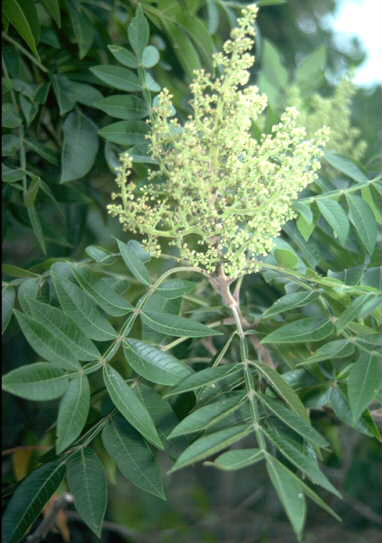

Side by side
| Prairie Flameleaf Sumac | Shining Sumac | |
|---|---|---|
| Scientific name | Rhus lanceolata (A.Gray) Britton | Rhus copallina L. |
| English name | Prairie Flameleaf Sumac | Shining Sumac |
| Group | Flowering plants | Flowering plants |
| Class | Magnoliopsida | Magnoliopsida |
| Order | Sapindales | Sapindales |
| Family | Anacardiaceae Sumac Family | Anacardiaceae Sumac Family |
| Genus | Rhus Sumac | Rhus Sumac |
| Red List category | Least Concern | Least Concern |
| Countries on record | 2 countries | 4 countries |
| GBIF occurrence records | 4,146 records | 41,859 records |
Rows where the two agree are shown in grey.
Where each is found
Both recorded in 1 country
Only Prairie Flameleaf Sumac (1)
Only Shining Sumac (3)
From Catalogue of Life checklists and GBIF occurrence records. A country missing from a list means no record is held, which is not proof of absence.
Checked facts
| Prairie Flameleaf Sumac | Shining Sumac | |
|---|---|---|
| Appearance |
|
|
| Size |
|
|
| Habitat | No checked fact yet |
|
| Diet |
|
|
| Behaviour | No checked fact yet |
|
| Reproduction |
|
|
| Distribution |
|
|
| Conservation | No checked fact yet |
|
| Uses |
|
|
In brief
Prairie Flameleaf Sumac
Rhus lanceolata is native to Texas, Oklahoma, Arizona and New Mexico in the southwestern United States, and to Coahuila, Nuevo León and Tamaulipas in northern Mexico. It has 13–17 lanceolate leaflets on a winged rachis and dark red, hairy, lens-shaped fruits. Full profile
Shining Sumac
Shining sumac is a deciduous tree with a rounded crown. It occurs in prairies, thickets, open woods, woodland borders, old fields, roadsides, and railroads, from Florida's Coastal Plain northward to Ontario, Canada, with a western distribution that includes Texas, Nebraska, Oklahoma, and Kansas. Its shiny, dark green foliage turns bright red during autumn, and its red berries remain on the plant into winter. Full profile
Compare something else
Page built on 29 November 2026 from the data on the two species pages, where every source is listed.
Cite this page
ScientificNames.org. (2026). Prairie Flameleaf Sumac vs Shining Sumac. Retrieved November 29, 2026, from https://scientificnames.org/compare/prairie-flameleaf-sumac-vs-shining-sumac
“Prairie Flameleaf Sumac vs Shining Sumac.” ScientificNames.org, 2026, scientificnames.org/compare/prairie-flameleaf-sumac-vs-shining-sumac. Accessed 29 Nov. 2026.
ScientificNames.org. “Prairie Flameleaf Sumac vs Shining Sumac.” Accessed November 29, 2026. https://scientificnames.org/compare/prairie-flameleaf-sumac-vs-shining-sumac.
@misc{scientificnames_prairie_flameleaf_sumac_vs_shining_sumac,
  author = {{ScientificNames.org}},
  title = {Prairie Flameleaf Sumac vs Shining Sumac},
  year = {2026},
  url = {https://scientificnames.org/compare/prairie-flameleaf-sumac-vs-shining-sumac},
  note = {Accessed 2026-11-29}
}