Comparison

Raccoon vs Kinkajou

Raccoon (Procyon lotor) and Kinkajou (Potos flavus) both belong to the family Procyonidae (procyonids) and part ways below it. Both are recorded in 11 countries.

Raccoon

Raccoon

Procyon lotor

Rhododendrites, CC BY-SA 4.0, via Wikimedia Commons

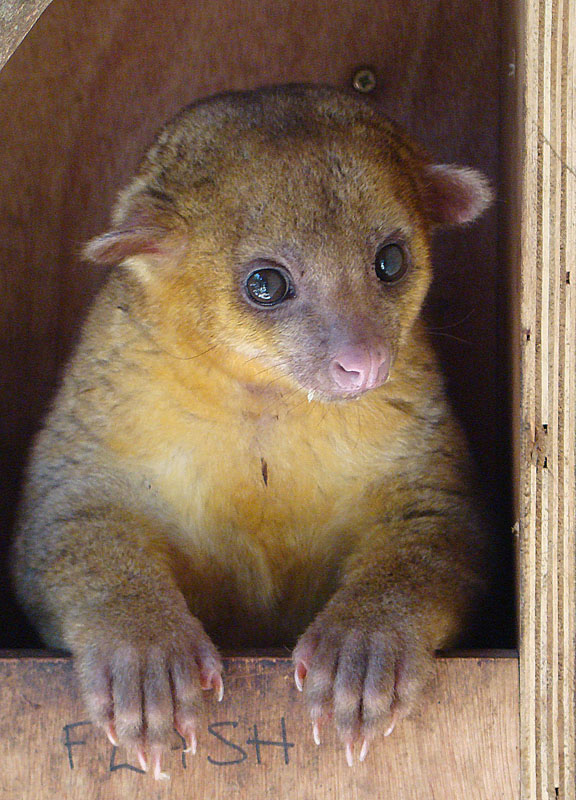
Kinkajou

Kinkajou

Potos flavus

Dick Culbert from Gibsons, B.C., Canada, CC BY 2.0, via Wikimedia Commons

Side by side

RaccoonKinkajou
Scientific nameProcyon lotor (Linnaeus, 1758)Potos flavus (Schreber, 1774)
English nameRaccoonKinkajou
GroupMammalsMammals
ClassMammalia MammalMammalia Mammal
OrderCarnivora CarnivoresCarnivora Carnivores
FamilyProcyonidae ProcyonidsProcyonidae Procyonids
GenusProcyon RaccoonsPotos Kinkajous
Named in17581774
Red List categoryLeast ConcernLeast Concern
EnvironmentterrestrialNot recorded
Countries on record26 countries18 countries
GBIF occurrence records210,083 records5,514 records

Rows where the two agree are shown in grey.

Where each is found

Both recorded in 11 countries

Only Raccoon (15)

Only Kinkajou (7)

From Catalogue of Life checklists and GBIF occurrence records. A country missing from a list means no record is held, which is not proof of absence.

Checked facts

RaccoonKinkajou
Appearance
  • The raccoon has a black mask across its eyes and a bushy tail marked with black rings. animaldiversity.org
  • Its coat coloration ranges from grey to reddish brown and buff depending on its habitat. animaldiversity.org
  • The raccoon's forepaws resemble slender human hands and are unusually dexterous. animaldiversity.org
  • Both the forepaws and hindpaws have five toes. animaldiversity.org
  • Its coat contains dense underfur that provides insulation against cold weather. English Wikipedia
No checked fact yet
Size
  • Adult raccoons generally weigh between 5 and 12 kilograms, although their weight varies considerably with habitat. English Wikipedia
  • The raccoon's body length from head to hindquarters ranges from 40 to 70 centimeters. English Wikipedia
  • Its bushy tail measures between 20 and 40 centimeters in length. English Wikipedia
  • Its shoulder height ranges from 23 to 30 centimeters. English Wikipedia
  • Male raccoons are usually 15 to 20 percent heavier than females. English Wikipedia
  • The largest recorded wild raccoon weighed 28.4 kilograms and measured 140 centimeters in total length. English Wikipedia
No checked fact yet
Habitat
  • The raccoon's original habitats include deciduous and mixed forests. English Wikipedia
  • Raccoons prefer moist woodland habitats but also occupy agricultural, suburban, and urban environments. animaldiversity.org
  • Raccoons require ready access to water. animaldiversity.org
  • Raccoons commonly build dens in trees but also use caves, burrows, mines, and human-made structures. animaldiversity.org
  • Raccoons can inhabit environments ranging from tropical regions to cold grasslands. animaldiversity.org
No checked fact yet
Diet
  • The raccoon is omnivorous and opportunistic in its feeding habits. animaldiversity.org
  • Its plant foods include wild grapes, cherries, apples, persimmons, berries, and acorns. animaldiversity.org
  • Where available, raccoons also consume peaches, plums, figs, citrus fruits, watermelons, beech nuts, and walnuts. animaldiversity.org
  • Corn is the most important dietary item in some areas. animaldiversity.org
  • Raccoons consume more invertebrates than vertebrates. animaldiversity.org
  • Their animal foods can include crayfish, insects, rodents, frogs, fish, and bird eggs. animaldiversity.org
  • Urban and suburban raccoons include garbage and other human-associated foods in their diets. animaldiversity.org
  • Some raccoons feed on carcasses of animals killed by vehicles. animaldiversity.org
No checked fact yet
BehaviourNo checked fact yet
ReproductionNo checked fact yet
Distribution
  • Raccoons are native to North America. English Wikipedia
  • The species occurs across southern Canada, most of the United States, and northern South America. animaldiversity.org
  • Introduced raccoon populations are established in parts of Europe and Asia. animaldiversity.org
  • Raccoons expanded their distribution into central Europe, the Caucasus, and Japan following escapes and deliberate introductions during the mid-20th century. English Wikipedia
No checked fact yet
Conservation
  • Since 2016, the raccoon has been listed as an Invasive Alien Species of Union Concern in Europe. English Wikipedia
  • Hunting and vehicle-related injuries are among the most common causes of raccoon mortality in many areas. English Wikipedia
  • Human activities, including hunting, trapping, and vehicle collisions, are major causes of raccoon mortality. animaldiversity.org
No checked fact yet
Name origin
  • The scientific genus name Procyon derives from Greek words meaning before dog. English Wikipedia
  • The specific scientific name lotor means washer in Latin. English Wikipedia
No checked fact yet
OtherNo checked fact yet

In brief

Raccoon

Procyon lotor is native to North America and occurs across southern Canada, most of the United States, and northern South America. It is marked by a black mask across its eyes and a bushy tail with black rings. Full profile

Compare something else

Page built on 24 November 2026 from the data on the two species pages, where every source is listed.

Cite this page

ScientificNames.org. (2026). Raccoon vs Kinkajou. Retrieved November 24, 2026, from https://scientificnames.org/compare/raccoon-vs-kinkajou