Species · Mammals
Raccoon Procyon lotor
The scientific name of the Raccoon is Procyon lotor. It is a species of mammal in the family Procyonidae (procyonids), order Carnivora. The name dates from 1758.
- Scientific name
- Procyon lotor (Linnaeus, 1758)
- Common name
- Raccoon
- Genus
- Procyon
- Family
- Procyonidae (Procyonids)
- Order
- Carnivora
- Class
- Mammalia
- Red List category
- LC Least Concern
- Environment
- terrestrial
- Recorded in
- 26 countries
- Name status
- accepted in the Catalogue of Life

Overview
Procyon lotor is native to North America and occurs across southern Canada, most of the United States, and northern South America. It is marked by a black mask across its eyes and a bushy tail with black rings.
Written 24 November 2026 from the sources listed below. Each statement was checked against the passage it cites; statements that could not be supported were removed.
Appearance
The Raccoon has a black mask across its eyes and a bushy tail marked with black rings. Its coat ranges from grey to reddish brown and buff depending on its habitat.[1][2]
Its forepaws resemble slender human hands and are unusually dexterous. Both its forepaws and hindpaws have five toes.[3][4]
Its coat contains dense underfur that provides insulation against cold weather.[5]
Adult Raccoons generally weigh between 5 and 12 kilograms. Their body length ranges from 40 to 70 centimeters, their tails measure between 20 and 40 centimeters, and their shoulder height ranges from 23 to 30 centimeters.[6][7][8][9]
Male Raccoons are usually 15 to 20 percent heavier than females. The largest recorded wild Raccoon weighed 28.4 kilograms and measured 140 centimeters in total length.[10][11]
The Raccoon is the largest member of the family Procyonidae. It has 40 teeth adapted to an omnivorous diet.[12][13]
Habitat
The Raccoon's original habitats include deciduous and mixed forests. It prefers moist woodland habitats but also occupies agricultural, suburban, and urban environments.[14][15]
Raccoons require ready access to water. They commonly build dens in trees but also use caves, burrows, mines, and human-made structures.[16][17]
Raccoons can inhabit environments ranging from tropical regions to cold grasslands.[18]
Diet
The Raccoon is omnivorous and opportunistic in its feeding habits. Its plant foods include wild grapes, cherries, apples, persimmons, berries, and acorns.[19][20]
Where available, Raccoons also consume peaches, plums, figs, citrus fruits, watermelons, beech nuts, and walnuts. Corn is the most important dietary item in some areas.[21][22]
Raccoons consume more invertebrates than vertebrates. Their animal foods can include crayfish, insects, rodents, frogs, fish, and bird eggs.[23][24]
Urban and suburban Raccoons include garbage and other human-associated foods in their diets. Some also feed on carcasses of animals killed by vehicles.[25][26]
Behaviour
Raccoons are generally nocturnal and seldom show activity during daylight hours. They do not hibernate during extremely cold and snowy periods, although they may sleep for extended periods.[27][28][29]
Raccoons can swim and are strong swimmers, although they may be reluctant to enter the water. They can reach ground speeds of approximately 15 miles per hour.[30][31]
Raccoons have a highly developed sense of touch. They can remember solutions to tasks for at least three years.[32][33]
Related female Raccoons often share a common living area. Unrelated males sometimes form social groups containing up to four individuals.[34][35]
Reproduction and life cycle
Raccoons generally produce one litter per year. Typical litters contain four young, although litter sizes range from three to seven.[36][37]
The mating season extends from February through June, with most mating occurring in March. The gestation period lasts approximately 63 to 65 days.[38][39]
Newborn Raccoons are blind and helpless when born in tree dens. They open their eyes between 18 and 24 days after birth and are weaned at approximately 70 days of age.[40][41][42]
Female Raccoons exclusively nurse, care for, and protect their offspring. Young remain with their mother through their first winter and become independent early the following spring.[43][44]
Conservation
Introduced Raccoon populations are established in parts of Europe and Asia. Following escapes and deliberate introductions during the mid-20th century, the species expanded its distribution into central Europe, the Caucasus, and Japan.[45][46]
Since 2016, the Raccoon has been listed as an Invasive Alien Species of Union Concern in Europe.[47]
Hunting and vehicle-related injuries are among the most common causes of Raccoon mortality in many areas. Human activities, including hunting, trapping, and vehicle collisions, are major causes of mortality.[48][49]
Classification of the Raccoon
| Kingdom | Animalia |
|---|---|
| Phylum | Chordata |
| Subphylum | Vertebrata |
| Infraphylum | Gnathostomata |
| Parvphylum | Osteichthyes |
| Megaclass | Tetrapoda |
| Class | Mammalia (Mammal) |
| Subclass | Theria |
| Infraclass | Eutheria |
| Order | Carnivora (Carnivores) |
| Suborder | Caniformia (Dog-like Carnivores) |
| Family | Procyonidae (Procyonids) |
| Genus | Procyon (Raccoons) |
| Species | Procyon lotor (Linnaeus, 1758) |
Where the Raccoon is found
Checklists and occurrence records place Procyon lotor in 26 countries across North America and South America. GBIF holds 210,083 georeferenced records of it.
Countries
- Bahamas 44
- Barbados 4
- Belgium 16,103
- Belize 89
- Brazil 5
- Canada 20,166
- Colombia 122
- Costa Rica 1,868
- Dominican Republic 5
- El Salvador 125
- France 4,442
- Germany 14,932
- Guadeloupe 322
- Guatemala 442
- Honduras 85
- Japan 8,017
- Luxembourg 11,043
- Martinique 23
- Mexico 7,032
- Nicaragua 56
- Panama 482
- Poland 540
- Saint Martin 5
- Switzerland 1,147
- The Netherlands 339
- United States 122,645
Regions and cities with the most records
- Texas, United States 21,894
- California, United States 14,853
- Ontario, Canada 10,821
- Florida, United States 9,365
- Diekirch, Luxembourg 7,402
- New York, United States 5,341
- Ohio, United States 4,098
- British Columbia, Canada 3,998
- North Carolina, United States 3,833
- Illinois, United States 3,733
- Georgetown, United States 3,641
- Virginia, United States 3,483
- Maryland, United States 3,276
- Washington, United States 3,211
- Massachusetts, United States 3,068
- Hesse, Germany 2,877
- Luxembourg, Luxembourg 2,767
- Pennsylvania, United States 2,682
- Round Rock, United States 2,585
- Oregon, United States 2,488
- Quebec, Canada 2,428
- Michigan, United States 2,348
- Tennessee, United States 2,339
- Luxembourg, Luxembourg 2,333
- Berlin, Germany 2,294
- State of Berlin, Germany 2,292
- Cedar Park, United States 2,113
- Lower Saxony, Germany 2,095
- Vermont, United States 2,089
- Leander, United States 1,969
- Moreno Valley, United States 1,869
- Willowdale, Canada 1,829
- North Rhine-Westphalia, Germany 1,826
- Louisiana, United States 1,823
- Minnesota, United States 1,797
- Manhattan, United States 1,777
17 more countries have a few records outside this range
These countries hold a few records of Procyon lotor but lie outside the range the checklists give for it. Such records are often zoo or garden specimens, museum material or vagrants, so the species is not counted as occurring there.
Range as the checklists state it
Europe & Northern Asia (excluding China)
Middle America
North America
South America
A number beside a place is its count of GBIF occurrence records. A place without a number comes from a checklist alone. Records show where a species has been observed or collected, which can include escapes and vagrants.
Common names
English
- Raccoon
- American Raccoon
- Bandit-masked Raccoon
- Coon
- North American Raccoon
- Northern Raccoon
- Racoon
- Trash Panda
- Common Raccoon
Names in 66 other languages
- Arabic
- راكون أمريكا الشمالية, راكون شائع
- Azerbaijani
- Amerika yenotu
- Basque
- Mapatxe
- Belarusian
- Янот-паласкун
- Breton
- Rakoun
- Bulgarian
- Американски енот
- Catalan
- Ós rentador, Ós rentador comú
- Chinese
- 浣熊
- Croatian
- Američki rakun
- Czech
- mýval severní
- Danish
- Almindelig vaskebjørn, Nordlig vaskebjørn, Vaskebjørn
- Dutch
- Gewone Wasbeer, Wasbeer
- Esperanto
- Lav-urso
- Estonian
- Pesukaru
- Finnish
- bahamansupi, barbadosinsupi, guadeloupensupi, pesukarhu
- French
- Raton laveur commun, raton laveur
- German
- Nordamerikanischer Waschbär, Schupp, Waschbär
- Greek
- Ρακούν
- Hebrew
- דביבון מצוי, דביבון רוחץ
- Hindi
- रैकून
- Hungarian
- Mosómedve
- Icelandic
- Þvottabjörn
- Irish
- Racún
- Italian
- Orsetto lavatore, Procione
- Japanese
- アライグマ
- Kazakh
- Жанат
- Korean
- 라쿤, 아메리카너구리
- Latvian
- Parastais jenots
- Lithuanian
- Paprastasis meškėnas
- Luxembourgish
- Wäschbier
- Macedonian
- Ракун
- Marathi
- रॅकून
- Norwegian
- Vanlig vaskebjørn
- Persian
- راکون
- Polish
- Szop pracz
- Portuguese
- Guaxinim, Guaxinim norte-americano, Guaxinim-norte-americano
- Romanian
- Raton
- Russian
- Американский енот, Енот-полоскун
- Scottish Gaelic
- mathan-nighe
- Slovak
- Medvedík čistotný, Medviedik čistotný
- Spanish
- Mapache, Mapache común, Mapachín, Zorra Manglera
- Swedish
- tvättbjörn
- Tagalog
- Mapatse
- Tamil
- ரக்கூன்
- Thai
- แรคคูน, แร็กคูน
- Turkish
- Rakun
- Ukrainian
- Єнот полоскун, Ракун звичайний
- Vietnamese
- Gấu mèo, Gấu mèo Mỹ
- akz
- Sawa
- chr
- ᎬᎲᎵ
- chy
- Matšeškome
- clm
- x̣áyk̕ʷs
- dsb
- Šup
- fry
- Waskbear
- grn
- Jaguachini
- ido
- Ratono
- mic
- amaljikwej
- mus
- Wotko
- myh
- q'wa·la·š
- nan
- Sé-hîm
- nav
- Tábąąh mą'ii, Tábąąh mąʼii
- oji
- esiban
- pdc
- Ragguune
- que
- Chincha mayuatu
- see
- Dzo’ä:ga’
- wam
- Ausupp
Synonyms
8 other scientific names have been used for this species and are now treated as synonyms of Procyon lotor.
- Procyon gloveralleni Nelson & Goldman, 1930
- Procyon lotor flavidus de Beaux, 1910
- Procyon lotor gloveralleni Nelson & Goldman, 1930
- Procyon lotor maynardi Bangs, 1898
- Procyon lotor varius Nelson & Goldman, 1930
- Procyon maynardi Bangs, 1898
- Procyon minor Miller, 1911
- Ursus lotor Linnaeus, 1758
Subspecies and varieties
- Procyon lotor auspicatus (Key Raccoon) subspecies
- Procyon lotor elucus (Florida Raccoon) subspecies
- Procyon lotor excelsus (Snake River Valley Raccoon) subspecies
- Procyon lotor fuscipes (Texas Raccoon) subspecies
- Procyon lotor grinnelli (Baja Raccoon) subspecies
- Procyon lotor hernandezii (Campeche Racoon) subspecies
- Procyon lotor hirtus subspecies
- Procyon lotor incautus subspecies
- Procyon lotor inesperatus (Key Largo Raccoon) subspecies
- Procyon lotor insularis (Tres Marias Raccoon) subspecies
- Procyon lotor litoreus (Saint Simons Island Raccoon) subspecies
- Procyon lotor lotor (Bahaman Raccoon) subspecies
- Procyon lotor marinus subspecies
- Procyon lotor megalodous (Mississippi Delta Raccoon) subspecies
- Procyon lotor pacificus (Pacific Raccoon) subspecies
- Procyon lotor pallidus (Pallid Coon) subspecies
- Procyon lotor psora (California Raccoon) subspecies
- Procyon lotor pumilus (Isthmian Raccoon) subspecies
- Procyon lotor simus subspecies
- Procyon lotor vancouverensis (Vancouver Island Raccoon) subspecies
Related species
-
 Crab-eating RaccoonProcyon cancrivorus
-
 Cozumel RaccoonProcyon pygmaeus
-
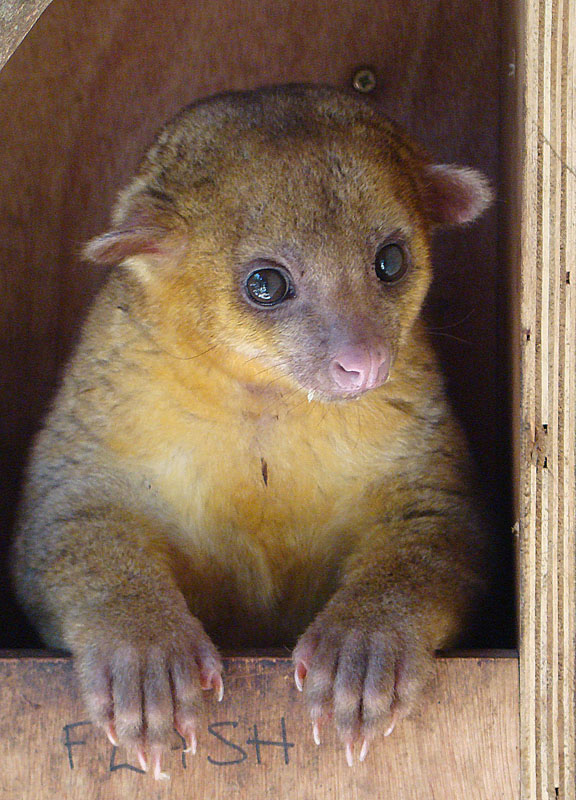 KinkajouPotos flavus
-
 RingtailBassariscus astutus
-
 White-nosed CoatiNasua narica
- South American CoatiNasua nasua
-
 CacomistleBassariscus sumichrasti
-
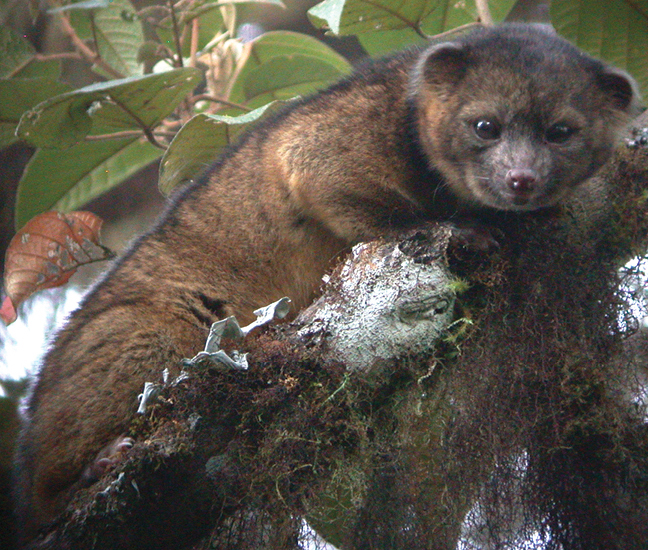 OlinguitoBassaricyon neblina
Compare
Questions and answers
What is the scientific name of the Raccoon?
The scientific name of the Raccoon is Procyon lotor. Written with its author, the full name is Procyon lotor (Linnaeus, 1758).
Which family does the Raccoon belong to?
Procyon lotor belongs to the family Procyonidae, in the order Carnivora and the class Mammalia.
Where is the Raccoon found?
Checklists and occurrence records place Procyon lotor in 26 countries, including United States, Canada, Belgium, Germany, Luxembourg and Japan.
What is the conservation status of the Raccoon?
The IUCN Red List category recorded for Procyon lotor is Least Concern (LC).
What other names does the Raccoon have?
Procyon lotor is also known in English as American Raccoon, Bandit-masked Raccoon, Coon, North American Raccoon, Northern Raccoon and Racoon.
Why are raccoons called Procyon?
The scientific genus name Procyon derives from Greek words meaning before dog.[50]
What does Procyon lotor eat?
The Raccoon is omnivorous and opportunistic. Its diet includes plant foods, invertebrates, and vertebrates, as well as garbage and other human-associated foods in urban and suburban environments.[19][20][21][22][23][24][25]
What type of habitat do raccoons live in?
Raccoons prefer moist woodland habitats, including deciduous and mixed forests, but also occupy agricultural, suburban, and urban environments. They require ready access to water.[14][15][16]
Sources
Passages the profile rests on
- The raccoon has a black mask across its eyes and a bushy tail marked with black rings. Source passage: “The most distinguishable characteristics of the raccoon are its black mask across the eyes and bushy tail with anywhere from four to ten black rings.” — animaldiversity.org
- Its coat coloration ranges from grey to reddish brown and buff depending on its habitat. Source passage: “Coloration varies with habitat, but tends to range from grey to reddish brown to buff.” — animaldiversity.org
- The raccoon's forepaws resemble slender human hands and are unusually dexterous. Source passage: “The forepaws resemble slender human hands and make the raccoon unusually dexterous.” — animaldiversity.org
- Both the forepaws and hindpaws have five toes. Source passage: “Both their forepaws and hindpaws have five toes.” — animaldiversity.org
- Its coat contains dense underfur that provides insulation against cold weather. Source passage: “The dense underfur, which accounts for almost 90% of the coat, insulates against cold weather” — English Wikipedia
- Adult raccoons generally weigh between 5 and 12 kilograms, although their weight varies considerably with habitat. Source passage: “It can range from 2 to 26 kg (4.4 to 57.3 lb), but is usually between 5 and 12 kg (11 and 26 lb).” — English Wikipedia
- The raccoon's body length from head to hindquarters ranges from 40 to 70 centimeters. Source passage: “Head to hindquarters, raccoons measure between 40 and 70 cm (16 and 28 in)” — English Wikipedia
- Its bushy tail measures between 20 and 40 centimeters in length. Source passage: “not including the bushy tail which can measure between 20 and 40 cm (7.9 and 15.7 in)” — English Wikipedia
- Its shoulder height ranges from 23 to 30 centimeters. Source passage: “The shoulder height is between 23 and 30 cm (9.1 and 11.8 in).” — English Wikipedia
- Male raccoons are usually 15 to 20 percent heavier than females. Source passage: “Males are usually 15 to 20% heavier than females.” — English Wikipedia
- The largest recorded wild raccoon weighed 28.4 kilograms and measured 140 centimeters in total length. Source passage: “The largest recorded wild raccoon weighed 28.4 kg (63 lb) and measured 140 cm (55 in) in total length” — English Wikipedia
- The raccoon is the largest member of the family Procyonidae. Source passage: “It is the largest of the procyonid family” — English Wikipedia
- The raccoon has 40 teeth adapted to an omnivorous diet. Source passage: “The dentition—40 teeth with the dental formula:3.1.4.23.1.4.2—is adapted to their omnivorous diet” — English Wikipedia
- The raccoon's original habitats include deciduous and mixed forests. Source passage: “The original habitats of the raccoon are deciduous and mixed forests.” — English Wikipedia
- Raccoons prefer moist woodland habitats but also occupy agricultural, suburban, and urban environments. Source passage: “Raccoons prefer to live in moist woodland areas. However, they can also be found in farmlands, suburban, and urban areas.” — animaldiversity.org
- Raccoons require ready access to water. Source passage: “They require ready access to water.” — animaldiversity.org
- Raccoons commonly build dens in trees but also use caves, burrows, mines, and human-made structures. Source passage: “Raccoons prefer to build dens in trees, but may also use woodchuck burrows, caves, mines, deserted buildings, barns, garages, rain sewers, or houses.” — animaldiversity.org
- Raccoons can inhabit environments ranging from tropical regions to cold grasslands. Source passage: “Raccoons can live in a wide variety of habitats from warm, tropical areas to cold grasslands.” — animaldiversity.org
- The raccoon is omnivorous and opportunistic in its feeding habits. Source passage: “Procyon lotor is omnivorous and opportunistic.” — animaldiversity.org
- Its plant foods include wild grapes, cherries, apples, persimmons, berries, and acorns. Source passage: “Plant foods vary from fruits to nuts, including wild grapes, cherries, apples, persimmons, berries, and acorns.” — animaldiversity.org
- Where available, raccoons also consume peaches, plums, figs, citrus fruits, watermelons, beech nuts, and walnuts. Source passage: “Where available raccoons may also eat peaches, plums, figs, citrus fruits, watermelons, beech nuts, and walnuts.” — animaldiversity.org
- Corn is the most important dietary item in some areas. Source passage: “In some areas, corn is the most important item in their diet.” — animaldiversity.org
- Raccoons consume more invertebrates than vertebrates. Source passage: “Raccoons consume more invertebrates than vertebrates.” — animaldiversity.org
- Their animal foods can include crayfish, insects, rodents, frogs, fish, and bird eggs. Source passage: “Crayfish , insects , rodents , frogs , fish , and bird eggs are all possible components of a raccoon's diet.” — animaldiversity.org
- Urban and suburban raccoons include garbage and other human-associated foods in their diets. Source passage: “Raccoons have adapted to include trash and other food available in suburban and urban areas in their diet.” — animaldiversity.org
- Some raccoons feed on carcasses of animals killed by vehicles. Source passage: “Some raccoons eat carrion from roadkilled animals.” — animaldiversity.org
- Raccoons are generally nocturnal. Source passage: “It is usually nocturnal and omnivorous” — English Wikipedia
- Raccoons seldom show activity during daylight hours. Source passage: “Raccoons are nocturnal and seldom active in the daytime.” — animaldiversity.org
- Raccoons do not hibernate during extremely cold and snowy periods, although they may sleep for extended periods. Source passage: “During extremely cold, snowy periods raccoons have been observed sleeping for long periods at a time, but do not hibernate.” — animaldiversity.org
- Raccoons can swim and are strong swimmers, although they may be reluctant to enter the water. Source passage: “As well as being excellent climbers, raccoons are strong swimmers, although they may be reluctant to do so.” — animaldiversity.org
- Raccoons can reach ground speeds of approximately 15 miles per hour. Source passage: “they are able to reach speeds of 15 miles per hour on the ground.” — animaldiversity.org
- Raccoons have a highly developed sense of touch. Source passage: “Raccoons have a highly developed tactile sense.” — animaldiversity.org
- Raccoons can remember solutions to tasks for at least three years. Source passage: “Studies in 1963, 1973, 1975, and 1992 concentrated on raccoon memory showed that they can remember the solutions to tasks for at least three years.” — English Wikipedia
- Related female raccoons often share a common living area. Source passage: “Related females often live in a so-called "fission-fusion society"; that is, they share a common area” — English Wikipedia
- Unrelated male raccoons sometimes form social groups containing up to four individuals. Source passage: “unrelated males live together in groups of up to four raccoons” — English Wikipedia
- Raccoons generally produce one litter per year. Source passage: “Raccoons generally have one litter per year.” — animaldiversity.org
- Typical raccoon litters contain four young, although litter sizes range from three to seven. Source passage: “Litter sizes range from 3 to 7, but are typically 4.” — animaldiversity.org
- The gestation period lasts approximately 63 to 65 days. Source passage: “The gestation period is 63 to 65 days.” — animaldiversity.org
- The mating season extends from February through June, with most mating occurring in March. Source passage: “Mating season is from February through June, with most mating in March.” — animaldiversity.org
- Newborn raccoons are blind and helpless when born in tree dens. Source passage: “Young are born blind and helpless in a tree den” — animaldiversity.org
- Young raccoons open their eyes between 18 and 24 days after birth. Source passage: “their eyes open at 18 to 24 days of age” — animaldiversity.org
- Young raccoons are weaned at approximately 70 days of age. Source passage: “they are weaned after 70 days.” — animaldiversity.org
- Female raccoons exclusively nurse, care for, and protect their offspring. Source passage: “Females nurse, care for, and protect their young exclusively.” — animaldiversity.org
- Young raccoons remain with their mother through their first winter and become independent early the following spring. Source passage: “The young remain with their mother through their first winter, becoming independent early the following spring.” — animaldiversity.org
- Introduced raccoon populations are established in parts of Europe and Asia. Source passage: “They have been introduced to parts of Asia and Europe and are now widely distributed there as well.” — animaldiversity.org
- Raccoons expanded their distribution into central Europe, the Caucasus, and Japan following escapes and deliberate introductions during the mid-20th century. Source passage: “As a result of escapes and deliberate introductions in the mid-20th century, raccoons are now also distributed across central Europe, the Caucasus, and Japan.” — English Wikipedia
- Since 2016, the raccoon has been listed as an Invasive Alien Species of Union Concern in Europe. Source passage: “In Europe, the raccoon has been included on the list of Invasive Alien Species of Union Concern since 2016.” — English Wikipedia
- Hunting and vehicle-related injuries are among the most common causes of raccoon mortality in many areas. Source passage: “In many areas, hunting and vehicular injury are the two most common causes of death.” — English Wikipedia
- Human activities, including hunting, trapping, and vehicle collisions, are major causes of raccoon mortality. Source passage: “The primary causes of death are humans (hunting, trapping, cars) and malnutrition.” — animaldiversity.org
- The scientific genus name Procyon derives from Greek words meaning before dog. Source passage: “The genus name, Procyon, derived from the Greek προ- (pro) 'before' and κύων (cyon) 'dog'” — English Wikipedia
- The specific scientific name lotor means washer in Latin. Source passage: “The full name Procyon lotor means, in Latin, 'before-dog washer'.” — English Wikipedia
Data
- Catalogue of Life, 2026-10-16 XR cc by
- Global Biodiversity Information Facility CC BY 4.0
- Wikidata CC0
- GeoNames CC BY 4.0
- Wikimedia Commons per image; credit shown with each image
- Within the Catalogue of Life, this name comes from The Integrated Taxonomic Information System cc0
References
- Syst. Nat., 10th ed. vol.1 p.48 where the name was published
- Banks, R. C., R. W. McDiarmid, and A. L. Gardner. (1987). Checklist of Vertebrates of the United States, the U.S. Territories, and Canada. Resource Publication, No. 166.
- Wilson, Don E., and DeeAnn M. Reeder, eds. (1993). Mammal Species of the World: A Taxonomic and Geographic Reference, 2nd Ed., 3rd Printing.
- Wilson, Don E., and F. Russell Cole. (2000). Common Names of Mammals of the World.
- Wilson, Don E., and DeeAnn M. Reeder, eds. (2005). Mammal Species of the World: A Taxonomic and Geographic Reference, 3rd Ed., Vols. 1 & 2.
- Kays, R. / Don E. Wilson and Russell A. Mittermeier, eds. (2009). Family Procyonidae (Raccoons). Handbook of the Mammals of the World. Vol. 1: Carnivores.
This species in other databases
- Catalogue of Life 4MPXY
- Wikidata Q121439
- iNaturalist 41663
- WoRMS urn:lsid:marinespecies.org:taxname:1451680
Page built on 24 November 2026. See how the catalog is made and all sources and licences.
Cite this page
ScientificNames.org. (2026). Procyon lotor (Raccoon). Retrieved November 24, 2026, from https://scientificnames.org/species/procyon-lotor
“Procyon lotor (Raccoon).” ScientificNames.org, 2026, scientificnames.org/species/procyon-lotor. Accessed 24 Nov. 2026.
ScientificNames.org. “Procyon lotor (Raccoon).” Accessed November 24, 2026. https://scientificnames.org/species/procyon-lotor.
@misc{scientificnames_procyon_lotor_raccoon,
  author = {{ScientificNames.org}},
  title = {Procyon lotor (Raccoon)},
  year = {2026},
  url = {https://scientificnames.org/species/procyon-lotor},
  note = {Accessed 2026-11-24}
}