Comparison

European Dwarf Cherry vs Chinese Plum

European Dwarf Cherry (Prunus fruticosa) and Chinese Plum (Prunus mume) both belong to the genus Prunus (plum) and part ways below it. Both are recorded in 2 countries.
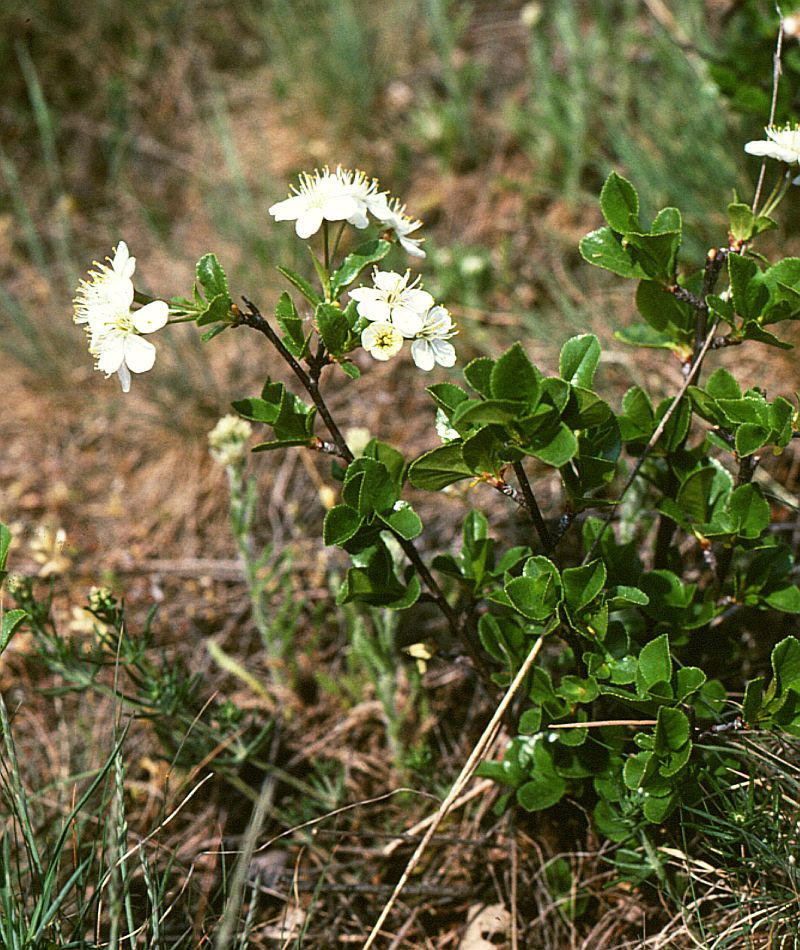
European Dwarf Cherry

European Dwarf Cherry

Prunus fruticosa

Franz Xaver, CC BY-SA 3.0, via Wikimedia Commons

Chinese Plum

Chinese Plum

Prunus mume

+- at Japanese Wikipedia, CC BY-SA 3.0, via Wikimedia Commons

Side by side

European Dwarf CherryChinese Plum
Scientific namePrunus fruticosa Pall.Prunus mume (Siebold) Siebold & Zucc.
English nameEuropean Dwarf CherryChinese Plum
GroupFlowering plantsFlowering plants
ClassMagnoliopsidaMagnoliopsida
OrderRosalesRosales
FamilyRosaceae Rose FamilyRosaceae Rose Family
GenusPrunus PlumPrunus Plum
Red List categoryLeast ConcernLeast Concern
Countries on record23 countries10 countries
GBIF occurrence records7,607 records2,115 records

Rows where the two agree are shown in grey.

Where each is found

Both recorded in 2 countries

Only European Dwarf Cherry (21)

Only Chinese Plum (8)

From Catalogue of Life checklists and GBIF occurrence records. A country missing from a list means no record is held, which is not proof of absence.

Checked facts

European Dwarf CherryChinese Plum
Appearance
  • Prunus fruticosa is a deciduous, xerophytic, winter-hardy shrub that produces cherries. English Wikipedia
  • The bark is dark brown and bears yellow lenticels. English Wikipedia
  • The leaves are oblanceolate to obovate and measure approximately 12 by 6 millimetres. English Wikipedia
  • The leaves have acuminate tips and are hairless on their upper surfaces. English Wikipedia
  • The leaves are thick, serrated, dark green, and turn yellow during autumn. English Wikipedia
  • The flowers are white and hermaphroditic. English Wikipedia
  • The flowers occur in groups of two to four on short peduncles in sessile umbels. English Wikipedia
  • The fruits range from light red to dark red and are globose to pear-shaped. English Wikipedia
  • Prunus mume is a deciduous tree that produces flowers in shades of white, pink, and red. English Wikipedia
  • The leaves are oval-shaped with pointed tips. English Wikipedia
  • The leaves measure 4–8 cm long and 2.5–5 cm wide. English Wikipedia
  • The fruit is a drupe with a groove extending from its stalk to its tip. English Wikipedia
  • The fruit develops yellow skin, sometimes with a red blush, and yellow flesh as it ripens. English Wikipedia
Size
  • The shrub typically reaches 1–2 metres in height and approximately the same width. English Wikipedia
  • The fruits measure approximately 8–25 millimetres in diameter. English Wikipedia
Habitat
  • The species grows in steppe environments rather than forests, although it can form thickets along open forest edges. English Wikipedia
  • The species can grow in almost any soil type but performs best in loamy soil. English Wikipedia
  • The shrub requires full sunlight for growth. English Wikipedia
DietNo checked fact yet
Behaviour
ReproductionNo checked fact yet
Distribution
  • The species is native to central and southeastern Europe, Ukraine, European Russia, the northern Caucasus, Kazakhstan, and the Altai. English Wikipedia
No checked fact yet
Uses
  • The fruits are used in cooking because of their sour taste. English Wikipedia
  • The fruits are used to make jams and jellies. English Wikipedia
  • The species has medicinal uses as an astringent. English Wikipedia
  • The flowers are used as a source for honey production in beekeeping. English Wikipedia
  • The shrub is planted in hedgerows as an ornamental privacy screen and windbreak. English Wikipedia
  • The shrub is cultivated as a host plant for bees, other beneficial insects, and birds. English Wikipedia
  • Its extensive root network is used for soil stabilization in designed landscapes and habitat restoration projects. English Wikipedia
  • The species is used as a grafting stock because of its winter hardiness. English Wikipedia
  • The species is grafted onto Prunus avium tree rootstock to produce trees with rounded tops. English Wikipedia
  • The species is cultivated for both its ornamental flowers and its fruit. English Wikipedia
  • The fruit is used to prepare juices and sauces in East Asian cuisine. English Wikipedia
  • The fruit is used to flavour alcoholic beverages. English Wikipedia
  • The fruit is consumed in pickled or dried forms. English Wikipedia
  • The fruit is used to prepare pickled plums, plum sauce, plum juice, and plum liquor. pmc.ncbi.nlm.nih.gov
  • The flowers are used to prepare tea in Korea. English Wikipedia
  • The fruit is used in traditional Chinese medicine. English Wikipedia
  • The dried fruit is used as a medicinal herb and health food in East Asian countries. pmc.ncbi.nlm.nih.gov
  • The dried ripening fruit is used in traditional Chinese medicine to relieve chronic cough associated with lung deficiency. pmc.ncbi.nlm.nih.gov
  • The dried ripening fruit is used in traditional Chinese medicine to address chronic infectious diarrhea. pmc.ncbi.nlm.nih.gov
  • The dried ripening fruit is used in traditional Chinese medicine for vomiting and abdominal pain caused by Ascaris infection. pmc.ncbi.nlm.nih.gov
  • The dried ripening fruit is used in traditional Chinese medicine for dysfunctional uterine bleeding. pmc.ncbi.nlm.nih.gov
  • The dried ripening fruit is used in traditional Chinese medicine for inadequate secretion of saliva or body fluids. pmc.ncbi.nlm.nih.gov
  • The species has been used as an ingredient in medicinal preparations. pmc.ncbi.nlm.nih.gov
  • The plant contains phenolic compounds, flavonoids, and organic acids. pmc.ncbi.nlm.nih.gov
Similar species
  • Prunus fruticosa is considered one of the parental species of the sour cherry, Prunus cerasus, through ancient crosses with Prunus avium. English Wikipedia
  • Prunus fruticosa naturally hybridizes with Prunus cerasus to produce Prunus × eminens. English Wikipedia
  • Prunus fruticosa naturally hybridizes with Prunus avium to produce Prunus × stacei. English Wikipedia
  • Prunus armeniaca is closely related to Prunus mume within the same section of the genus. English Wikipedia
OtherNo checked fact yet
  • The species is classified in the Armeniaca section of Prunus despite commonly being called a plum. English Wikipedia
  • More than 300 cultivars of Prunus mume have been recorded in China. English Wikipedia
  • Approximately 192 chemical compounds have been isolated from different parts of the species. pmc.ncbi.nlm.nih.gov

In brief

European Dwarf Cherry

European Dwarf Cherry is a deciduous, xerophytic, winter-hardy shrub that produces cherries. It grows in steppe environments across central and southeastern Europe, Ukraine, European Russia, the northern Caucasus, Kazakhstan, and the Altai. It has white flowers and light-red to dark-red fruits that range from globose to pear-shaped. Full profile

Chinese Plum

The species occurs in sparse forests, along stream sides, on forested slopes along trails, and in mountainous areas at elevations reaching 1,700–3,100 metres. It produces fragrant flowers in white, pink, and red shades beginning in midwinter, followed by yellow fruit that ripens in early summer. Full profile

Compare something else

Page built on 29 November 2026 from the data on the two species pages, where every source is listed.

Cite this page

ScientificNames.org. (2026). European Dwarf Cherry vs Chinese Plum. Retrieved November 29, 2026, from https://scientificnames.org/compare/european-dwarf-cherry-vs-chinese-plum