Comparison

Blue-bellied Black Snake vs Red-bellied Black Snake

Blue-bellied Black Snake (Pseudechis guttatus) and Red-bellied Black Snake (Pseudechis porphyriacus) both belong to the genus Pseudechis (black snakes) and part ways below it. Both are recorded in 1 country.

Blue-bellied Black Snake

Blue-bellied Black Snake

Pseudechis guttatus

Max Tibby, CC0, via Wikimedia Commons

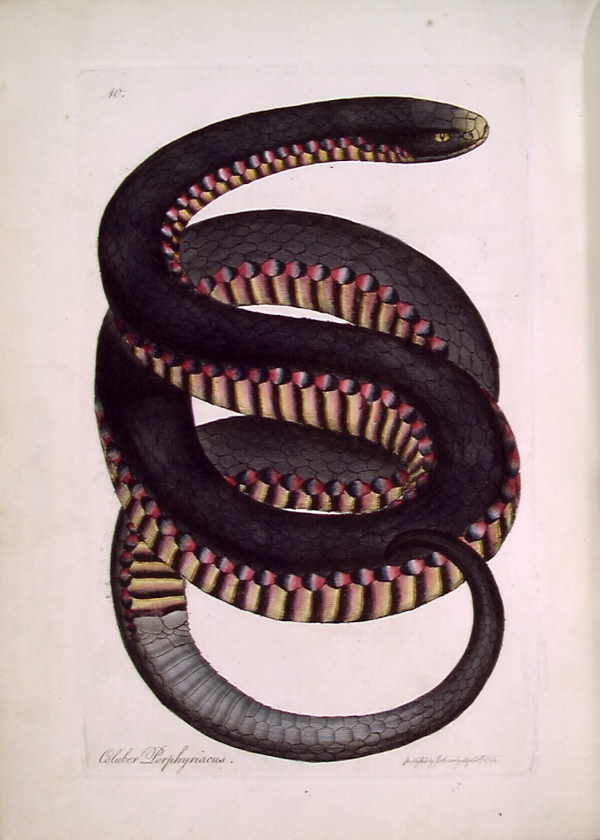
Red-bellied Black Snake

Red-bellied Black Snake

Pseudechis porphyriacus

James Sowerby, Public domain, via Wikimedia Commons

Side by side

Blue-bellied Black SnakeRed-bellied Black Snake
Scientific namePseudechis guttatus de Vis, 1905Pseudechis porphyriacus (Shaw, 1794)
English nameBlue-bellied Black SnakeRed-bellied Black Snake
GroupReptilesReptiles
ClassReptilia ReptileReptilia Reptile
OrderSquamata SnakesSquamata Snakes
FamilyElapidae CobrasElapidae Cobras
GenusPseudechis Black SnakesPseudechis Black Snakes
Named in19051794
Red List categoryLeast ConcernLeast Concern
Countries on record1 country1 country
GBIF occurrence records1,177 records37,871 records

Rows where the two agree are shown in grey.

Where each is found

Both recorded in 1 country

From Catalogue of Life checklists and GBIF occurrence records. A country missing from a list means no record is held, which is not proof of absence.

Checked facts

Blue-bellied Black SnakeRed-bellied Black Snake
Appearance
  • The snake is predominantly shiny bluish-black or brownish-black, with a dark bluish-grey or black belly. australian.museum
  • Some individuals have cream or pale grey colouring with black-edged scales that create a spotted appearance. australian.museum
  • Some individuals have a mixture of pale and dark scales forming thin, broken crossbands. australian.museum
  • The head is uniformly dark in all colour forms. australian.museum
  • The head is relatively broad and deep and is barely distinguishable from the robust body. australian.museum
  • The snake has a prominent brow ridge above its dark-coloured eye. australian.museum
  • The midbody has 19 scale rows. australian.museum
  • The ventral scale count ranges from 175 to 205. australian.museum
  • The subcaudal scales are single anteriorly and divided posteriorly. australian.museum
SizeNo checked fact yet
  • The species averages approximately 1.25 metres in total length, including its tail. English Wikipedia
  • Reliable reports give the species a maximum total length of approximately 2.54 metres. australian.museum
  • Males are generally slightly larger than females. australian.museum
Habitat
  • The species inhabits grasslands, shrublands and savannas. English Wikipedia
  • The species occurs in marshes, riparian environments, temperate habitats, open forests and woodlands. australian.museum
  • Its habitats include river floodplains and wetlands. australian.museum
  • The species also inhabits dry sclerophyll forests and woodlands. australian.museum
  • Individuals shelter under fallen logs, in deep soil cracks and in abandoned animal burrows. australian.museum
  • Dense matted vegetation is another shelter location for the species. australian.museum
  • The species commonly inhabits woodlands, forests, swamplands and riverbanks. English Wikipedia
  • It is particularly associated with moist environments such as streams, swamps and lagoons. australian.museum
  • It also inhabits grasslands, disturbed areas and rural properties. australian.museum
  • The species frequently occurs around drainage canals and farm dams. australian.museum
  • It prefers shallow water containing tangled aquatic vegetation, logs or debris. English Wikipedia
  • Its shelters include thick grass clumps, logs, mammal burrows and large rocks. australian.museum
  • Individuals maintain several preferred shelter sites within their home ranges. australian.museum
Diet
Behaviour
  • The species is primarily a diurnal hunter. australian.museum
  • Individuals may forage during warm evenings. australian.museum
  • The species is usually shy but may defend itself aggressively when threatened. australian.museum
  • When threatened, the snake warns potential threats by hissing and flattening its forebody into a low S-shape. English Wikipedia
  • Further harassment can cause the snake to strike, sometimes with its mouth closed. australian.museum
  • When biting, the snake often maintains its grip and chews. australian.museum
  • The species is generally non-aggressive and usually retreats when approached. English Wikipedia
  • When threatened, it raises its head and forebody horizontally and flattens its neck. English Wikipedia
  • The species is primarily active during daylight hours. English Wikipedia
  • It can remain submerged underwater for as long as 23 minutes. English Wikipedia
  • Its active body temperature generally ranges from 28 to 31 degrees Celsius. English Wikipedia
  • It regulates its temperature by basking in sunny locations and resting in shade. australian.museum
  • The species can climb several metres while searching for prey. australian.museum
Reproduction
  • The species is oviparous and reproduces by laying eggs. English Wikipedia
  • Females lay between 5 and 17 eggs. australian.museum
  • Eggs can take up to 87 days to hatch, depending on incubation temperature. australian.museum
  • Male combat and mating have been recorded between late winter and early spring, from late August to early October. australian.museum
  • Gravid females have been observed in the wild between 5 September and October. australian.museum
  • During male combat, individuals initially bite, intertwine and then pursue one another with further biting. australian.museum
  • In captivity, mating pairs coil loosely together with their tails wrapped around each other. australian.museum
  • Copulation can last up to five hours. australian.museum
  • Gravid females usually refuse food between mating and egg-laying. australian.museum
  • Hatchlings remain inside their eggs for one or two days after cutting the egg case. australian.museum
Distribution
  • The species is endemic to inland southeastern Queensland and northeastern New South Wales, Australia. English Wikipedia
  • The species occurs just west of the coastal ranges in southeastern Queensland and northeastern New South Wales. australian.museum
  • The species is native to the eastern coast of Australia. English Wikipedia
  • Its distribution extends continuously from southeastern Queensland through eastern New South Wales and Victoria. australian.museum
  • Disjunct populations occur in northern and central eastern Queensland. australian.museum
  • A separate population occurs in the southern Mount Lofty Ranges of South Australia. australian.museum
Conservation
  • The species' venom is described as highly toxic and contains coagulants, haemolysins, neurotoxins and cytotoxins. australian.museum
Similar speciesNo checked fact yet
  • Copperheads of the genus Austrelaps are also potential identification lookalikes. English Wikipedia

In brief

Blue-bellied Black Snake

Pseudechis guttatus is endemic to inland southeastern Queensland and northeastern New South Wales, Australia. It is predominantly shiny bluish-black or brownish-black, with a dark bluish-grey or black belly, although some individuals have pale, spotted or crossbanded colouring. Full profile

Red-bellied Black Snake

Pseudechis porphyriacus is native to the eastern coast of Australia, occurring from southeastern Queensland through eastern New South Wales and Victoria, with separate populations in Queensland and South Australia. It is distinguished by glossy black upperparts, bright red or orange flanks and a pink or dull red belly. Full profile

Compare something else

Page built on 29 November 2026 from the data on the two species pages, where every source is listed.

Cite this page

ScientificNames.org. (2026). Blue-bellied Black Snake vs Red-bellied Black Snake. Retrieved November 29, 2026, from https://scientificnames.org/compare/blue-bellied-black-snake-vs-red-bellied-black-snake