Comparison
Papuan Black Snake vs Red-bellied Black Snake
Papuan Black Snake (Pseudechis papuanus) and Red-bellied Black Snake (Pseudechis porphyriacus) both belong to the genus Pseudechis (black snakes) and part ways below it. Both are recorded in 1 country.
Papuan Black Snake
Pseudechis papuanus
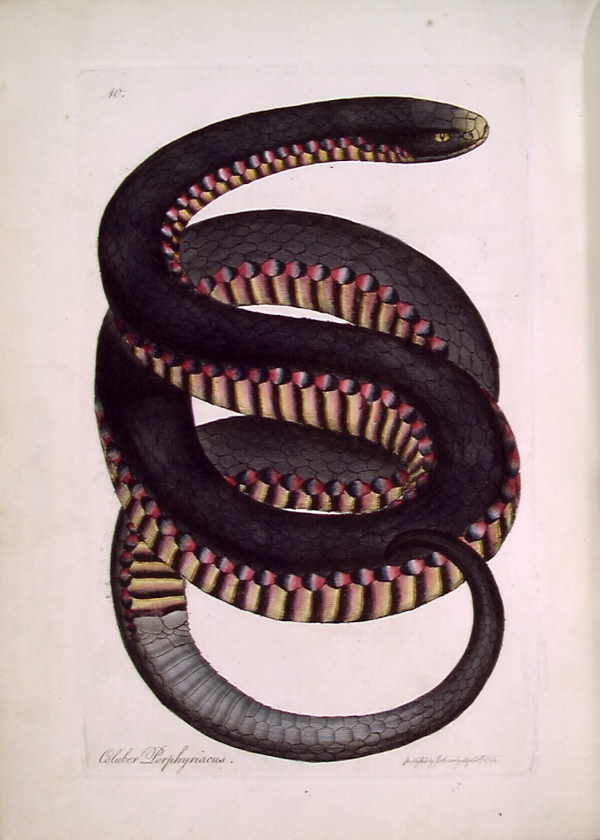

Side by side
| Papuan Black Snake | Red-bellied Black Snake | |
|---|---|---|
| Scientific name | Pseudechis papuanus Peters & Doria, 1878 | Pseudechis porphyriacus (Shaw, 1794) |
| English name | Papuan Black Snake | Red-bellied Black Snake |
| Group | Reptiles | Reptiles |
| Class | Reptilia Reptile | Reptilia Reptile |
| Order | Squamata Snakes | Squamata Snakes |
| Family | Elapidae Cobras | Elapidae Cobras |
| Genus | Pseudechis Black Snakes | Pseudechis Black Snakes |
| Named in | 1878 | 1794 |
| Red List category | Data Deficient | Least Concern |
| Countries on record | 2 countries | 1 country |
| GBIF occurrence records | 43 records | 37,871 records |
Rows where the two agree are shown in grey.
Where each is found
Both recorded in 1 country
Only Papuan Black Snake (1)
From Catalogue of Life checklists and GBIF occurrence records. A country missing from a list means no record is held, which is not proof of absence.
Checked facts
| Papuan Black Snake | Red-bellied Black Snake | |
|---|---|---|
| Appearance |
|
|
| Size |
|
|
| Habitat | No checked fact yet |
|
| Diet | No checked fact yet |
|
| Behaviour |
|
|
| Reproduction | No checked fact yet |
|
| Distribution |
|
|
| Conservation |
|
|
| Similar species | No checked fact yet |
|
| Other |
| No checked fact yet |
In brief
Papuan Black Snake
Pseudechis papuanus occurs in southern New Guinea, including Papua New Guinea and the West Papua province of Indonesia, as well as offshore islands and Boigu and Saibai Islands in the far northern Torres Strait. It is highly venomous, with venom that acts predominantly through neurotoxic effects and is the most potent among members of the genus Pseudechis. Full profile
Red-bellied Black Snake
Pseudechis porphyriacus is native to the eastern coast of Australia, occurring from southeastern Queensland through eastern New South Wales and Victoria, with separate populations in Queensland and South Australia. It is distinguished by glossy black upperparts, bright red or orange flanks and a pink or dull red belly. Full profile
Compare something else
Page built on 29 November 2026 from the data on the two species pages, where every source is listed.
Cite this page
ScientificNames.org. (2026). Papuan Black Snake vs Red-bellied Black Snake. Retrieved November 29, 2026, from https://scientificnames.org/compare/papuan-black-snake-vs-red-bellied-black-snake
“Papuan Black Snake vs Red-bellied Black Snake.” ScientificNames.org, 2026, scientificnames.org/compare/papuan-black-snake-vs-red-bellied-black-snake. Accessed 29 Nov. 2026.
ScientificNames.org. “Papuan Black Snake vs Red-bellied Black Snake.” Accessed November 29, 2026. https://scientificnames.org/compare/papuan-black-snake-vs-red-bellied-black-snake.
@misc{scientificnames_papuan_black_snake_vs_red_bellied_black_snake,
  author = {{ScientificNames.org}},
  title = {Papuan Black Snake vs Red-bellied Black Snake},
  year = {2026},
  url = {https://scientificnames.org/compare/papuan-black-snake-vs-red-bellied-black-snake},
  note = {Accessed 2026-11-29}
}